We usually know Vilnius through its great symbols: the Cathedral, Gediminas Tower, the Gates of Dawn, Užupis, or Vilnius University. But there is another Vilnius — smaller, quieter, hidden in walls, pavements, courtyards and narrow Old Town lanes.
This is a Vilnius you have to not only see, but find.
This route is for those who love urban details: small sculptures, hidden signs, curious reliefs, symbols of love and luck — objects you could walk past dozens of times without ever noticing.
The route runs through the Old Town, Gediminas Avenue, Vilniaus Street, the University area, Literatų gatvė and Užupis. You can complete it in 1.5–2 hours, but it is best not to rush.
Route direction:
Cathedral Square → Stebuklo plytelė → S. Moniuška Square → Dobermanė (Gedimino Ave.) → Lithuanian Hounds → Lucky Belly → St. John's Street → University Street → Alumni Courtyard → Literatų gatvė → Užupis Mermaid → Užupis → Užupis Cat.
1. Stebuklo plytelė (Miracle Tile): a small sign where big wishes begin
Start the route at Cathedral Square. But this time, don't look first at the Cathedral or the bell tower. Look down.
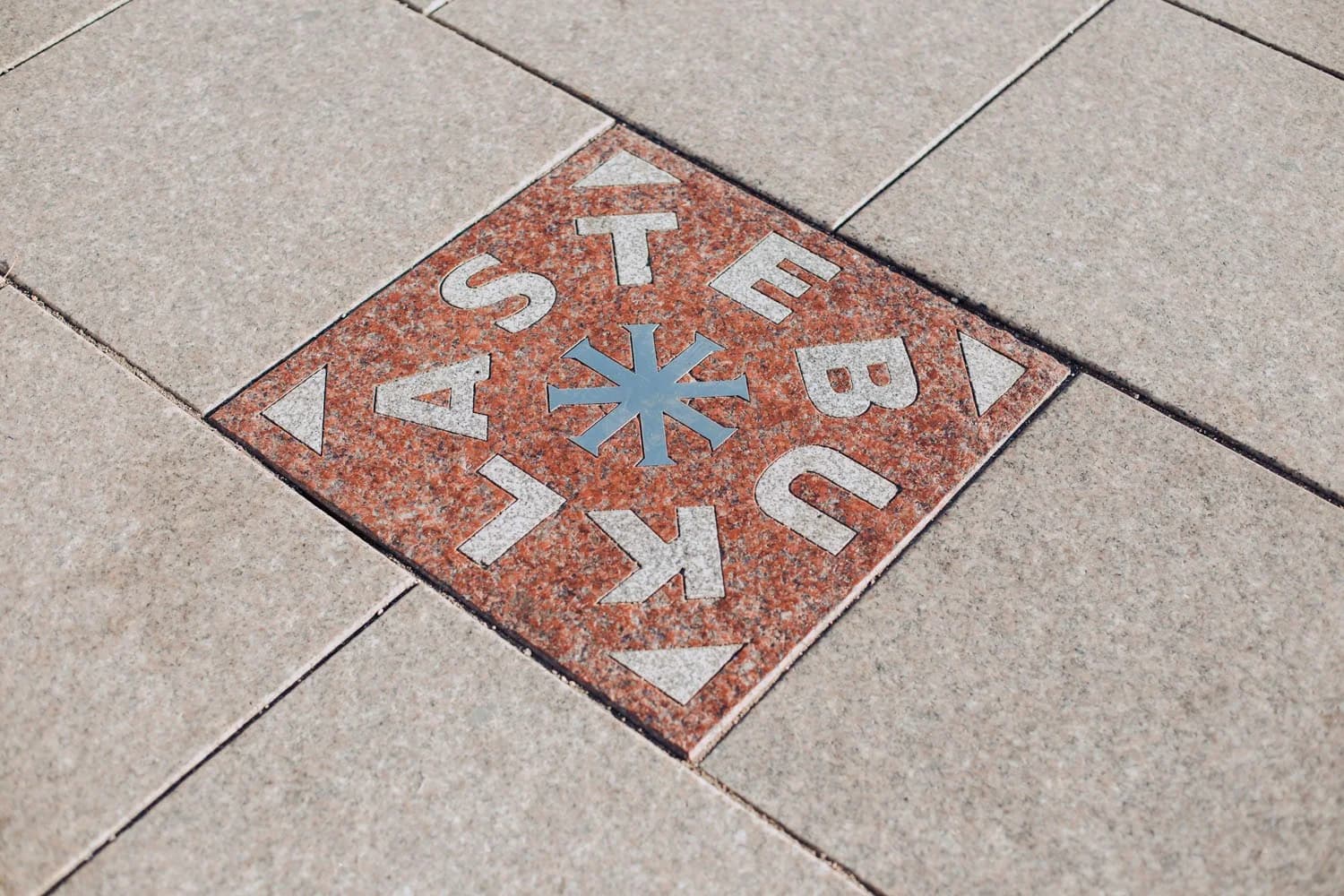
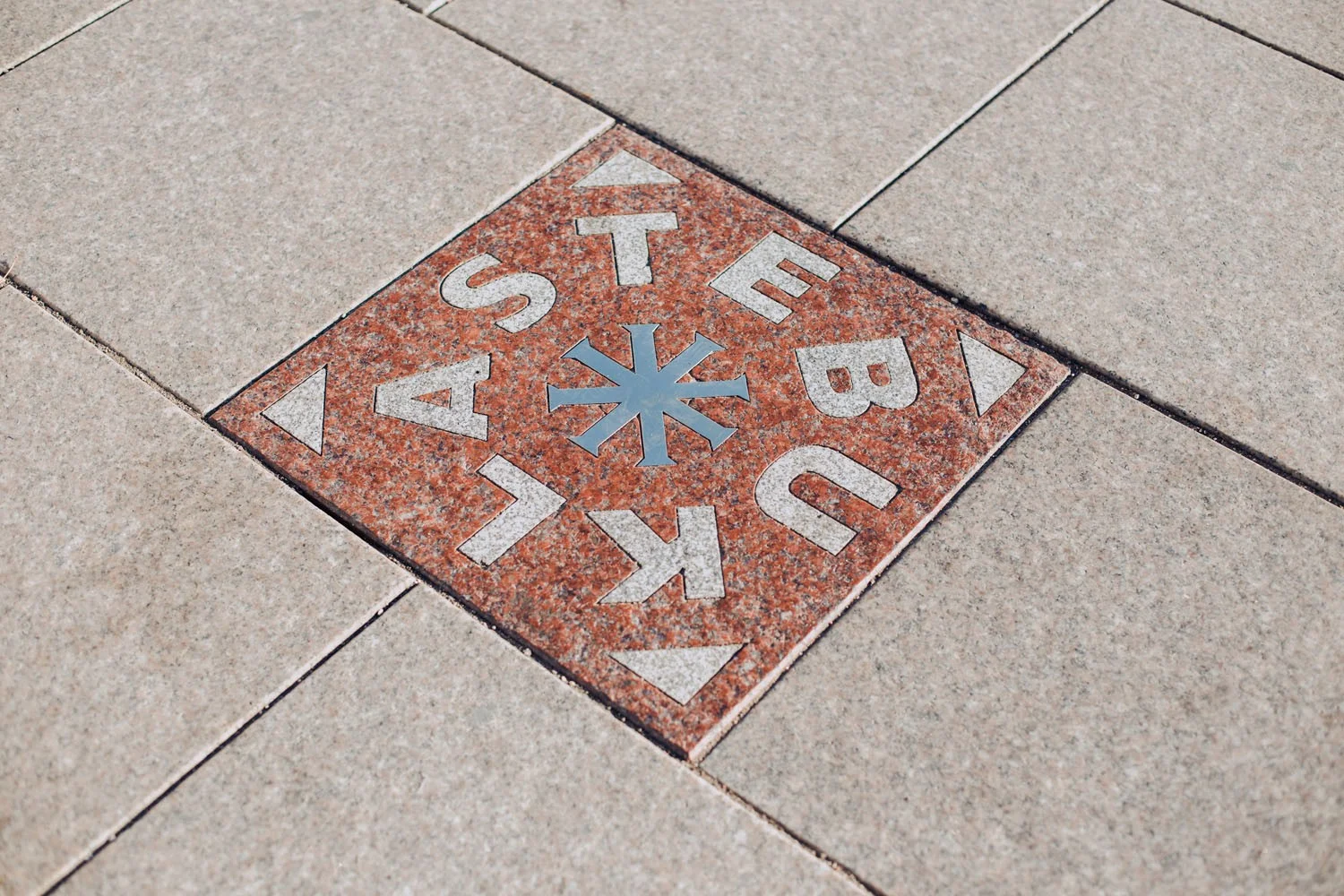
Between the Cathedral and the bell tower, a small tile is set into the pavement with one word: "Stebuklas" (Miracle). Tradition says you should stand on the tile, make a wish, and spin around on your own axis.
But this tile is not just a playful city ritual. It is connected to the Baltic Way — the historic event of 23 August 1989, when a human chain linked Vilnius, Riga and Tallinn.
👉 Stebuklo plytelė on VisitVilnius.lt
Tip: come in the morning or later in the evening, when Cathedral Square is less crowded.
2. The "Obuoliukas" (Little Apple) Tile: Vilnius's love sign in S. Moniuška Square
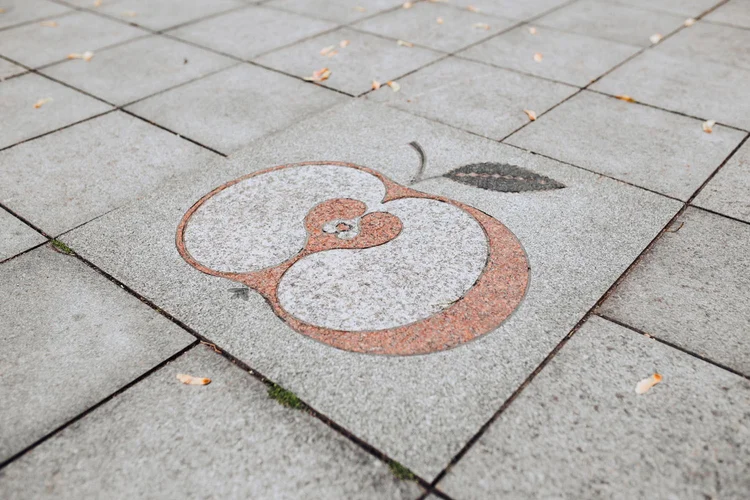
From Cathedral Square, walk towards S. Moniuška Square. Here hides a small Vilnius legend — the "Obuoliukas" (Little Apple) tile, created by sculptor Gitenis Umbrasas. It depicts an apple and heart, evoking Adam and Eve's meeting in paradise.
Worth knowing: if you are travelling as a couple, this spot can become a symbolic stop on the route.
3. Dobermanė on Gediminas Avenue: the avenue's little guardian
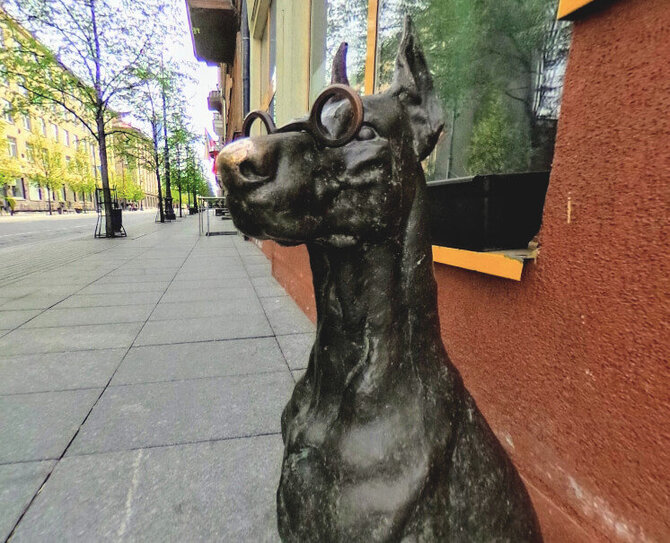
From "Obuoliukas" you can briefly detour to Gediminas Avenue. At Gedimino Ave. 32A you will find a bronze Doberman sculpture — one of those city objects that hurried passers-by often miss, but which attentive Vilnius locals know well.
This Doberman looks like the avenue's little guardian — blending into the daily city rhythm: people walk past, cars drive by, someone stops at the crossing, someone strokes her nose.
The first Doberman was created in 1994 as Svajūnas Kižis's graduation project; the sculpture was later stolen, and the version you see today is already the third. The current bronze Doberman was recreated by sculptor Eimantas Ludavičius.
Tip: look for her at Gedimino Ave. 32A, near the pedestrian crossing.
4. Lithuanian Hounds: in the shadow of hunting traditions at the foot of Gediminas Hill
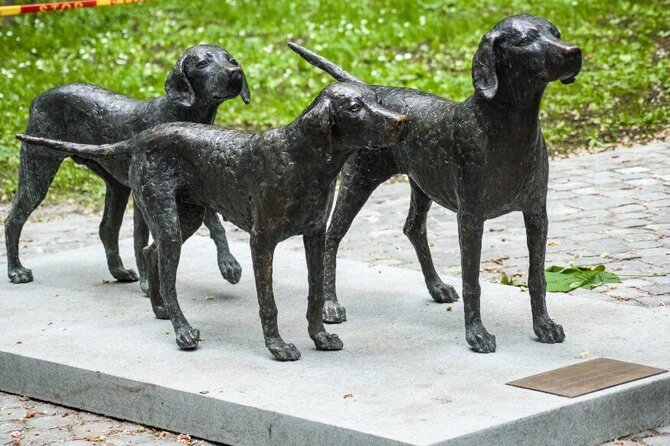
At Barboros Radvilaitės St. 6A, at the foot of Gediminas Hill, stands a sculpture easy to miss but hard to forget: the Lithuanian Hounds. These are not one but several dog figures — a local breed with deep roots in Lithuania's hunting traditions.
The Lithuanian Hound is the oldest hunting dog breed developed in Lithuania. The sculpture erected in 2015 is a reminder that the city holds not only architectural but also animal memory — there is room here for those who travelled alongside humans for centuries.
At this spot, Gediminas Hill is close, and the sculpture stands as if the hounds are still waiting for a returning hunter. This is one of the calmer, more reflective stops on the route — not a ritual, not a relief, but a simple act of homage.
Tip: the sculpture is at the junction of Barboros Radvilaitės St. and the start of the Gediminas Hill footpath — convenient to combine with a quick climb for a view of the city.
5. Lucky Belly on Vilniaus Street: rub it and walk on with a better mood
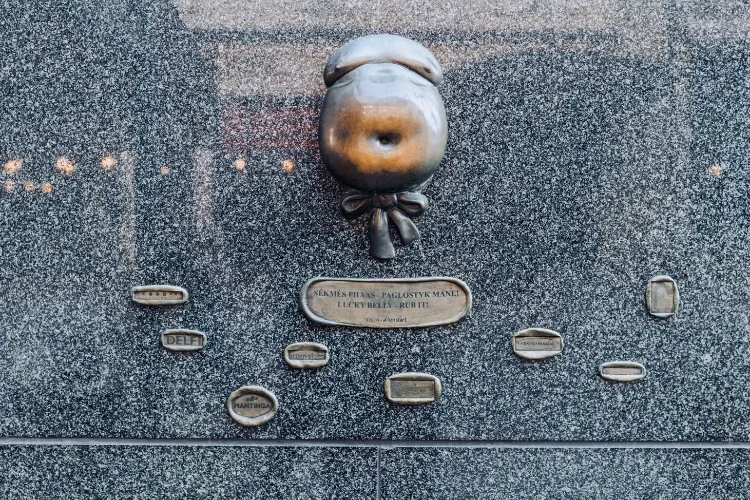
From the Gediminas Avenue area, turn towards Vilniaus Street. Look for one detail on a building wall: the "Sėkmės pilvas", or Lucky Belly. A small bronze relief of a round belly that passers-by traditionally rub for luck or simply for a good day.
Vilnius has a lot of serious history, but Lucky Belly is a reminder that the city can also be playful. No long explanations needed here: you see it, smile, rub it and walk on.
👉 Lucky Belly on VisitVilnius.lt
Tip: look for it on the wall along Vilniaus Street — it is a wall accent, not a free-standing sculpture.
6. The Lamplighter on St. John's Street: a memory of a city someone lit every evening
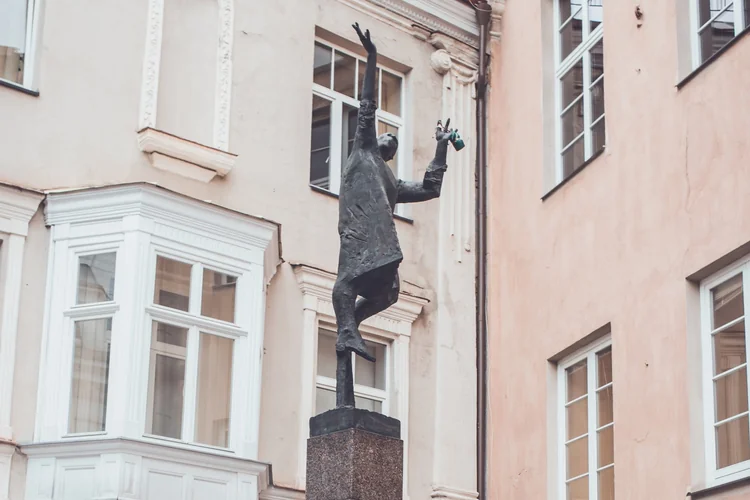
The route continues towards the St. John's Street area. Here it is worth looking for the "Žibintininkas" (Lamplighter) — a small city figure recalling the times when light on Vilnius streets did not appear by itself.
Lamplighters lit city lamps in the evenings. Today that seems almost fairytale-like, but it was once a very practical profession. This small sculpture tells of the everyday city — of a person who made sure the street was brighter.
7. Alumnato drambliukai (Alumni Elephants): a chess board on small city shoulders
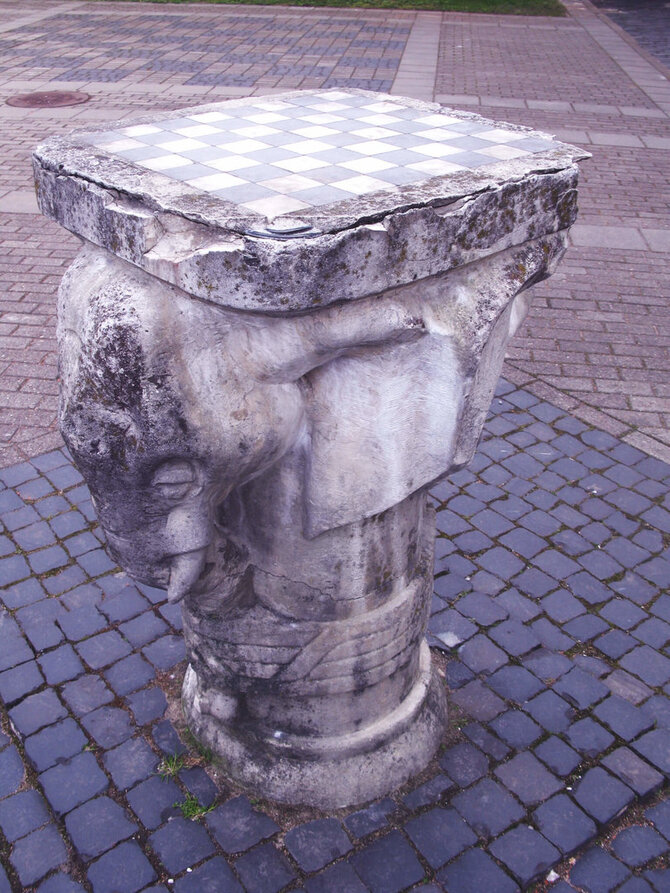
Stepping into the Alumni Courtyard (Universiteto St. 4), Vilnius briefly becomes quieter. Before you opens the Old Town courtyard space with one of the most charming small city objects — the Alumnato drambliukai (Alumni Elephants).
These are white elephants holding a chess board on their backs. They look like a small city riddle: why elephants, why chess? The answer lies in the surroundings — a chess club operated nearby. The sculpture was created by Vytenis Jankūnas.
This stop is especially suitable for families with children — the elephants are clear and playful, and the chess board allows you to talk about the game and about the old city communities.
👉 Alumnato drambliukai on VisitVilnius.lt
Tip: look in the courtyard, not on the main street-facing side of the building.
8. Literatų gatvė (Writers' Street): more than 200 small works of art on one wall
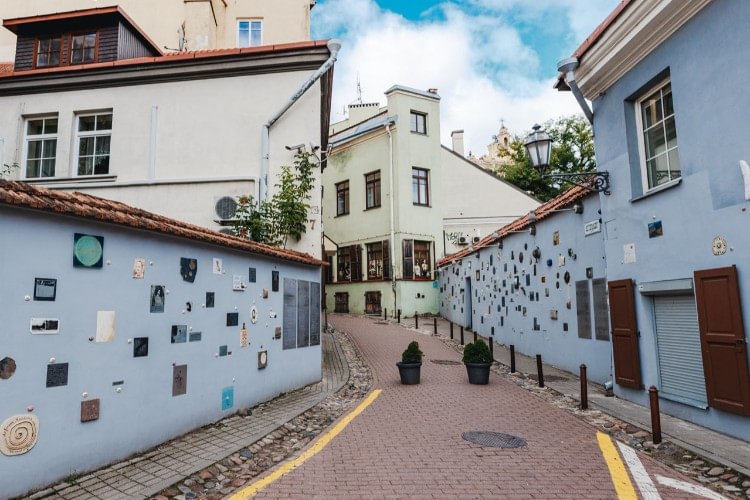
From University Street, turn towards Literatų gatvė. The walls are covered with ceramic, metal and glass miniatures dedicated to writers, poets and cultural figures. The street has more than 200 works.
You walk along the wall and read the city like a book. Each plaque has its own addressee — a city of literature, languages and memory.
Worth knowing: choose 10–15 works that catch your eye and spend more time with them.
9. Užupio undinėlė (Užupis Mermaid): a small bronze myth by the Vilnelė River
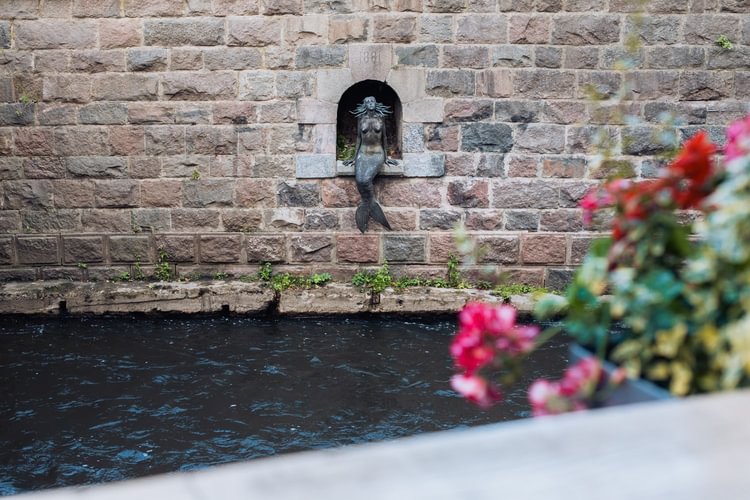
From Literatų gatvė, walk towards Užupis. Crossing into this part of the city, Vilnius changes its mood: here there is more bohemia, art and the proximity of the river.
The Užupio undinėlė (Užupis Mermaid) — a small bronze figure by the Vilnelė River, which has become one of the district's symbols. She looks as if she has risen from a river tale and is quietly watching passers-by. You need to approach her, lean down, find the right angle.
Tip: come in the morning or before evening, when the light is softer.
10. Užupio katinas (Užupis Cat): a small courage ritual on a fence
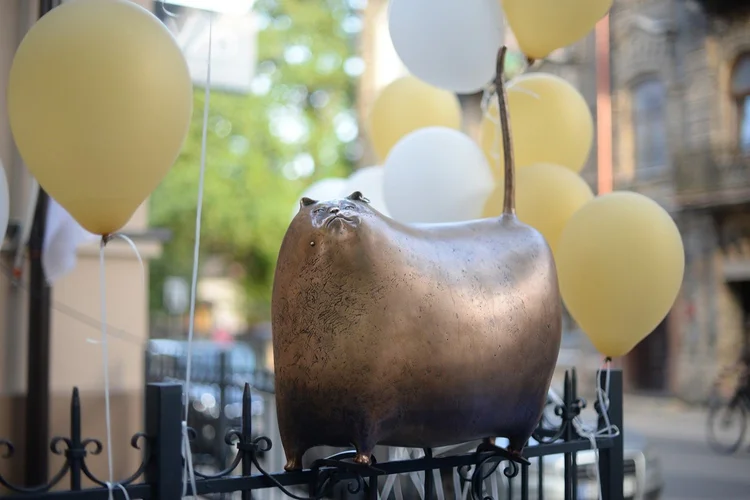
End the route at the Užupio katinas (Užupis Cat) — a cat sitting on a fence with an earring, a true resident of Užupis (Polocko St. 2).
It is said that if you scratch the cat's ear you can rid yourself of fear. You walk up, touch it, smile — and perhaps you really do feel a little braver.
You started from the "Stebuklas" at Cathedral Square — and through love, luck, hunting hounds, lamplights, elephants, literature and river myth you arrived at a cat who reminds you: Vilnius is most beautiful when you allow yourself to be curious.
All 10 route stops
- Stebuklo plytelė — tile of wishes and the Baltic Way, Cathedral Square
- Obuoliukas tile — love symbol, S. Moniuška Square
- Dobermanė — the avenue's little guardian (Gedimino Ave. 32A)
- Lithuanian Hounds — hunting tradition sculpture (Barboros Radvilaitės St. 6A)
- Lucky Belly / Sėkmės pilvas — luck relief, Vilniaus Street
- Žibintininkas (Lamplighter) — the old city light profession, St. John's St.
- Alumnato drambliukai — chess board on small shoulders (Universiteto St. 4)
- Literatų gatvė — 200+ artworks on walls
- Užupio undinėlė — bronze myth by the Vilnelė
- Užupio katinas — courage ritual (Polocko St. 2)
You just need to walk more slowly. And look more carefully.