Unveiling Wilno: A Journey Through Vilnius's Rich Polish Heritage
Vilnius, the vibrant capital of Lithuania, holds a multifaceted history, deeply interwoven with that of Poland. For centuries, this city was known to many as Wilno, a cultural crossroads where Polish and Lithuanian identities converged, creating a unique heritage that continues to shape its character. From grand architectural masterpieces to the echoes of literary giants, the Polish legacy in Vilnius is palpable, offering visitors a profound journey into a shared past that spans the Grand Duchy of Lithuania and the Polish-Lithuanian Commonwealth.
Adam Mickiewicz: Echoes of a Poet Laureate
No exploration of Polish heritage in Vilnius would be complete without acknowledging Adam Mickiewicz, widely considered Poland's greatest Romantic poet. Though born in what is now Belarus, his formative years and intellectual awakening were deeply rooted in Vilnius. He studied at the Imperial University of Vilnius (now Vilnius University) between 1815 and 1819, a period that profoundly influenced his literary output. The city's intellectual atmosphere, its diverse population, and the surrounding landscapes inspired many of his early works and later, the epic national poem, "Pan Tadeusz."
Visitors can delve into his life and legacy at the Adam Mickiewicz House-Museum, located at Bernardinų g. 11. This charming museum offers a glimpse into the poet's life during his Vilnius years, showcasing personal belongings, manuscripts, and period furniture. It’s a poignant space that brings to life the environment in which he honed his craft and dreamt of a free homeland. The museum is a must-visit for literary enthusiasts and those seeking a deeper connection to Polish cultural history in Vilnius. It is open Tuesday to Saturday and entry is free of charge.
St. Anne's and Bernardine Churches: Gothic Grandeur
Standing majestically on Maironio g., the architectural complex of St. Anne's Church and the adjacent Bernardine Church represents the pinnacle of Gothic artistry in the Baltics and a profound connection to the city's Polish past. St. Anne's, with its intricate brickwork and slender spires, is a breathtaking example of Flamboyant Gothic style. Legend has it that Napoleon Bonaparte, captivated by its beauty during his 1812 campaign, expressed a wish to carry the church back to Paris on the palm of his hand. While a charming anecdote, it perfectly encapsulates the church's undeniable allure.
The Bernardine Church, though equally impressive, offers a more robust and austere Gothic contrast, hinting at its defensive capabilities in earlier times. Together, these two churches form an unforgettable architectural ensemble that has witnessed centuries of Polish-Lithuanian history, including periods when Polish was the predominant language of worship and administration. Their enduring beauty serves as a testament to the shared artistic and religious traditions that flourished in Wilno.
Aušros Vartai (The Gate of Dawn): A Beacon of Faith
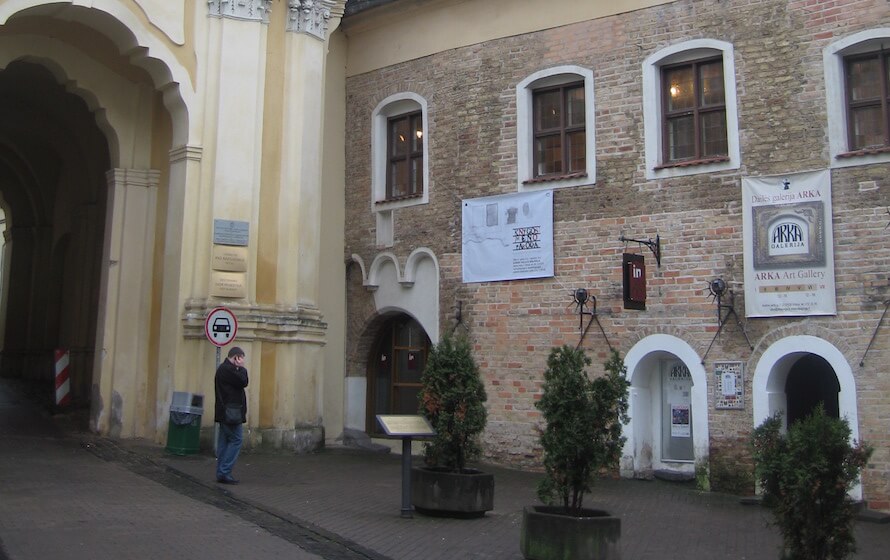
For Polish Catholics, few places in Vilnius hold as much spiritual significance as Aušros Vartai, or the Gate of Dawn, located at Aušros Vartų g. 14. This iconic gatehouse, part of the original city fortifications, houses a miraculous icon of the Blessed Virgin Mary, Mother of Mercy. Unlike many religious depictions, the Madonna of the Gate of Dawn is not depicted with the Infant Jesus, creating a uniquely powerful and serene image that has drawn pilgrims for centuries.
The icon is revered by both Lithuanians and Poles, but its particular importance for Polish Catholics is profound. It has been a pilgrimage destination for generations, with countless faithful traveling to Wilno to pray before the image, which is believed to possess miraculous powers. The chapel housing the icon is often filled with visitors, its walls adorned with votive offerings, testaments to answered prayers. Experiencing the quiet devotion at Aušros Vartai offers a deep insight into the enduring spiritual bond between the city and its Polish heritage.
Vilnius as Wilno: Capital of a Grand Legacy
To truly understand the depth of Polish heritage in Vilnius, one must look back to the era of the Grand Duchy of Lithuania and the subsequent Polish-Lithuanian Commonwealth. For centuries, Vilnius (or Wilno) served as a vital capital within a vast state that stretched from the Baltic Sea to the Black Sea. This was an epoch of immense cultural exchange and political cooperation, largely forged under the Jagiellon dynasty, which united the crowns of Poland and Lithuania.
During this golden age, Wilno flourished as a multicultural metropolis, a crucible of Lithuanian, Polish, Ruthenian, Jewish, and German cultures. Polish language and customs became increasingly influential, particularly among the nobility and in urban centers, without erasing the distinct Lithuanian identity. The University of Vilnius, founded by the Jesuits, became a beacon of learning, often with Polish as a prominent language of instruction. This shared legacy of the Commonwealth means that many historical figures, architectural styles, and cultural traditions are claimed and cherished by both nations, making Vilnius a living testament to a complex, intertwined history.
The Polish Minority Today: A Living Link
The Polish presence in Lithuania is not merely a historical footnote; it is a vibrant, living aspect of the country's contemporary identity. Today, ethnic Poles constitute Lithuania's largest national minority, numbering approximately 200,000 individuals. Vilnius itself is home to a significant Polish community, and their cultural contributions are evident throughout the city and surrounding regions.
Visitors will find numerous Polish-language schools in Vilnius, ensuring the preservation of language and culture for younger generations. In certain areas, particularly in southeastern Lithuania, such as the Šalčininkai region which borders Poland, Polish street signs can be seen alongside Lithuanian ones, a tangible indicator of the community's strong presence. Polish cultural centers, theaters, and media outlets also thrive, demonstrating a continuing commitment to nurturing and celebrating their heritage. This contemporary community serves as a vital bridge to the past, keeping Polish traditions, language, and customs alive in the heart of Lithuania.
Practical Tips for Exploring Polish Heritage in Vilnius
Immersing yourself in Vilnius's Polish heritage is a rewarding experience. To make your visit seamless and enriching, consider these practical tips:
- Polish-Language Guided Tours: To gain the deepest insights, look for local tour operators or independent guides who specialize in Polish history and offer tours in Polish. Many guides are knowledgeable about the nuances of the shared heritage and can provide a unique perspective. Websites like "Vilnius Tour Guide" or "Go Vilnius" often list guides with specific language proficiencies and thematic specializations.
- Suggested Half-Day Walking Route: A logical and enjoyable route to explore the key sites mentioned would be:
- Start at Vilnius University (Universiteto g. 3), exploring its historic courtyards, where Adam Mickiewicz studied.
- Walk a short distance to the Adam Mickiewicz House-Museum (Bernardinų g. 11), approximately 5-7 minutes walk from the university's main entrance.
- Continue towards the Old Town, making your way to St. Anne's Church and the Bernardine Church (Maironio g.), which is about a 10-12 minute walk from the Mickiewicz Museum.
- From St. Anne's, weave through the charming Old Town streets towards Aušros Vartai (Aušros Vartų g. 14), a walk of approximately 15-20 minutes, allowing you to soak in the atmosphere.
- Distances and Time: The entire suggested walking route covers approximately 2.5-3 kilometers and can be comfortably completed in 2.5-3.5 hours, including time spent inside the museum and churches, depending on your pace and interest level. The Old Town is very walkable, and these sites are relatively close to each other, making for an enjoyable stroll.
- Local Interaction: Don't hesitate to engage with locals. Many older residents, particularly in the Old Town, may speak Polish, and younger Lithuanians often speak excellent English.
Vilnius, or Wilno, stands as a profound testament to the intricate tapestry of Polish and Lithuanian history. From the intellectual footsteps of Adam Mickiewicz to the sacred reverence at Aušros Vartai, and the architectural splendor of its Gothic churches, the city offers a captivating journey into a shared past. Exploring this rich heritage not only reveals the depth of Polish influence but also celebrates the enduring spirit of a city that continues to embrace its diverse identity. Your visit to Vilnius promises an unforgettable encounter with a history that shaped nations.