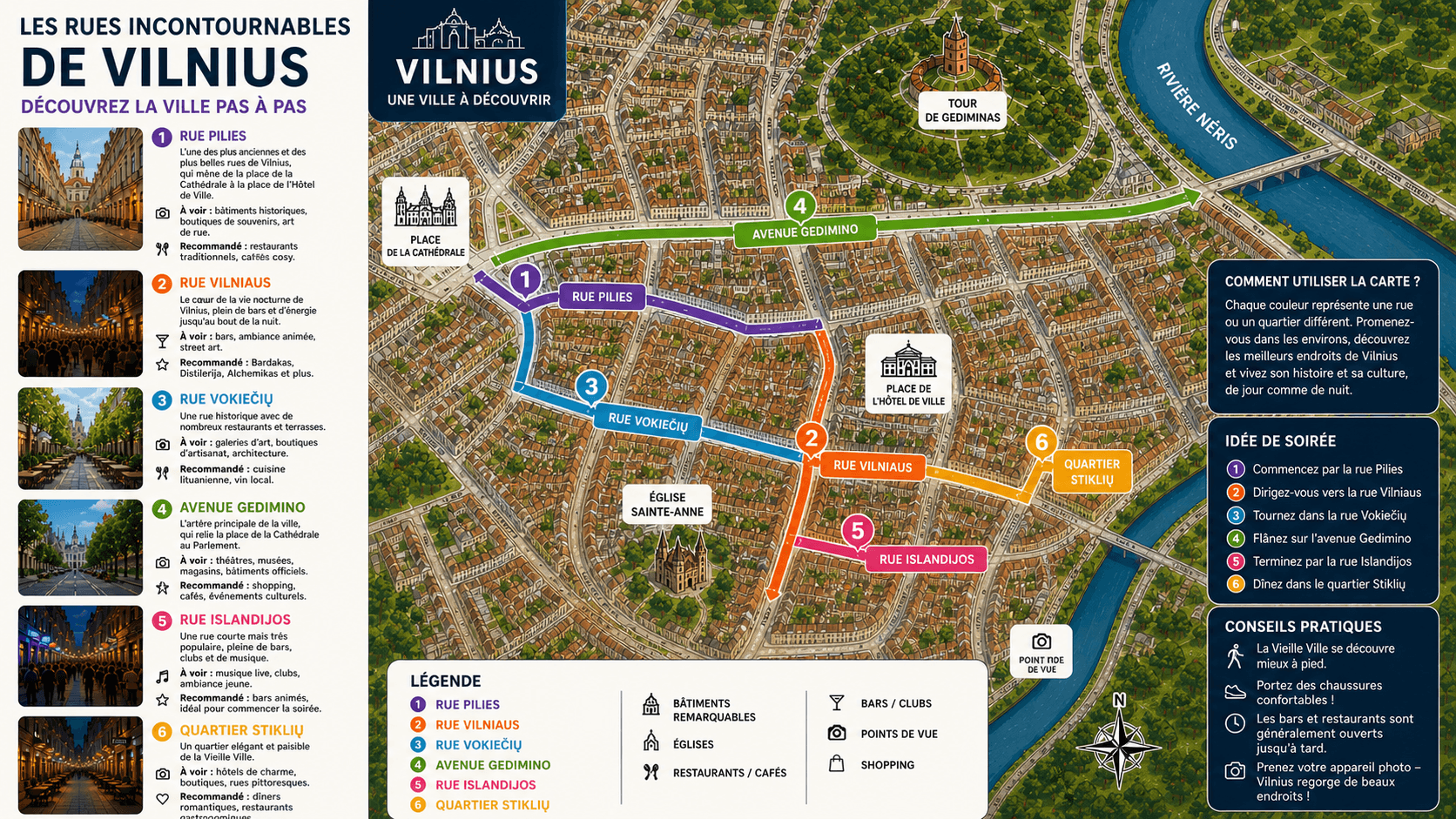
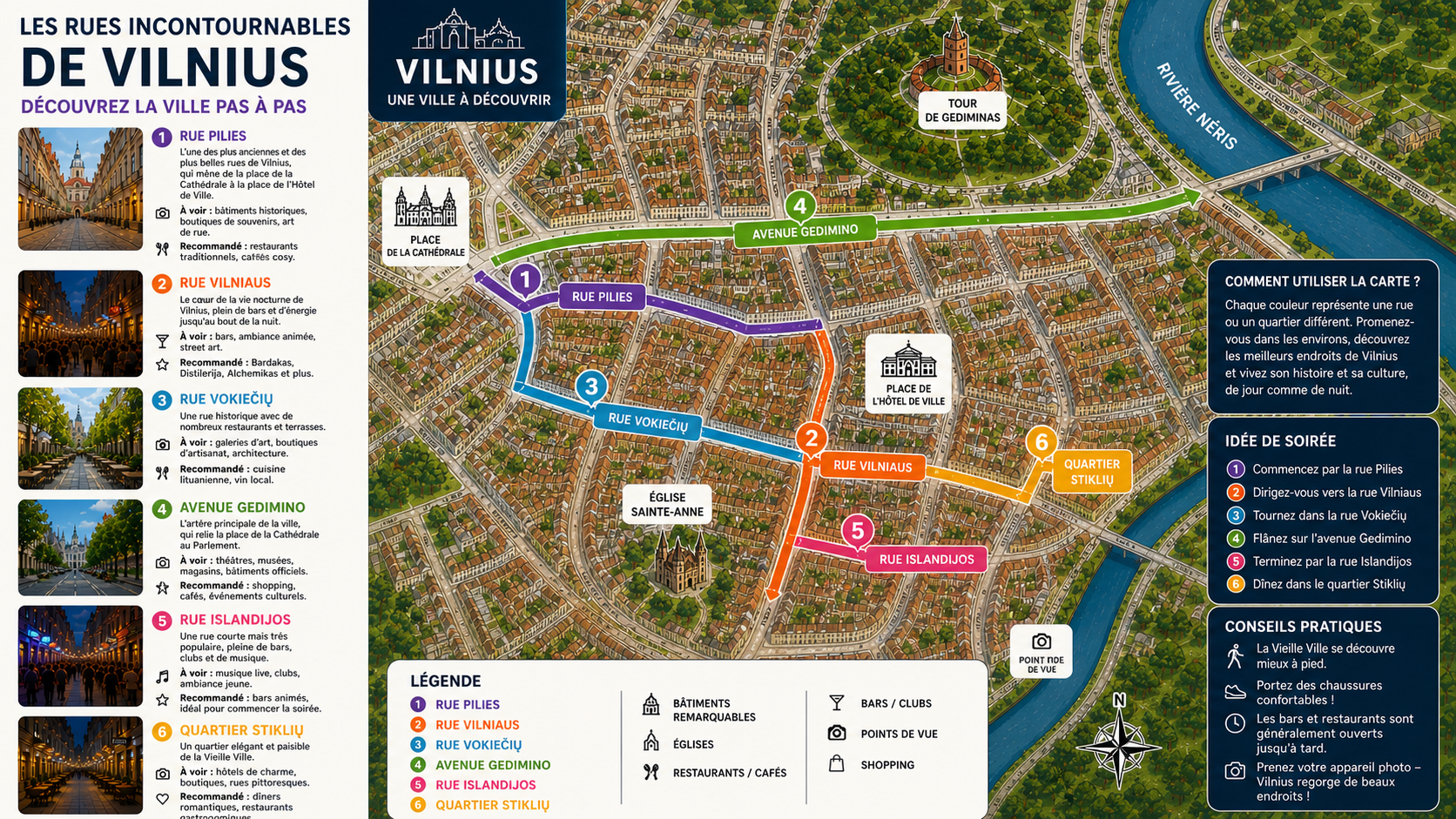
Vilnius' Main Streets: Where True City Life Begins
Vilnius is not a city you understand by merely visiting its attractions. You understand it by walking its streets, for it is there that history, culture, gastronomy, and nightlife intertwine. This guide will help you not only navigate but also feel the city's pulse. Here are the main streets worth not just walking, but truly “experiencing.”
Pilies Street: The Oldest Face of Vilnius

Pilies Street is a Vilnius classic. It is the oldest and one of the most beautiful streets in the entire Old Town. It connects Cathedral Square to Town Hall Square, and for any first-time visitor, it looks like a postcard: cobblestones, facades from different eras, cozy cafes.
The street is filled with souvenir shops, small restaurants, and historic buildings. In summer, musicians are always heard here, and in winter, it transforms into a romantic path with lanterns and Christmas trees in the surrounding squares.
What to discover here:
- Wander aimlessly, as it's the most beautiful street to “get lost” in.
- Step into a Lithuanian cuisine restaurant. Classics include cepelinai, šaltibarščiai in summer, and fried bread.
- Stop for street musicians, as they are always present here.
Pilies Street is the “first impression of Vilnius,” and it is usually a very good one.
Vilniaus Street: The Heart of Bars and Nightlife

Vilniaus Street is a completely different Vilnius. If Pilies Street is history, this one is energy. This is where the city's true life begins in the evening. Bars follow one another, people move from one place to another, and the spontaneous atmosphere of “where are we going next?” is naturally part of this district.
A particularly important spot is the intersection with Islandijos Street. This is one of the liveliest points of Vilnius' nightlife, where all evenings typically begin.
Places to know:
- Bardakas: chaotic, lively, a symbol of “Vilnius night.” Young crowd, vibrant atmosphere that lasts until the early hours.
- Distilerija: for stronger drinks, whisky and gin lovers. Ideal for an evening without too much noise.
- Alchemikas: the benchmark for cocktail culture in Vilnius. Professional mixology, attention to detail, rated 4.7 out of 5.
If you want to experience Vilnius at night, start here.
Vokiečių Street: History and Gastronomy in One Place

Vokiečių Street is one of Vilnius' oldest arteries, now a place for gastronomy and gatherings. There's less of a tourist “wow” effect here, but more authentic local life, restaurant terraces, and a slower pace.
The street is wide, making it pleasant to dine on a terrace, especially in summer. The choice of restaurants is vast: from Lithuanian to Italian, South Asian, or modern European cuisine.
What to do here:
- Dine on a terrace during the warmer months.
- Try different cuisines in one evening, moving from one terrace to another.
- Observe the city unhurriedly, as the pace naturally slows down here.
This is a street where Vilnius becomes “inhabited,” not just visited.
Gediminas Avenue: The Backbone of Vilnius

Gediminas Avenue is the city's main artery, connecting the Cathedral to the Parliament. This is where official Vilnius unfolds, where business, politics, and culture meet. On weekends, some sections of the avenue become almost a pedestrian zone.
Unlike the Old Town, Vilnius here appears more modern: wide sidewalks, late 19th and early 20th-century facades, public transport flow, and a multitude of cafes with large glass fronts.
What to see here:
- Theatres and museums, including the Lithuanian National Drama Theatre.
- Shops and cafes, where locals usually gather.
- The city's daytime pace, which differs greatly from the bustle of the Old Town.
Islandijos Street: Small Area, Big Energy
Islandijos Street is like Vilnius' "mini Soho." It is small, but its energy is big.