A label saying “amber”, “linen” or “Lithuanian design” does not by itself explain what an object is made from or where it was produced. A better Vilnius shopping plan starts with three questions: is the material clearly identified, can the maker be traced, and will the seller provide the documents needed for returns or a VAT claim? This guide uses those questions to connect three different stops rather than presenting an unverified list of “best” souvenir shops.
Buying amber without unreliable home tests
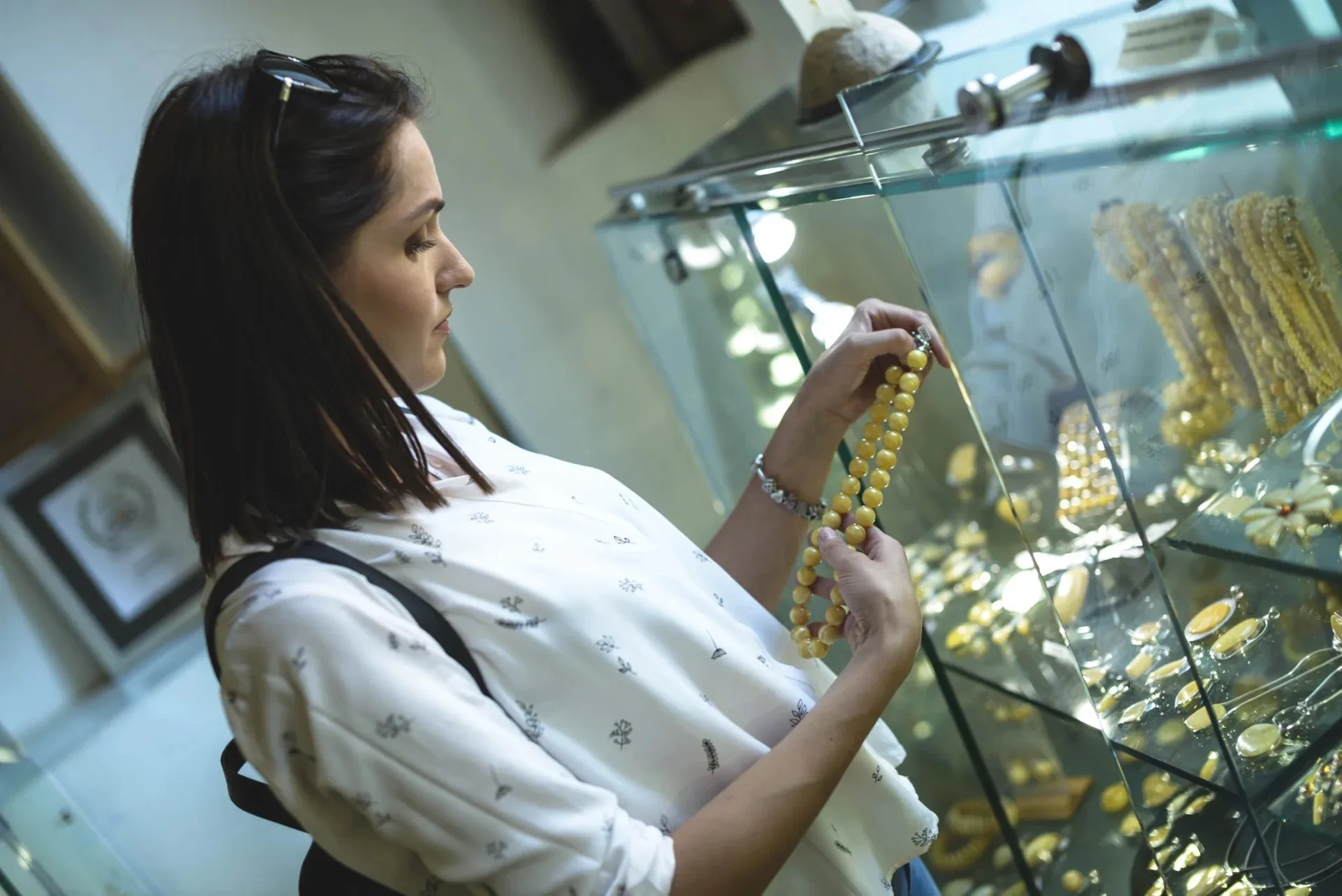
Colour and warmth in the hand are not proof that a piece is natural Baltic amber. The GIA amber buyer’s guide explains that bright yellow-green material may result from heat and pressure treatment. Natural amber, treated amber, pressed or reconstructed amber, and an imitation are different products; a clear description matters more than a romantic colour name.
Do not put a finished piece of jewellery into salt water or use a hot needle. In gemological notes published by GIA, amber, copal and polystyrene can all float in a supersaturated salt solution, while a setting, adhesive or other component changes the result. For a meaningful purchase, ask for an invoice, the material and treatment description, and the maker’s details. If the value warrants it, an independent laboratory report is a stronger safeguard than a shop-counter experiment.
The Amber Museum-Gallery on Šv. Mykolo Street is a useful first stop because its exhibition provides context before the shop. Check the current address and opening information in the official city listing. When comparing two pieces, ask whether the amber is natural, pressed or treated, who made the jewellery, and what the written return terms cover.
Choosing linen by composition and care
“Linen look” and a textured weave do not mean an item is linen. Read the fibre label: pure linen, a linen-cotton blend and a fabric containing only a small percentage of linen behave differently in use and washing. Check seams and edge finishing, the expected shrinkage, and the care instructions. For clothing, try the item on; for a tablecloth or towel, bring the measurements you actually need.
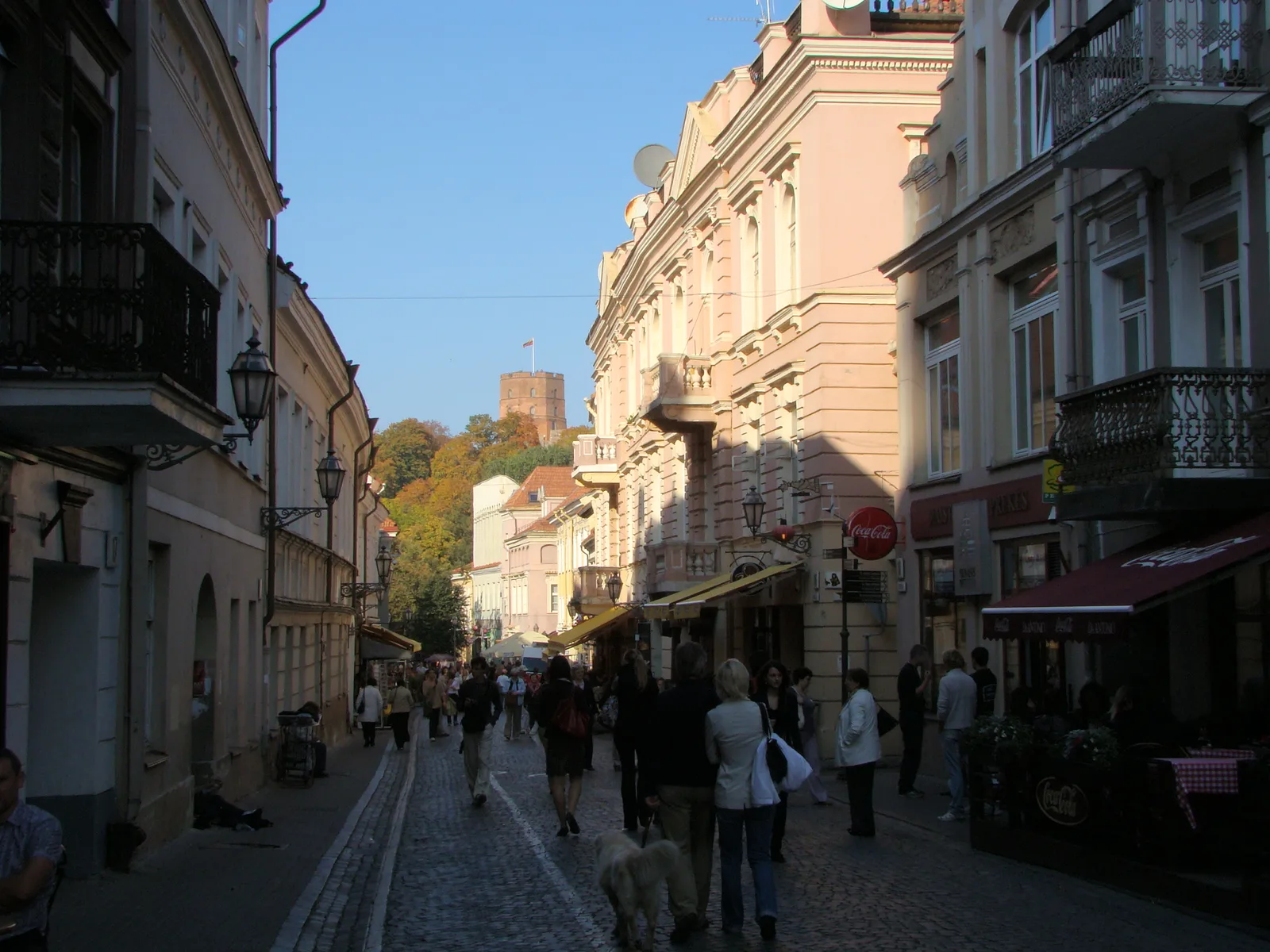
Lino Namai on Pilies Street offers a concrete starting point, not an exclusive recommendation. Use the maker’s official shop list for current hours rather than relying on a travel article. If Lithuanian production matters to you, ask where the cloth was woven and where the item was sewn. Designed in Lithuania and fully made in Lithuania are useful but different descriptions.
Finding local design with a named maker
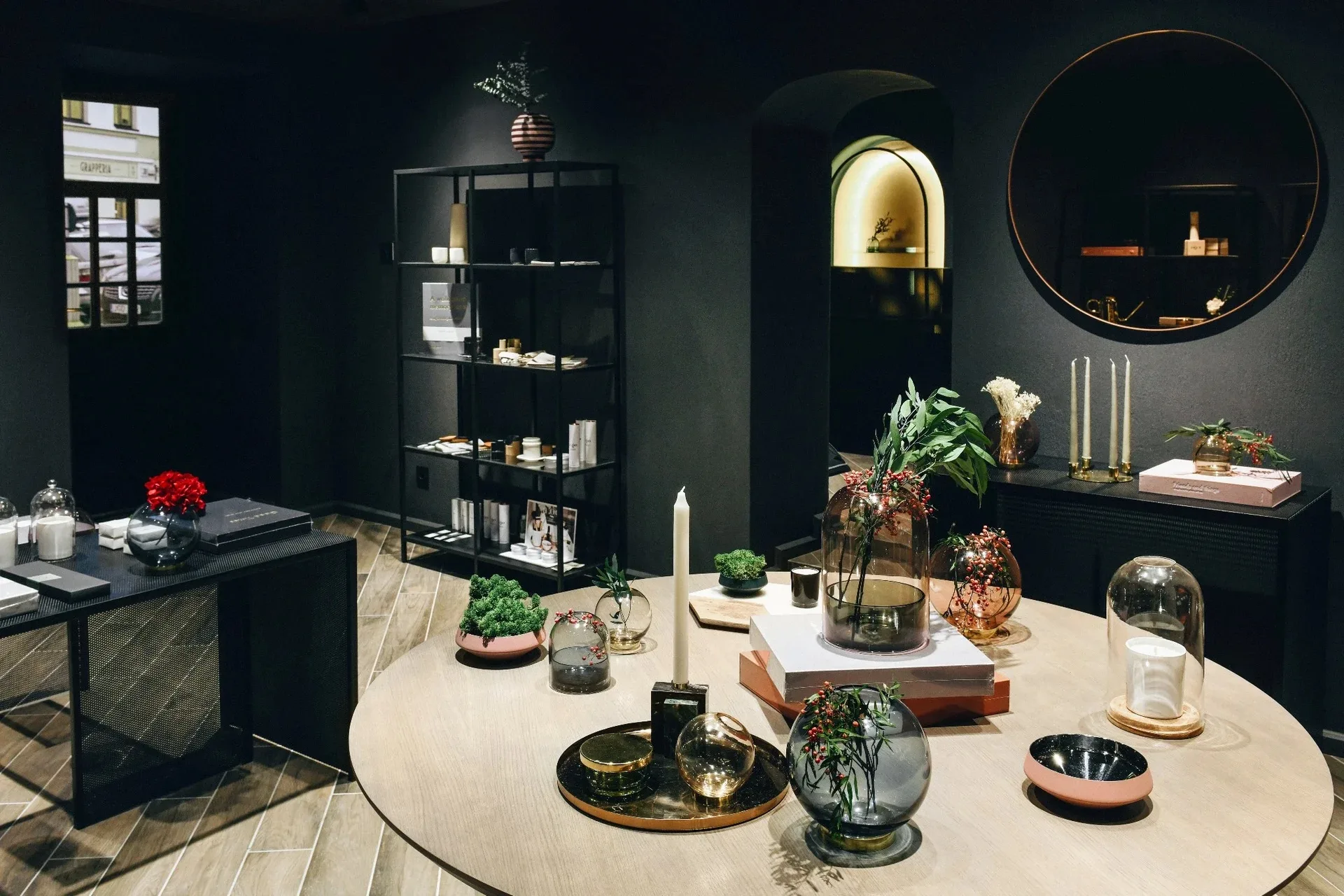
For ceramics, prints, jewellery or textiles, look for the designer’s name and a material description. Ask whether an object is unique, made in a small batch or industrially produced, how it should be cared for, and whether it can travel safely in hand luggage. In a multi-brand shop, photograph the label or take the maker’s card so that the origin does not become anonymous as soon as you leave.
The annual Lithuanian Design Week brings exhibitions and workshops to Vilnius, but its dates and venues change each year. For a future trip, use the current programme rather than copying the previous edition’s calendar. The same principle applies to permanent shops: collections move and opening times change, so verify a primary source before crossing the city for one brand.
Food gifts from Halės Market
Halės Market is an alternative when you would rather take home food than another decorative object. For cheese, rye bread, honey or šakotis, check the use-by date, storage temperature and packaging first. Tell the seller how long your journey is and ask whether the product is suitable. Liquids and alcoholic drinks remain subject to airline, baggage and destination-country rules.
Traditional stalls and food businesses inside the market may follow different schedules. The city’s tourist publications page provides a Halės Market guide, but a specific trader’s own channel is the better source for a special visit. Morning is often practical for groceries and lunchtime for prepared food, without guaranteeing that every stall will be open.
Tax Free: the EUR 40 threshold is only one condition
According to the Lithuanian tax authority’s information updated in April 2026, a traveller whose permanent residence is outside the EU may reclaim VAT only when the shop participates in the Tax Free system. The goods must cost at least EUR 40 including VAT, remain unused and unchanged, leave the EU within the required period, and receive customs confirmation. Read the current conditions on the VMI Tax Free page.
This is not an automatic refund of the full 21% VAT rate. The merchant or its contracted intermediary processes the refund, and the method or fee can vary. Before paying, show the document proving residence outside the EU and ask whether the shop will issue an electronic Tax Free declaration. Keep the receipt and the declaration’s QR or barcode, and do not use the goods before customs validation. If you leave the EU through another country, find out where the final customs step will occur.
A walkable route and a five-point buying check
A compact Old Town route can begin at the Amber Museum-Gallery, continue along Pilies Street to the linen shop and finish at Halės Market. It is not a ranking and there is no need to buy at every stop. Its value is that you can compare a museum explanation, a textile label and an everyday food hall within one walk.
Before paying, check five things: material or ingredients, named maker or manufacturer, treatment and origin, written returns or warranty, and any documents needed for travel or Tax Free. Compare prices only between objects of similar composition and provenance. That turns shopping into a short introduction to Vilnius craft, design and food rather than a hunt for a generic souvenir.