Užupis sits across the Vilnia River from the eastern edge of Vilnius Old Town. It is both a residential neighbourhood and the home of a symbolic republic shaped by local artists and community initiatives. Its best-known works, public spaces and cultural venues remain part of the everyday city. This guide connects them while distinguishing documented history from local legend and leaving changing opening information to the organisations that manage it.
Choose your way into Užupis
From Cathedral Square, follow Šventaragio Street towards Maironio Street, pass near St Anne’s Church and continue to Užupis Bridge. The bridge places you close to the riverside Mermaid, Constitution plaques and the lower entrance to the Užupis district. Alternatively, approach through Bernardine Garden and over a pedestrian bridge.
Užupis rises away from the river, and some streets combine slopes, cobbles and narrow pavements. Visitors using wheelchairs, mobility aids or pushchairs may prefer to assess the route in smaller sections and avoid the steeper lanes. Riverbank surfaces can also become slippery in wet weather. Public streets and marked paths provide enough scope for a rewarding walk; there is no need to enter residential courtyards or unmarked workspaces.
Read the republic before interpreting it
On Paupio Street, mirrored plaques present the 41 provisions of the Užupis Constitution in many languages. The text moves between serious principles and deliberate humour, including ideas about happiness, mistakes and care for others. The community’s account of the Constitution dates the text to 2001 and the first Lithuanian and English plaques to 2003.
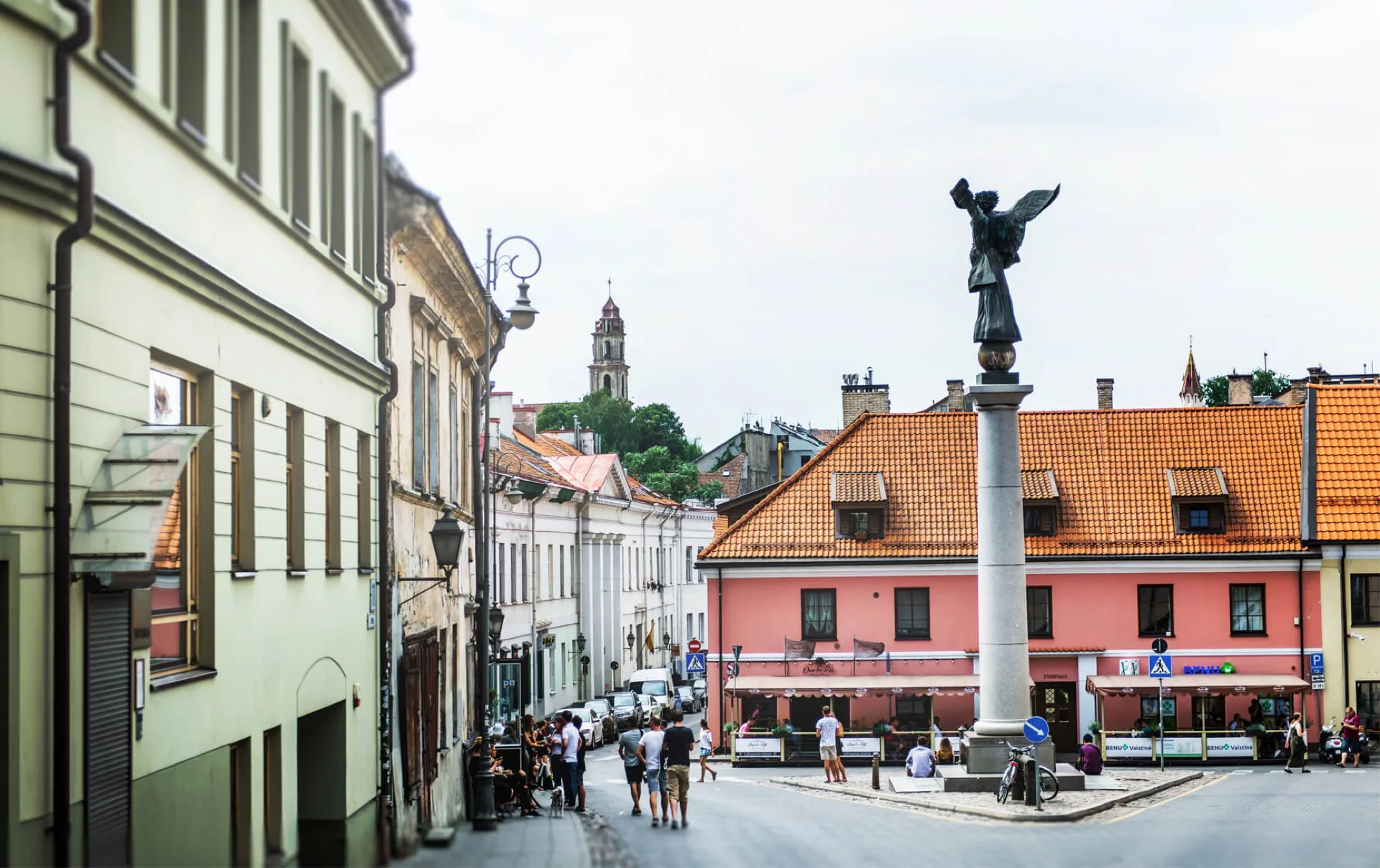
Near the bridge, the bronze Mermaid of Užupis occupies a niche in the river wall. Local legend says that her charm encourages people to return, a story best understood as part of the republic’s playful mythology. Farther uphill, the Angel of Užupis stands on a column in the central square. The community timeline records the Angel’s unveiling in 2002. Together, the Mermaid, Constitution and Angel show three different aspects of local identity: storytelling, shared principles and a visible civic symbol.
Understand what happens on 1 April
The symbolic Independence Day of the Užupis Republic is celebrated annually on 1 April. Community events may include performances, art activities and theatrical border ceremonies at the bridges. These are festival traditions, not state border controls. Details vary from year to year, so use the Vilnius events calendar and organisers’ current announcements instead of relying on an old timetable.
A souvenir stamp may be offered as part of the celebration or at a participating venue, but its availability should never be assumed. If you want one, check the current programme and use a postcard or souvenir sheet rather than an official travel document. At busy events, keep bridge crossings and building entrances clear. Užupis remains a place where people live and work even when the annual celebration draws a larger crowd.
Visit art spaces without crossing private boundaries
The Užupis Art Incubator supports artists, exhibitions and cultural projects in two locations known as Vilnelė and Kalnas. Its programme changes, as does access to particular rooms or outdoor areas. Check the official UMI website for current exhibitions and visitor information rather than assuming that every studio is open.
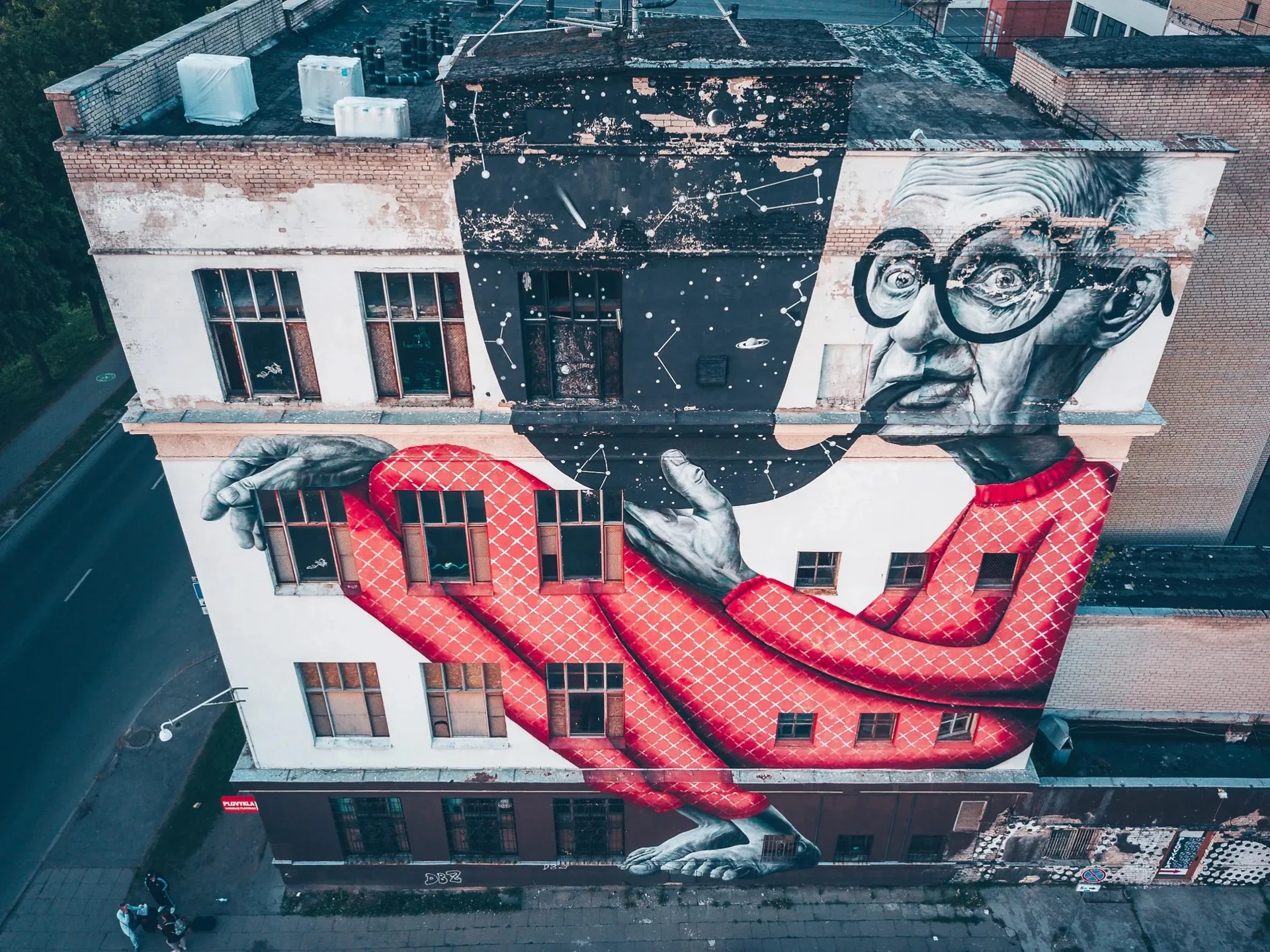
Art also appears around the river, streets and squares. Some works are permanent, while others change. That does not make every doorway or courtyard a public gallery. Look for signs, published events or a clear invitation before entering. Ask permission when residents or artists are the subject of a photograph.
Connect the riverside with Tibetan Square
A longer circuit can continue from the central square towards Malūnų and Krivių streets and Tibetan Square. The small riverside space contains a mandala mosaic created by Rimantas Sakalauskas. A Vilnius city record documents the Dalai Lama’s unveiling of the mandala in 2013. The prayer flags and mandala have cultural and spiritual meaning, so the square is better approached as a place for a quiet pause than as a prop for staged photographs.
This part of the walk reveals how close Užupis is to both the river landscape and the older fabric of Vilnius. It also brings more changes in level than the bridge-to-Angel route. If energy, weather or mobility makes the climb unsuitable, the lower circuit around the bridge, Constitution Wall and incubator still forms a coherent visit.
Add a place of memory with care
Bernardine Cemetery offers a different reason to continue uphill. Founded in 1810, it is the second-oldest cemetery in Vilnius and a protected place of memory. The Lithuanian Department of Cultural Heritage includes it in its overview of historic cemeteries. Visitors should keep to established paths, speak quietly and give way to ceremonies and people tending graves. Historic monuments can be fragile, so they should not be touched or used as seating.
The cemetery is optional, but adds historical depth for visitors comfortable with the uphill route. Presenting it as a place of memory, rather than an atmospheric backdrop, respects its heritage and continuing function.
Build a practical route without a rigid schedule
For a focused visit, walk from Užupis Bridge to the Mermaid, continue along Paupio Street to the Constitution Wall, then reach the Angel and check whether UMI has a public exhibition. For a broader circuit, add Tibetan Square and return towards the Old Town through Bernardine Garden, or continue to Bernardine Cemetery if conditions suit your group.
Opening hours for galleries, cafés and small shops can change, so confirm them on the operator’s own website on the day of your visit. The same applies to temporary exhibitions, street works and festival arrangements. Comfortable footwear is useful on cobbles and slopes, while a quieter voice is appropriate in residential lanes and at the cemetery. Taking these practical limits seriously does not reduce the experience; it makes the walk more accurate, considerate and connected to the neighbourhood as it exists now.
Leave with context, not a checklist
Užupis public symbols make more sense when read together. The Constitution places individual freedom beside responsibility. The Angel and Mermaid carry community stories, the incubator represents ongoing cultural work, and the river links the district to the Old Town. Go Vilnius provides additional route context.
A respectful visit means staying in public areas unless invited, avoiding disruption at homes and workplaces, and checking live information instead of expecting a neighbourhood to follow an old article’s timetable. That approach leaves room for discovery without turning residents’ daily surroundings into a performance. It also makes the guide useful throughout the year, including outside the 1 April celebration.