Your Complete Vilnius Travel Guide for 2026
Vilnius is the kind of city that takes most visitors by surprise. The Lithuanian capital doesn't dominate European travel media the way Prague or Amsterdam do, which means you arrive with relatively modest expectations and leave having been thoroughly won over. A UNESCO-listed Baroque Old Town, remarkable food and drink, an unusually vibrant arts and culture scene, and some of the most affordable prices in the EU make Vilnius one of the best-value city break destinations in Europe in 2026.
This guide covers everything you need to know before you arrive: how to get there, how to get around, which neighbourhood to stay in, how much to budget, when to go, and the cultural context that will make your visit richer. Read it end to end or jump to the section you need.
Getting to Vilnius
By Air
Vilnius International Airport (VNO) is 7km south of the city centre. It has grown significantly as a destination hub and in 2026 has direct connections to over 80 European cities, including London, Berlin, Paris, Amsterdam, Madrid, Warsaw, Copenhagen, Stockholm, Helsinki, Riga, Tallinn, and most major Central and Eastern European hubs.
The main carriers operating to Vilnius include Ryanair (the dominant low-cost carrier with routes from London Stansted, Edinburgh, Manchester, Dublin, Brussels Charleroi, and more), Wizz Air (routes from London Luton, Birmingham, and Eastern Europe), airBaltic (connecting through Riga to an extensive network), and LOT Polish Airlines (via Warsaw). Finnair connects Vilnius to Helsinki with onward connections to Asia and North America.
Getting from the airport to the city:
- Train — the best option; trains run every 30 minutes and reach the central train station in 7 minutes (€0.90). From the central station, the Old Town is a 15-minute walk.
- Bus No. 3G — runs from the airport to the Old Town area in about 30 minutes; €1 with contactless card payment on board.
- Taxi/Bolt — around €10–15 for the journey; use the Bolt app to avoid inflated prices from unregistered taxis. Journey time 20–30 minutes depending on traffic.
By Bus from Riga, Warsaw, and Tallinn
Vilnius is excellently connected by long-distance bus to the other Baltic capitals and to Warsaw. Bus travel has been transformed in recent years by FlixBus and the Baltic operator Lux Express, which runs high-quality coaches with WiFi and power outlets.
- From Riga — Lux Express and FlixBus run multiple daily departures; journey time approximately 4 hours; tickets from €10–25 booked in advance.
- From Tallinn — Lux Express is the main operator; 8–9 hours direct (with one stop in Riga); tickets from €15–35. An overnight option saves accommodation costs.
- From Warsaw — FlixBus and Polish operators run multiple daily services; journey approximately 8–9 hours; tickets from €15–30. The overnight bus is popular for budget travellers.
- From Kaunas — frequent services run throughout the day; journey 1.5 hours; €5–8.
All buses arrive at Vilnius Bus Station (Autobusų stotis) at Sodų Street 22, a 20-minute walk or short bus ride from the Old Town.
By Train
The Vilnius Train Station (adjacent to the bus station) connects to Kaunas (1h15, frequent services), Warsaw (8–10 hours, one overnight service daily), and Minsk. International rail connections are limited compared to Western Europe, but the Vilnius–Warsaw overnight train is a practical option for travellers coming from Central Europe.
By Car
Vilnius is well connected by road. The Via Baltica (E67) highway connects Warsaw to Vilnius in approximately 6 hours. From Riga it's a 4-hour drive via the A7/E77. Driving into the Old Town requires a permit (available to hotel guests); park outside the Old Town in the designated car parks on the perimeter and walk in.
Getting Around Vilnius
On Foot
For the Old Town and its immediate surroundings, walking is the best and most enjoyable option. The historic centre is compact — you can walk from Cathedral Square to the far end of Užupis in under 20 minutes — and Vilnius's maze of lanes and hidden courtyards are genuinely best explored on foot. The Old Town's cobblestones can be hard on unsuitable footwear; comfortable walking shoes are strongly recommended.
Public Transport
Vilnius has an extensive and reliable public transport network of buses and trolleybuses covering the entire city. The system uses a contactless payment system: tap your bank card or phone directly on the card reader when boarding (€1 per journey). Single-use paper tickets are available from the driver at a slightly higher price (€1.10). No smartphone app or separate transit card is required for most visitors — contactless bank card payment works throughout.
Key routes for visitors:
- No. 1 trolleybus — from the train/bus station through the city centre
- No. 2 bus — from the Old Town to Vingis Park and beyond
- No. 3G bus — airport to Old Town (see above)
Services run frequently (every 5–15 minutes on main routes) from 05:30 to midnight; night buses run on weekends. Full timetables are available on the troleibusai.lt website and the Google Maps app covers Vilnius public transport comprehensively.
Cycling
Vilnius has invested heavily in cycling infrastructure and the city is increasingly bike-friendly. CycCity is the city's bike-share system, with docking stations across the city centre; a day pass costs around €3. The terrain is gentle in the Old Town and Naujamiestis; hillier around the park areas. A riverside cycle path connects the city centre to Vingis Park and is excellent for leisure cycling.
Taxis and Ride-Share
Bolt (the Estonian ride-share app, dominant in the Baltics) is the standard way to book taxis in Vilnius. It's consistently cheaper than street hailing, prices are transparent before booking, and drivers are reliably prompt. A journey within the city centre costs €4–8; airport to Old Town €10–15. Uber operates in Vilnius but with a smaller fleet. Avoid unmarked taxis around the bus station.
Vilnius Neighbourhoods: Where to Stay and Explore
Old Town (Senamiestis)
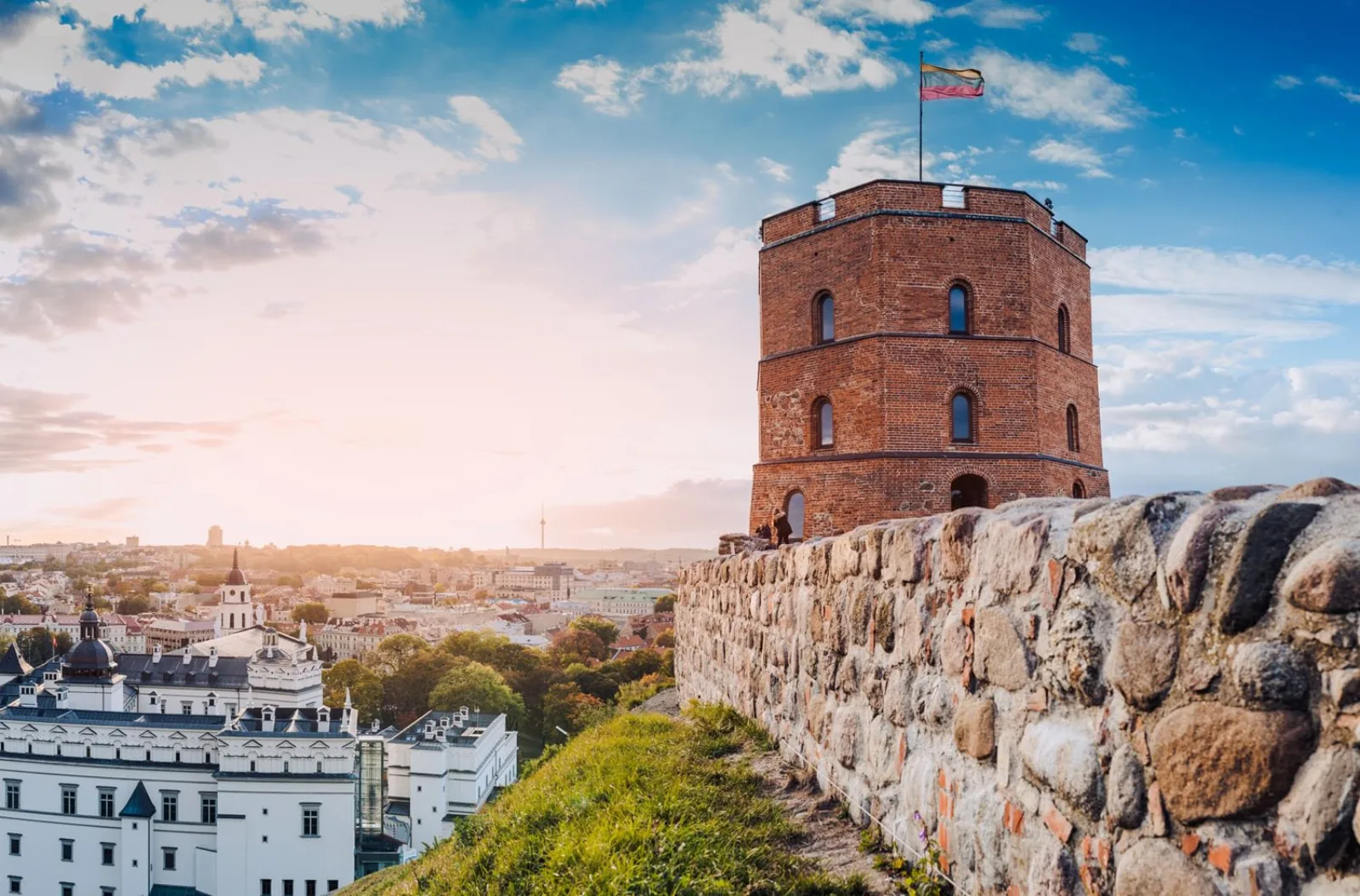
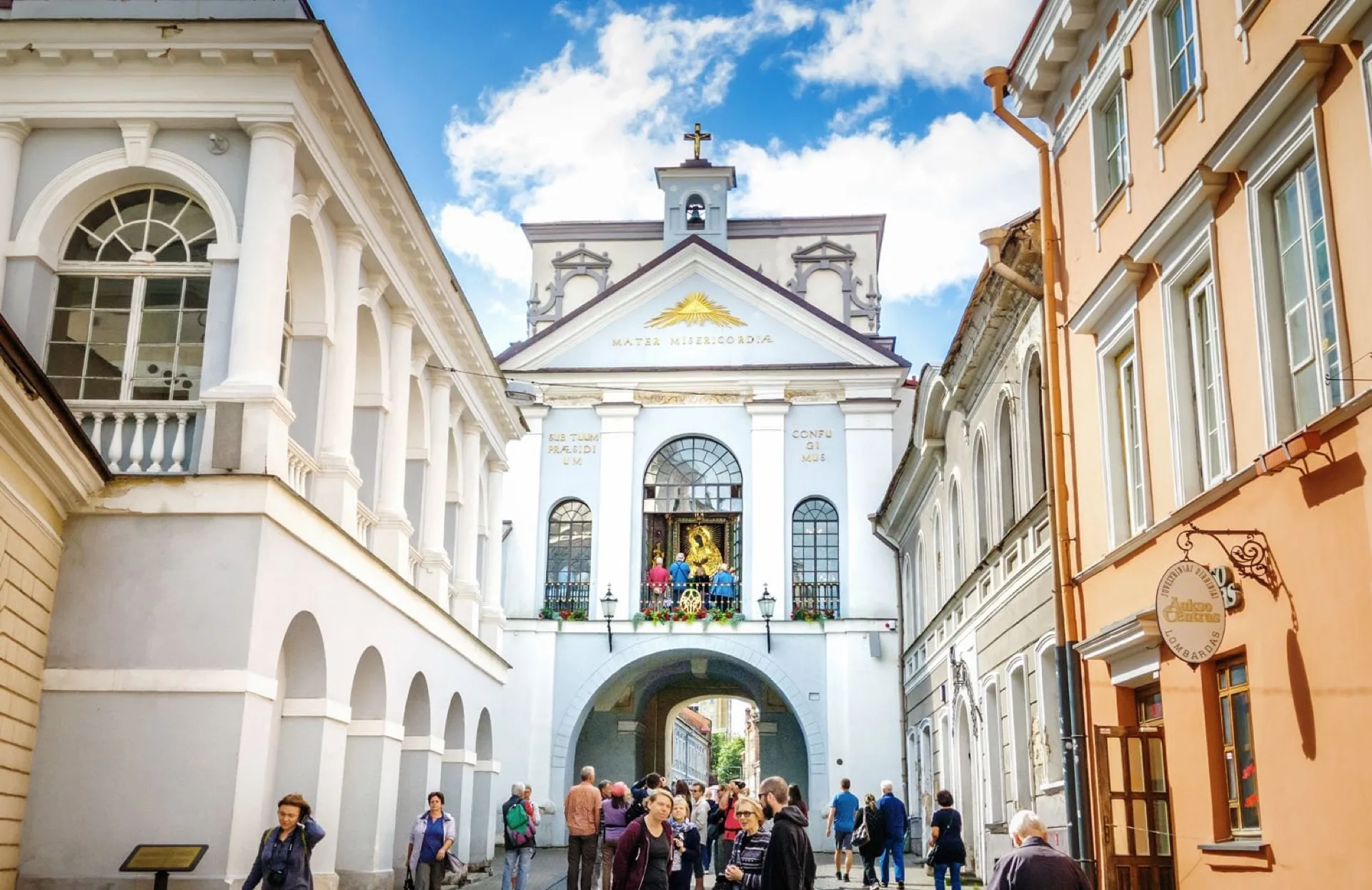
The Old Town is the historic core and the best base for most visitors. The 3.6 square kilometre UNESCO-listed district contains the highest concentration of sights, restaurants, and bars, and walking everywhere is genuinely practical. Accommodation here tends to be pricier than elsewhere in the city, but the convenience premium is worth it for a short visit. Browse Old Town hotels and apartments.
Naujamiestis (New Town)
Naujamiestis — directly west of the Old Town — is the city's creative and commercial heart. It has the highest density of coffee shops, independent restaurants, street art, and design stores, and is where most of the city's more contemporary culture is happening. Slightly quieter than the Old Town at night; 15 minutes on foot from Cathedral Square. Good mid-range accommodation options.
Užupis
Staying in Užupis means waking up in Vilnius's most characterful neighbourhood. Accommodation options here are boutique-scale: apartments in converted buildings, small guesthouses, and artist-run studios. Limited options but unique atmosphere. Five minutes on foot from the Old Town.
Šnipiškės (Across the River)
Šnipiškės across the Neris to the north has more modern hotels (including most of the international chains) at lower prices than the Old Town. The Europa Tower, the Parliament, and several good restaurants are here. The Old Town is a 10–15 minute walk across the Green Bridge or Mindaugas Bridge.
When to Visit Vilnius
Spring (March–May) — Best Overall
Spring is arguably the best time to visit Vilnius. The city comes alive from March onward: the Kaziukas Fair (early March) fills the Old Town with craft vendors; cherry blossom appears in Bernardine Garden in April; and May is warm, green, and full of festivals. Crowds are manageable and prices are lower than peak summer. The Užupis Day celebrations on April 1st are unmissable if you can time your visit accordingly.
Summer (June–August) — Peak Season
Summer in Vilnius is warm and often genuinely hot (July averages 22°C, with peaks to 30°C). Long days — up to 17 hours of daylight in June — make for excellent sightseeing conditions. Outdoor terraces are full, river activities are at their best, and the Vilnius Festival brings classical music to Old Town courtyards. The trade-off: crowds at major sights, higher accommodation prices, and the need to book restaurants and hotels well in advance for weekends. Joninės midsummer on June 23–24 is one of the year's best cultural events.
Autumn (September–October) — Underrated
September and October offer some of the most pleasant conditions for city exploration. Temperatures are comfortable (14–18°C), the trees turn colour brilliantly in October, crowds thin noticeably after mid-September, and accommodation prices drop. The food scene is at its best with autumn produce — mushroom dishes and game feature heavily on menus. Recommended for travellers who value atmosphere over sunshine.
Winter (November–February) — for the Atmosphere
Vilnius in winter can be genuinely cold (averaging -5°C in January, with periods below -15°C) and dark (only 8 hours of daylight in December). But the city handles winter beautifully: the Christmas Market on Cathedral Square (late November through early January) is one of the finest in the Baltics, with excellent craft stalls and mulled wine. Snow transforms the Old Town into something extraordinary. Crowds are minimal at almost all sights. Dress in proper winter layers; this is not the Mediterranean.
Budget Planning
Vilnius remains one of the most affordable EU capitals. Here's what to expect in 2026:
- Accommodation — Hostel dorm from €18/night; budget private room from €45; mid-range 3-star hotel from €70; boutique hotel from €110; top-end hotel from €180
- Meals — Market breakfast €4–7; casual restaurant lunch €10–15; good dinner with wine €25–40; top restaurant tasting menu €60–90
- Beer/wine — Craft beer in a bar €4–6; glass of wine €5–8; cocktail €8–12
- Entry fees — Most major museums €3–7; Gediminas Tower €5; combined museum passes available for €15–20
- Transport — Bus journey €1; Bolt across the city €5–8; airport transfer €10–15
- Daily budget estimate — Budget traveller €50–70; mid-range €120–160; comfort €200+
Practical Information
Language
Lithuanian is the official language — one of the oldest living Indo-European languages and notoriously complex for outsiders. Don't worry: English is widely spoken in Vilnius, particularly in the hospitality sector, among younger people, and throughout the tourist areas. A few words of Lithuanian are warmly appreciated: ačiū (thank you), labas (hello), prašom (please). Russian is understood by older generations but you should not assume it will be welcomed.
Currency and Payments
Lithuania has used the euro (€) since 2015. Card payments are accepted virtually everywhere in Vilnius — restaurants, taxis, market stalls, even some buskers have card readers. ATMs are widely available throughout the Old Town and city centre. There is no practical reason to carry significant cash; a small amount for markets and tips is sufficient.
Connectivity
Lithuania has excellent mobile network coverage; all major EU operators provide standard EU roaming. Local SIM cards from Tele2, Bite, or Telia are cheap and easy to buy at the airport or phone shops (from €5 for 10GB data). Free WiFi is available throughout the Old Town, in all cafés and restaurants, and in city parks. Vilnius is a reliably connected city.
Safety
Vilnius is a very safe city by European standards. Violent crime affecting tourists is rare. Standard urban precautions apply: keep an eye on bags in busy markets and crowds; be aware of pickpockets on Cathedral Square during peak tourist season; exercise normal caution around the bus/train station area late at night. Emergency services number: 112 (EU standard).
Cultural Notes
- Lithuanians value directness — service in shops and restaurants may seem reserved compared to Southern European norms. This is not rudeness; it's the local style. Smiles are genuine when they come.
- Remove shoes when entering private homes. Your host will offer slippers.
- Dining pace is leisurely — staff will not rush you or bring the bill without being asked. Signal clearly when you want to pay.
- Tipping — not obligatory but appreciated. 10% is standard for good service; rounding up is fine for casual meals.
- Pharmacies (vaistinė) are widely available and well-stocked; staff usually speak English.
Public Holidays
Key Lithuanian public holidays that may affect opening hours: Independence Day (February 16), Restoration of Independence Day (March 11), Easter Sunday and Monday, International Labour Day (May 1), Statehood Day (July 6), Assumption of Mary (August 15), All Saints' Day (November 1), and Christmas (December 24–26). Banks and some shops close; most tourist attractions and restaurants remain open.
What to Eat and Drink
Lithuanian food is hearty, seasonal, and increasingly interesting. The traditional staples — cepelinai (potato dumplings), šaltibarščiai (cold pink borscht), bulviniai blynai (potato pancakes), dark rye bread — remain excellent and widely available. But Vilnius also has a thriving contemporary restaurant scene with genuinely ambitious cooking at fair prices. Browse the full Vilnius restaurant guide for current recommendations across all styles and budgets.
For drinks, the Lithuanian craft beer scene is excellent — several independent breweries produce outstanding ales and lagers available in dedicated craft beer bars across the city. Lithuanian mead (midus) is worth trying at least once. For something stronger, Stumbras vodka and various grain spirits are the local options; the craft cocktail scene in Vilnius is also very good. See the full bar guide.
Where to Stay
For most visitors, staying in or near the Old Town is the right choice. The combination of walkability to all major sights, density of good restaurants, and atmosphere makes the premium over other neighbourhoods worthwhile. Book at least 3–4 weeks ahead for summer weekends; the better boutique properties sell out faster than you'd expect for a city of this size.
For the full breakdown of Vilnius neighbourhoods, specific hotel recommendations at every price point, and tips for finding the best deals, visit the Vilnius accommodation guide. And for everything else — things to do, restaurants, bars, shops, and events — explore the full Vilnius guide.
Frequently Asked Questions — Vilnius 2026
Do I need a visa to visit Vilnius?
Lithuania is in the EU Schengen area. EU/EEA citizens need only an ID card. UK, US, Canadian, Australian citizens can visit visa-free for up to 90 days. Check your country's requirements.
What currency is used in Vilnius?
Euro (€). Lithuania adopted the Euro in 2015. Cards are accepted almost everywhere. ATMs are widely available in the city centre.
What language is spoken in Vilnius?
Lithuanian is the official language. English is widely spoken in hotels, restaurants and tourist areas. Younger generations speak excellent English. Russian and Polish are also common.
How do I get from Vilnius airport to the city?
Bus No.1 or No.88 runs to the city centre for €1. A train takes 7 minutes to the main station for €0.72. Bolt/Uber costs €10–16. The airport is only 7km from the Old Town.