48 Hours in Vilnius: How to Make Every Hour Count
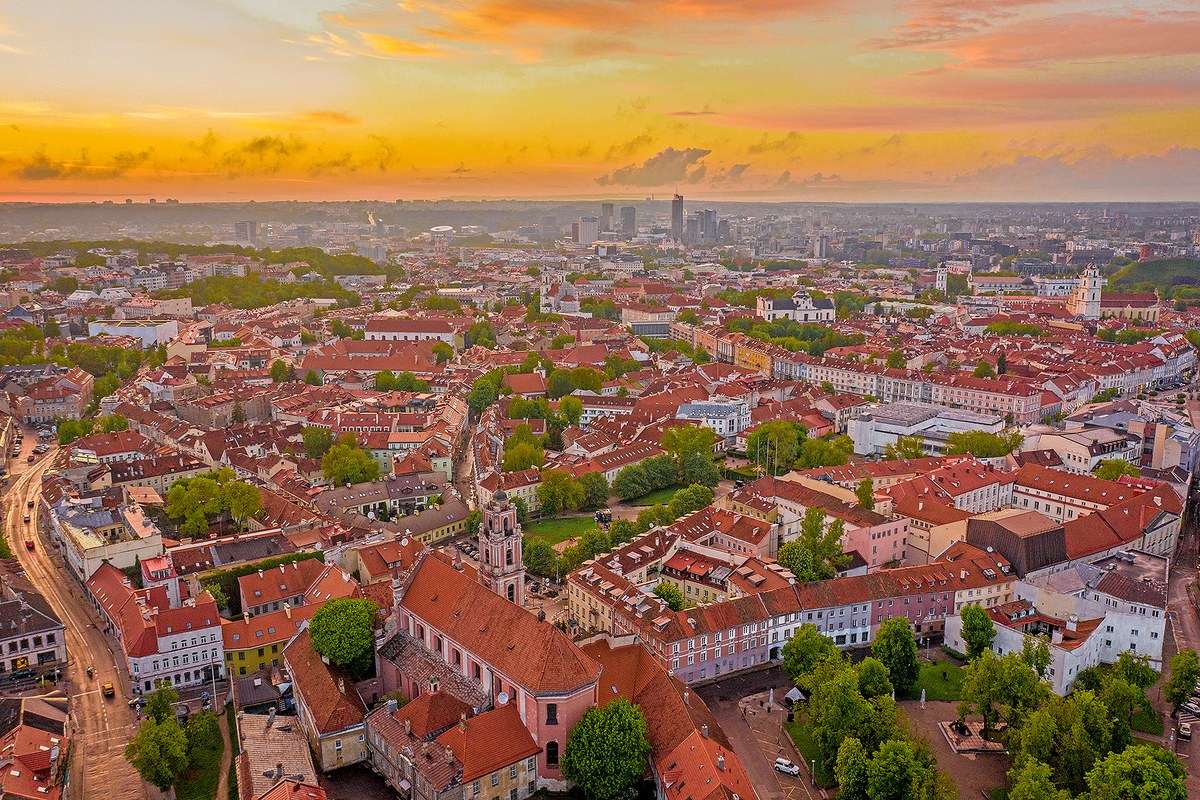
Two days is enough to fall in love with Vilnius. The Lithuanian capital is compact, walkable, and endlessly rewarding: a city where a UNESCO-listed Baroque Old Town sits alongside a self-declared bohemian republic, where medieval cellars have been turned into cocktail bars, and where the food scene punches far above what the city's modest size might suggest.
Use the times below as planning examples, not a guaranteed timetable. Pick fewer stops if you want longer visits; check opening hours and book any guided visit before setting out. If something catches your attention (a courtyard, a gallery, a café) give yourself permission to linger. Vilnius rewards the curious more than the efficient.
Day 1: Old Town, Cathedral, Castle, and Užupis
08:00 Morning Coffee and Breakfast in the Old Town
Start your first morning with coffee and breakfast in the Old Town before the tour groups arrive. The lanes around Pilies Street and the university quarter are at their best in early morning, when the light is soft and the streets are near-empty. Choose a café that is actually open at your starting time; early opening and breakfast service vary by venue.
One of the city's most distinctive breakfast options is the local šakotis: a ribbed, tree-shaped spit cake that looks extraordinary and tastes of vanilla and butter. You'll find it in most traditional bakeries. Alternatively, grab a seat at one of the courtyard cafés along Literatų Street, where literary plaques from local and international writers cover every surface.
09:00 Cathedral Square and the Crypt
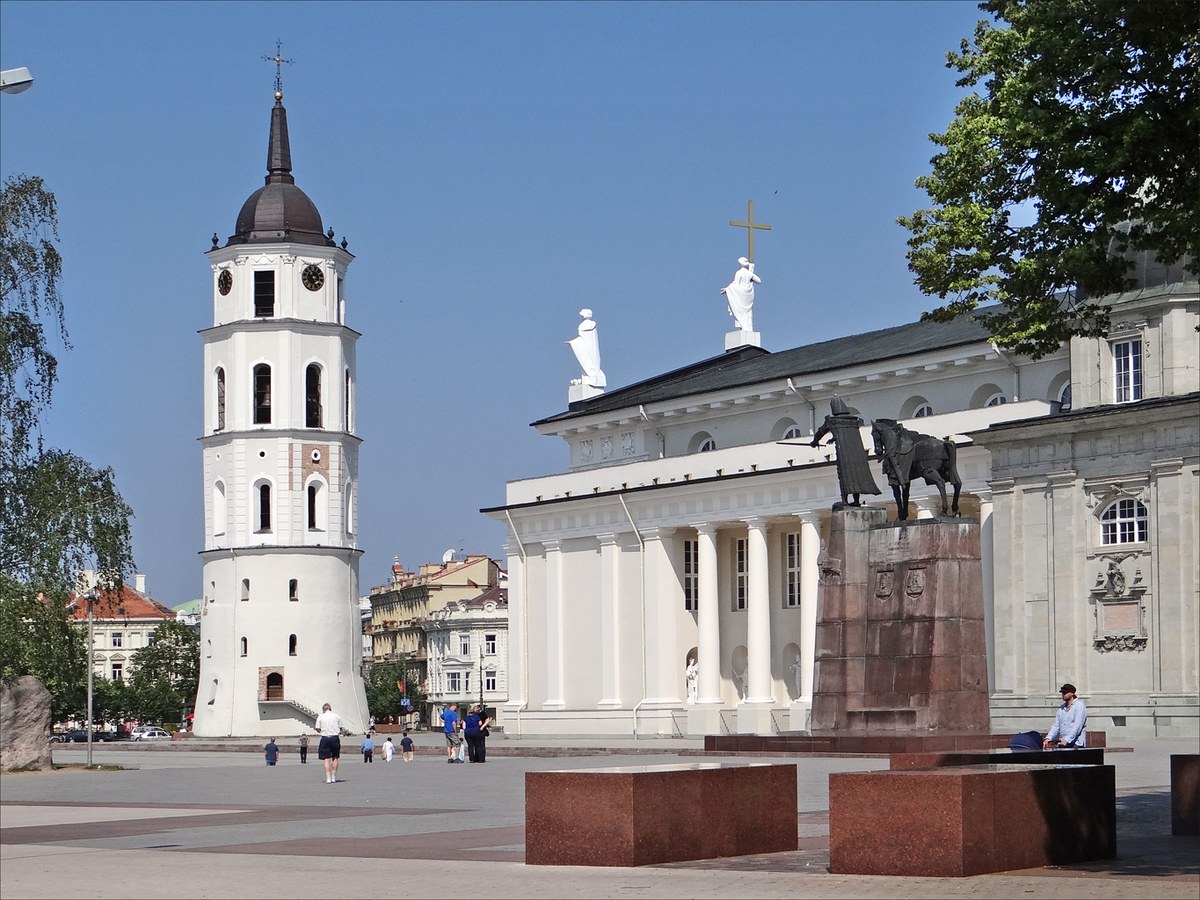
Walk to Cathedral Square, the city's grand centrepiece. The neoclassical Vilnius Cathedral is listed by Go Vilnius as open 07:30-19:00. Respect services and any temporary restrictions. The crypt is a separate guided visit with advance booking, not a drop-in stop at 09:00. Check the Church Heritage Museum for availability; keep the square and Cathedral in this morning route and return for a booked crypt tour at its actual time.
In the square itself, find the Stebuklas tile: a tile marked with the word "miracle" and associated with a local wish-making tradition. Make a wish if you like; this is folklore, not a promise. Do not treat the tile as an established exact starting point of the Baltic Way. The freestanding bell tower beside the Cathedral dates to the 14th century and is one of the oldest surviving structures in the city.
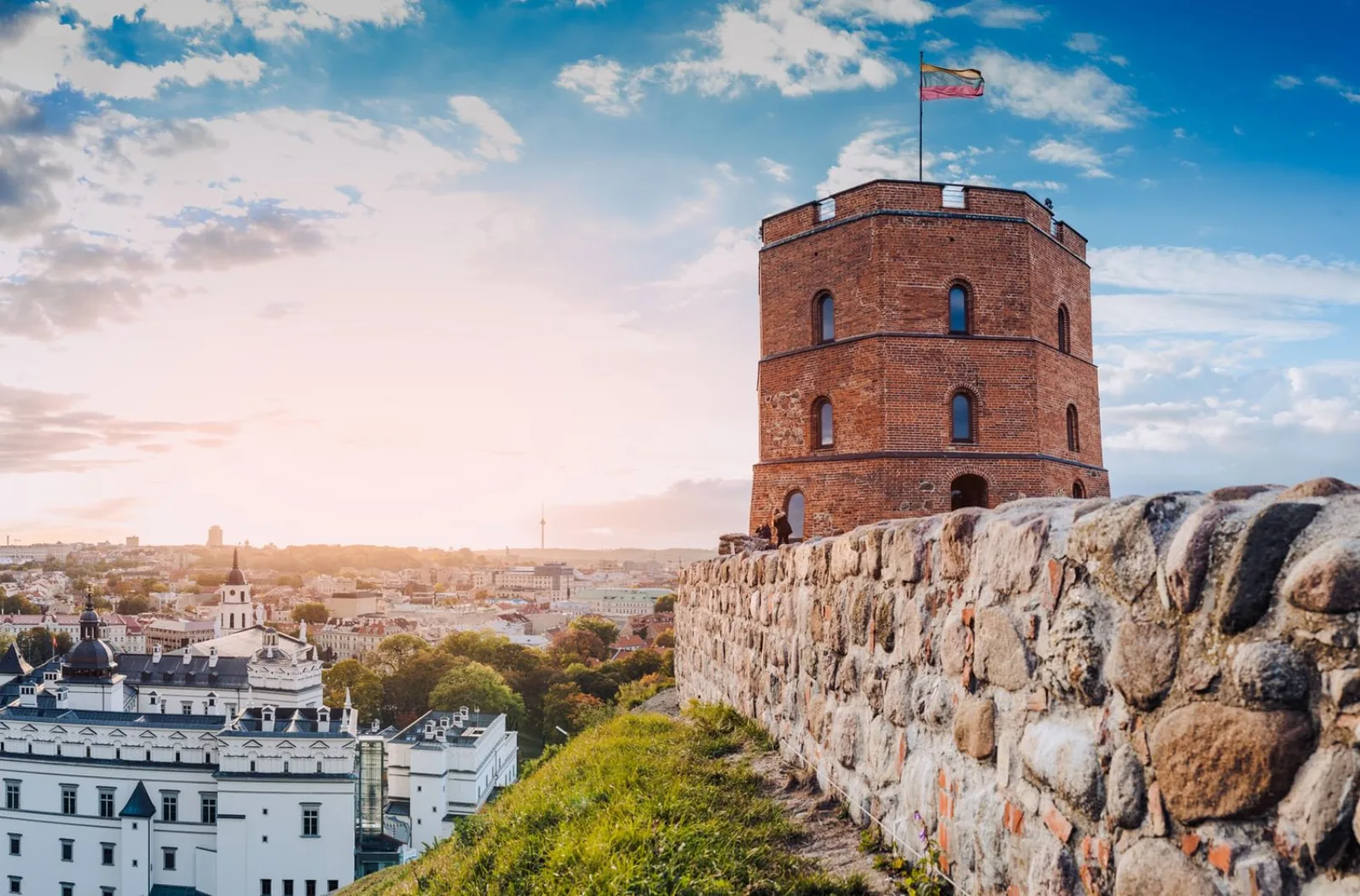
10:00 Gediminas Castle Tower
Head up the hill to Gediminas Castle Tower: the red-brick tower that appears on every image of Vilnius and earns its iconic status. You can walk up or use the funicular: the current adult fare is €2 one way or €3 return. Tower admission is separate, currently €8 for an adult. Check the National Museum visitor information for hours, concessions and access; hill paths and the tower may not suit every visitor. The tower holds a compact museum on medieval Lithuanian history that is genuinely excellent, and the panoramic platform at the top offers the best view in Vilnius: the full sweep of the Old Town's orange and red rooftops, the Neris river curving through the city, and forested hills in every direction.
Budget 45-60 minutes here. Adjust this stop to the opening time and any queue on the day rather than relying on a quiet period. On clear days you can see the TV tower in Karoliniškes, to the west, and the Three Crosses on the adjacent hill.
11:30 Exploring the Old Town Core
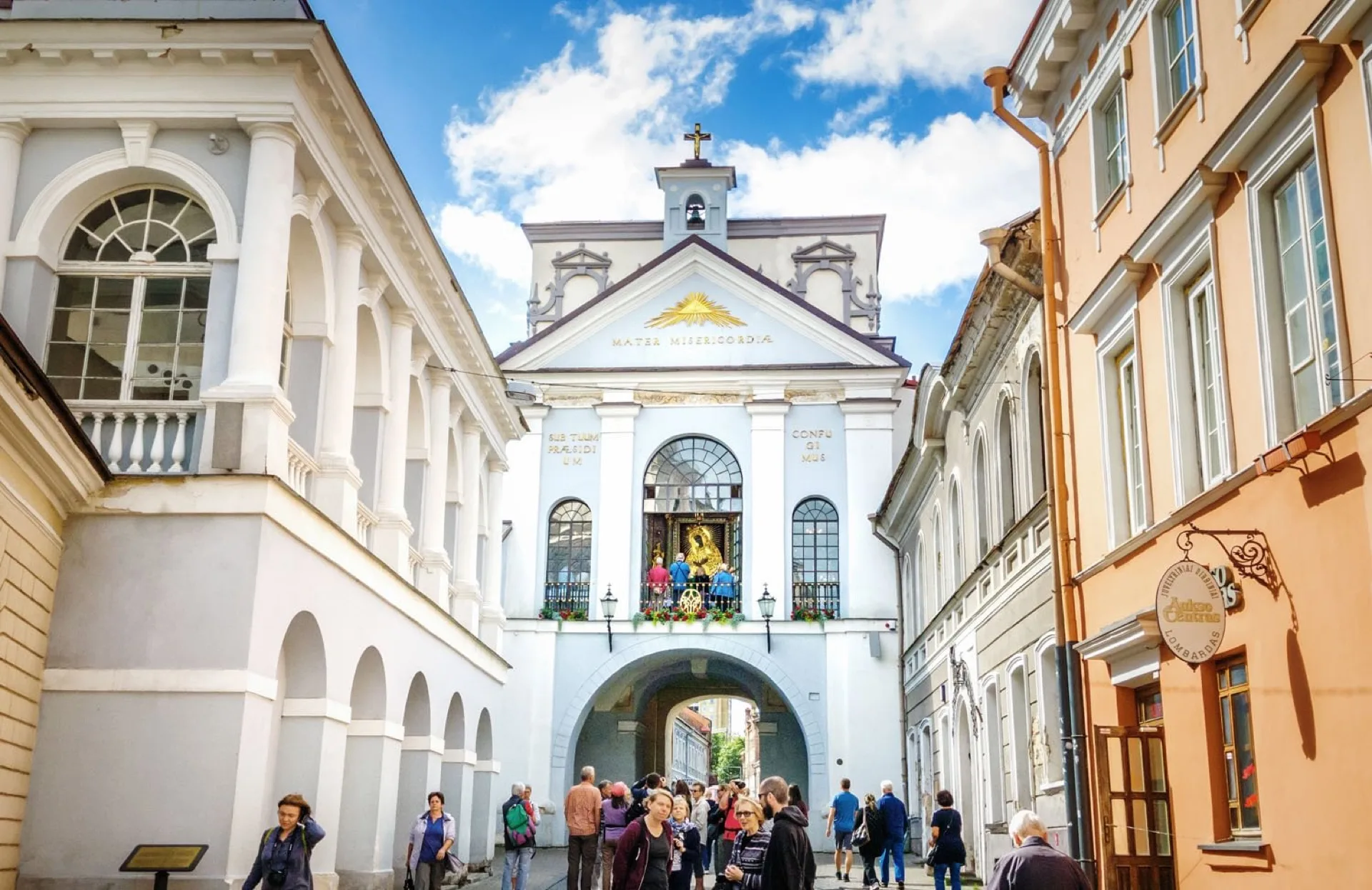
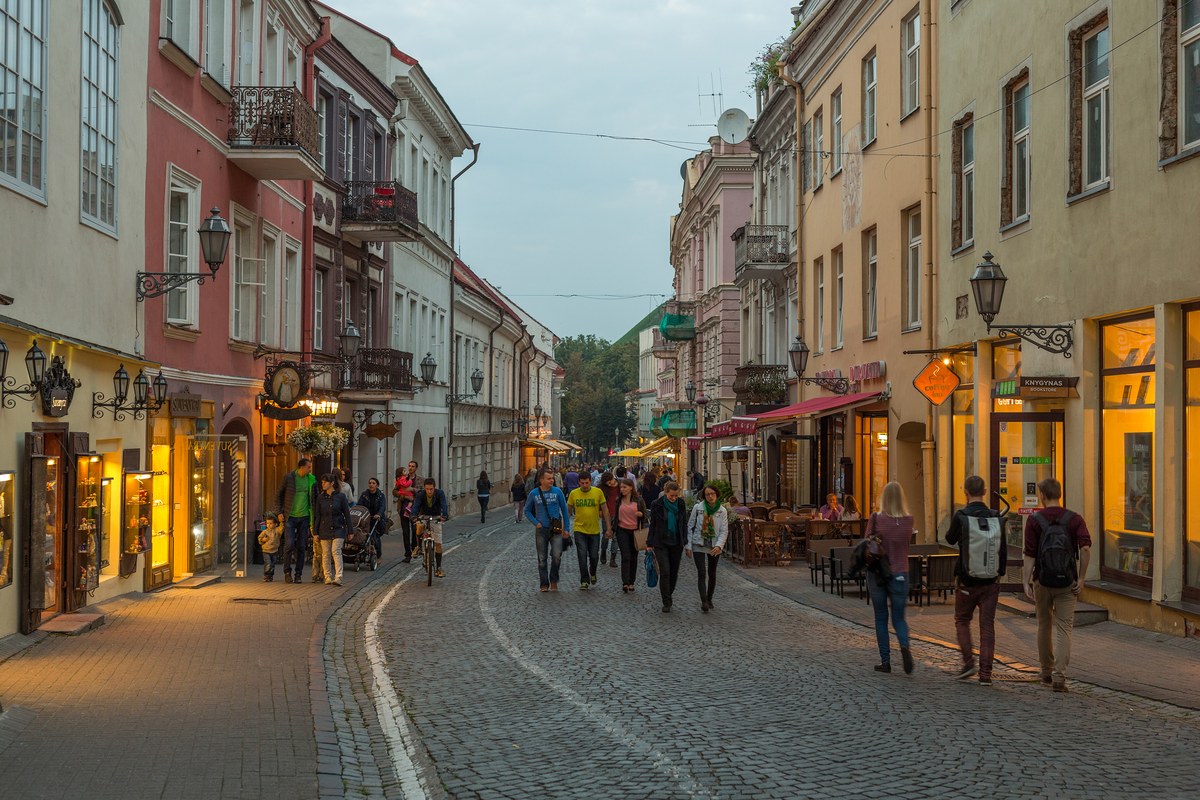
Descend back to the Old Town and spend 90 minutes exploring the streets south of Cathedral Square. The route along Pilies Street and its side lanes passes Gothic, Renaissance, and Baroque buildings in such density that architectural overload becomes a genuine risk. Highlights to look for:
Vilnius University courtyard complex: a historic ensemble with changing access during restoration. Enter from Universiteto Street through the Library Courtyard and follow the marked visitor route; the Pilies Street gate and part of the Grand Courtyard are closed during the works. Individual visitors and organized groups have different conditions; groups must register, and the bell tower has a separate ticket. Check VU visitor information before going.
St. Anne's Church: the jewel of Vilnius's Gothic architecture. The facade, built from 33 different types of Gothic brick, is one of the most intricate architectural compositions in Northern Europe.
Bernardine Garden: a formal garden running along the Vilnelė river behind St. Anne's, ideal for a 10-minute rest before the next stretch.
13:00 Lunch
For lunch, head to one of the Old Town's better traditional restaurants for a proper sit-down Lithuanian meal. Cepelinai, huge potato dumplings stuffed with meat and topped with a sour cream and bacon sauce, are the definitive Lithuanian dish and genuinely excellent when made well. The local šaltibarščiai (cold pink borscht) is a summer staple that looks alarming and tastes delicious. Price your meal from the current menu, including drinks and any extras. Explore the full restaurant guide for specific picks to suit your taste and budget.
14:30 Užupis Republic
Cross the small bridge over the Vilnelė river into Užupis: the bohemian neighbourhood that declared itself an independent republic in 1997. Allow a full 90 minutes to explore properly. The essential stops:
The Constitution plaques on Paupio Street: 41 articles displayed on plaques in multiple languages; the installation changes as translations are added. Reading them is one of the most charming 20 minutes Vilnius offers.
The Užupis angel: a bronze figure on a tall column at the main intersection, the neighbourhood's unofficial mascot, erected to symbolise rebirth and independence.
The riverbank walk along the Vilnelė: lined with willows, small bridges, and a succession of street art installations.
The galleries and studios: Užupis has a genuine density of working artists. Many studios open their doors to visitors; look for signs on doors and take any open invitation.
16:30 Three Crosses Hill Viewpoint
From Užupis, the path up to Three Crosses Hill (Trijų Kryžių kalnas) takes about 20 minutes on foot through Kalnų Park. The three white crosses at the summit are visible from across the city and are one of Vilnius's most recognisable landmarks. The view from the top, looking west across the entire Old Town with the castle tower rising above the roofline, is arguably the single best panoramic photograph point in Vilnius. Arrive in the late afternoon for the best light.
18:30 Aperitivo Hour
Head back into the Old Town for the early evening. This is the time for an aperitivo: a glass of something cold at one of the courtyard bars that fill up from around 18:00. The stretch of bars around Trakų Street and Stiklių Street is particularly lively on warm evenings. Many serve excellent Lithuanian craft beer alongside classic cocktails.
20:00 Dinner
For the first evening's dinner, stay in the Old Town and treat yourself to one of the neighbourhood's better restaurants. Vilnius offers excellent value compared to Western European capitals: the total depends on the restaurant, menu, wine and any tasting-menu supplements. The Old Town has strong options across Lithuanian, Georgian, Italian, and contemporary European cuisine. Browse the Vilnius restaurant guide for current top picks.
22:00 Evening Bar Scene
The Old Town's bar scene is at its best from around 21:00 onwards. Gothic cellars with vaulted brick ceilings have been converted into atmospheric cocktail bars; rooftop terraces offer castle views; and a cluster of craft beer pubs around the university quarter stays lively until late. Explore the Vilnius bar guide for current recommendations.
Day 2: Markets, Museums, Neighbourhoods, and Nightlife
08:30 Halės Market
Day 2 starts at Halės Market: a covered market at Pylimo Street 58, near the station area. Check the market operator and your chosen trader before planning an 08:30 breakfast; travel time depends on where you start.
Look for open produce, bakery and food counters rather than expecting a fixed two-level food-hall layout. The selection depends on the trader and day. Grab a kibinas (a warm Karaite pastry filled with mutton or chicken), a coffee, and a slice of local cheese, and eat standing at a market counter like a local. Check the selected counter's menu and prices before ordering.
10:00 Naujamiestis: The New Town
Spend the mid-morning exploring Naujamiestis (New Town), the 19th-century neighbourhood directly west of the Old Town. It's increasingly the creative heart of modern Vilnius, with a high concentration of independent coffee shops, design stores, vintage boutiques, and the city's best street art.
Walk along Pylimo, Šv. Stepono, and the streets surrounding the bus station to see the largest murals. For the Occupations Museum, head towards Aukų Street and Gedimino Avenue as a separate city-centre leg. The Seimas stands at the western end of the avenue. Do not plan the Palace of Concerts and Sports as an avenue stop: it is on Rinktinės Street across the river.
11:30 Museum of Occupations
Set aside 90 minutes for the Museum of Occupations and Fights for Freedom on Aukų Street: one of the most important and affecting museums in the Baltics. Located in the actual former KGB headquarters, the museum documents Soviet and Nazi occupation of Lithuania with unflinching honesty. The basement cells where political prisoners were held, interrogated, and executed are original and intact.
This is not light sightseeing, and it shouldn't be. But it is essential context for understanding modern Lithuania, and it is done with intelligence and care. Allow the full 90 minutes; the permanent collection requires time to absorb properly. The operator currently lists adult admission at €6. A twice-daily English tour is not established here: contact the museum for a confirmed language, time and booking before relying on a guided visit. See the official visitor information.
13:30 Lunch in Naujamiestis
The streets around Halės Market and the Naujamiestis food cluster offer some of the best-value lunch options in Vilnius. A range of contemporary cafés, traditional canteens, and international spots cluster in this neighbourhood. Compare current menus and choose a venue close to your next stop rather than assuming a fixed lunch cost or quality. See the restaurant guide for specific picks in this area.
15:00 Afternoon: Paupys or Šnipiškės
The mid-afternoon is the ideal time to explore one of Vilnius's newer neighbourhoods. Two options depending on your taste:
Paupys: a brand-new waterfront development along the Vilnelė just east of the Old Town, built on former industrial land. It has an excellent food and retail market in a converted warehouse, outdoor terraces along the river, and a lively young crowd. Great for a coffee, craft beer, or an afternoon snack.
Šnipiškės: across the Neris to the north, streets and modern business buildings offer a contrast to the Old Town. Choose a street-level walk; this itinerary does not promise public access to a Europa Tower viewing platform. A water-park visit is a separate trip with its own travel time, opening hours and admission, not a one-hour stop in this walk.
17:00 Vingio Park Walk or Shopping
Use the late afternoon either for a walk in Vingis Park (a park for walking and cycling; plan the journey to your chosen entrance rather than assuming a fixed bus time) or for a final pass through the shopping options around the Old Town. Vilnius is a good city for amber jewellery (shop carefully: genuine Baltic amber is sold alongside synthetic versions; buy from reputable shops), linen products, local ceramics, and Lithuanian craft spirits.
19:00 Final Dinner
For the last dinner, choose somewhere that represents the more contemporary side of Vilnius's food scene: the city has developed a genuine cluster of ambitious, creative restaurants in the past five years that have put it on the European culinary map. Browse the full restaurant guide for the current standouts; book ahead for the most popular spots, especially on weekends.
21:30 Final Night Out
Vilnius's bar and club scene runs late on weekends. The options range from sophisticated rooftop cocktail bars with Old Town views to basement clubs playing electronic music until sunrise. The cluster of venues around Islandijos Street in the city centre and the bars around Trakų Street in the Old Town are the most reliable areas for a good night out. See the full bar guide for current top picks.
Practical Logistics
Getting Around
Day 1 can be planned mainly on foot, but cobbles, hills and your starting address matter. Day 2 combines separate areas: choose Paupys or Šnipiškės, and treat Vingis Park as optional. Use the JUDU journey planner for the actual connections. A contactless bank-card tap currently buys one full-price 60-minute ticket for €1.25, activated automatically; a €1 ticket is a different, 30-minute product. See contactless payment instructions and current ticket types. Taxi and ride-hailing prices depend on the trip and demand.
Where to Stay
Old Town is the ideal base for this itinerary: you'll save significant time and transportation costs by being within walking distance of Day 1's sights. Browse Vilnius accommodation for options at every price point, from boutique hotels in converted townhouses to well-priced apartments. Compare availability for your actual dates, especially during major events, and check cancellation terms.
Budget Planning
Budget approach: price a hostel bed for your dates, selected meals and only the paid stops you intend to visit
Mid-range approach: add your room, chosen restaurants, tickets and transport; state whether you are pricing one person or a shared booking
Comfort approach: obtain actual quotes for the room, dining and any private tours or transfers
There is no fixed admission total for this route: free street stops, the tower, booked crypt tours and other museums are different purchases. Add the tickets you actually select, accommodation for your dates, meals and transport. Include drinks, supplements and booking fees where relevant.
What to Skip on 2 Days
With only 48 hours, the Paneriai Memorial (the WWII massacre site 10km southwest) and the Trakai Island Castle (28km west) are best left for a longer trip or a third day. Both are outstanding and absolutely worth visiting: just not when time is short. See the full Vilnius guide for details on both.
Frequently Asked Questions about a 2-Day Vilnius Visit
Is 2 days enough to see Vilnius?
Yes: 2 days covers the essential highlights: Old Town, Gediminas Castle, Užupis, Cathedral Square, and good restaurants. You won't see everything but you'll get the best of Vilnius.
What should I not miss in 2 days in Vilnius?
Gediminas Castle tower for panoramic views, Užupis bohemian district, Pilies Street, Cathedral Square, and at least one traditional Lithuanian meal (try cepelinai).
Can you walk everywhere in Vilnius in 2 days?
Not every stop. The Old Town core can be explored on foot, but the hill climbs, museum visits and optional neighbourhoods require extra time. Choose fewer stops if mobility, weather or fatigue makes the full route impractical; public transport can also help within the city.