Lithuanian food in Vilnius is one of the simplest ways to understand the country through taste. On your first visit you can wander the Old Town, climb Gediminas Hill and explore Užupis, but it is only when you sit down to šaltibarščiai, cepelinai, dark rye bread or curd cheese that you get that very down-to-earth feeling: this, right here, is Lithuania – not as a postcard, but as everyday, filling and sometimes unexpected life.
This guide is meant not only to answer where to eat Lithuanian food, but first and foremost – what to taste in Vilnius. The places matter here, yet the main hero is the dish. If you want a broader gastronomic route, it is worth pairing this page with other guides: best restaurants in Vilnius, Vilnius food markets, things to do in Vilnius.
Dishes you must try
Cepelinai
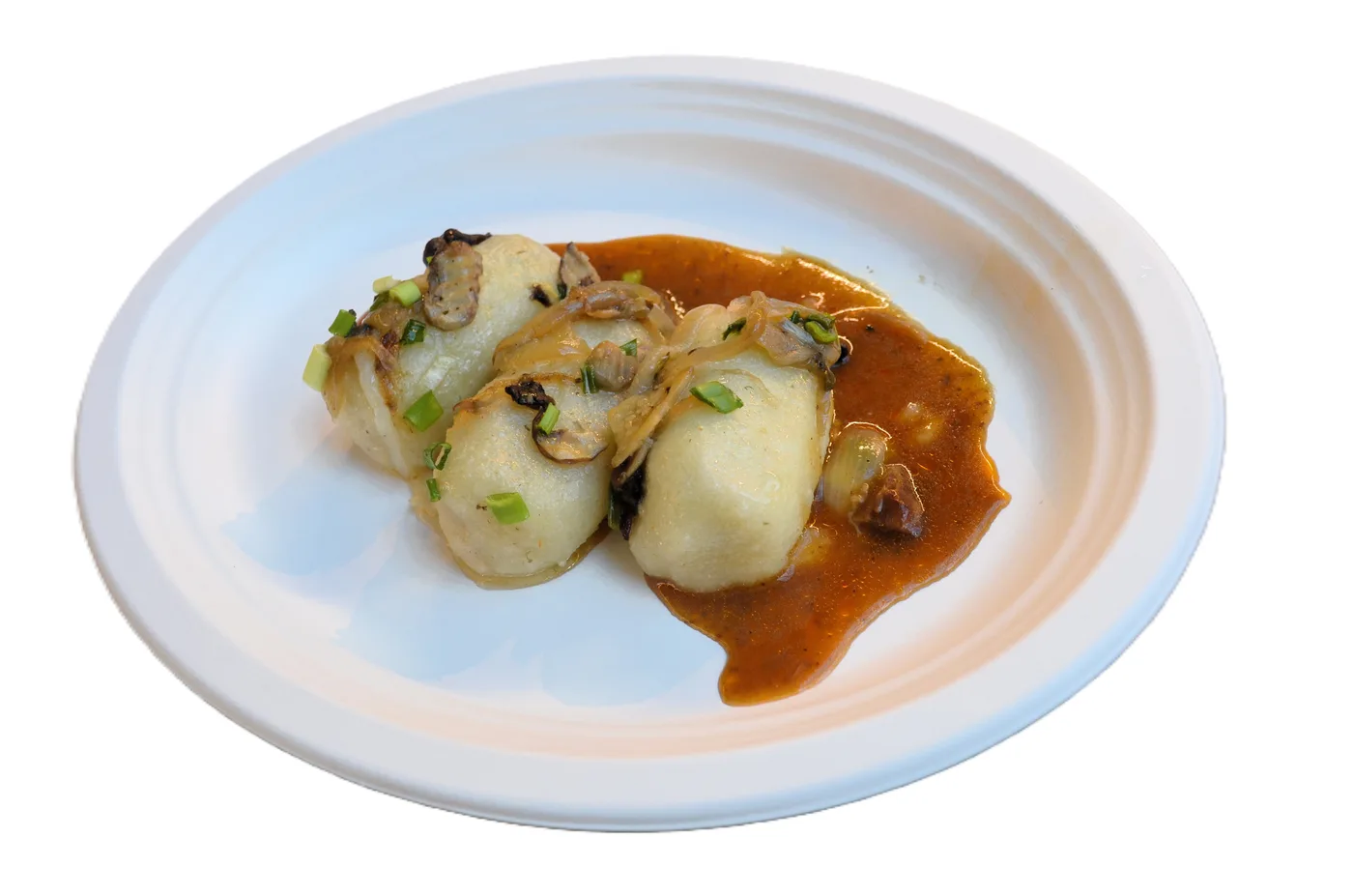
Cepelinai in Vilnius are a classic that tourists often look for first. They are large dumplings of grated and boiled potatoes, usually stuffed with meat, curd or mushrooms, served with sour cream and a sauce of crackling. They are filling, heavy and very Lithuanian – not a dish to eat before a light stroll, but rather a serious lunch or an early dinner.
Cepelinai are worth tasting not because they are the "prettiest" or the most subtle, but because they show the logic of Lithuanian cuisine so well: simple ingredients, plenty of handwork, heartiness and a clear flavour. If you are eating them for the first time, start with a smaller portion or share with another person. This is one of those dishes that makes you understand why Lithuanians never needed small snacks in winter.
Šaltibarščiai

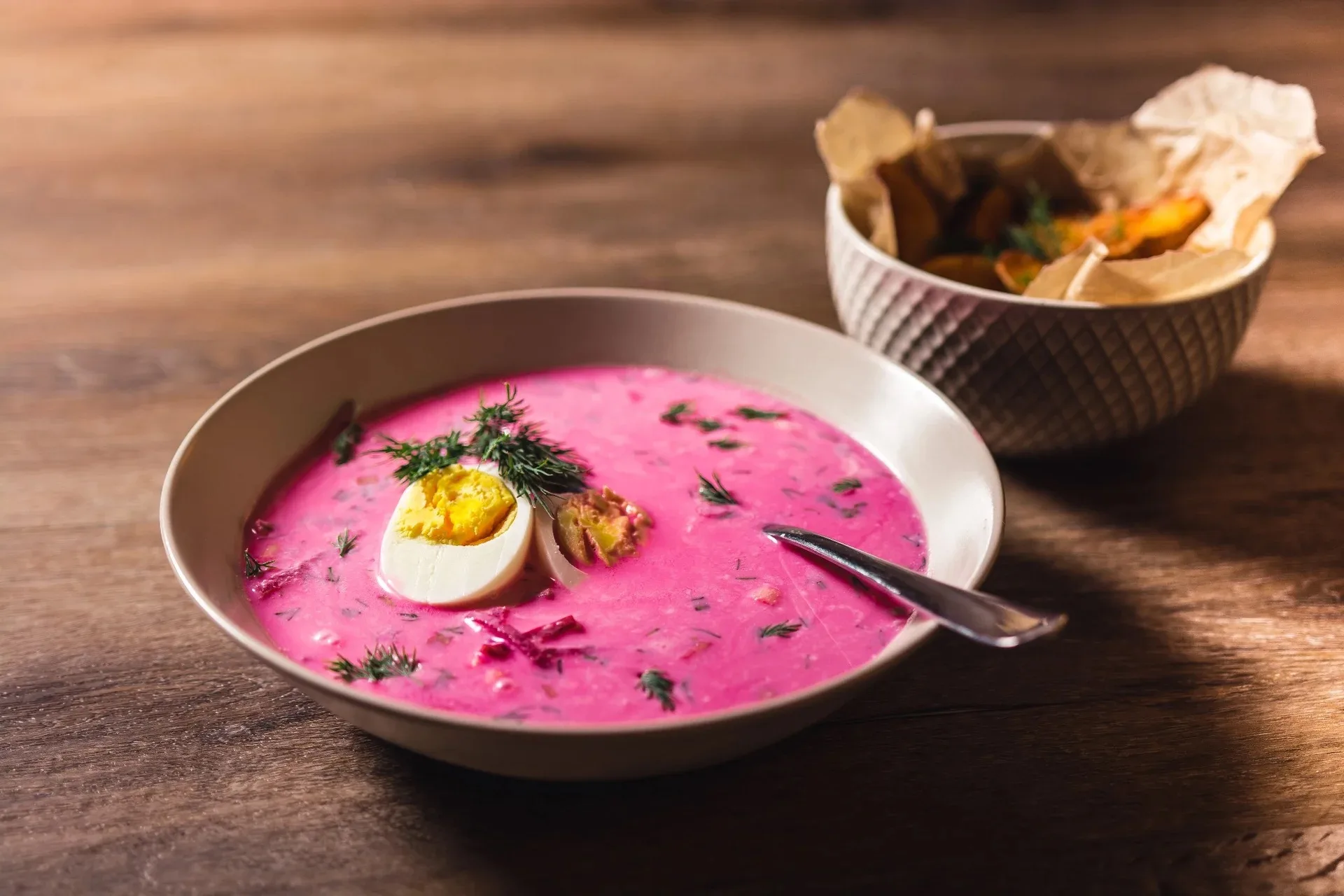
Šaltibarščiai are the complete opposite of cepelinai. It is a cold, vividly pink beetroot soup with kefir, cucumbers, dill, spring onions, a boiled egg and hot potatoes on the side. To foreigners this dish often looks like a joke, but once tasted it becomes one of Lithuania's most memorable flavours.
Šaltibarščiai are especially good in summer, when Vilnius is hot and you crave something refreshing. They have a tang, a coolness, greens and a very distinctive colour that is hard to confuse with anything else. If you are wondering what to taste in Vilnius during the warm season, šaltibarščiai are almost a must.
Kugelis, or potato pudding

Kugelis, also called potato pudding, is another symbol of Lithuanian potato cuisine. It is baked from a mixture of grated potatoes, often with milk, onions, spices and meat additions, and served with sour cream or another sauce. A good kugelis should be soft inside, slightly browned on top and quite filling.
It is a dish that feels more like home than a restaurant. That is why in Vilnius it is worth tasting where the kitchen focuses on traditional dishes, not just on a quick tourist menu. Kugelis is a good fit for those who want a Lithuanian flavour but find cepelinai too big a challenge.
Vėdarai

Vėdarai are one of those dishes worth introducing honestly: not every tourist will fall in love with them straight away, but for curious eaters it is a very authentic experience. Traditionally it is a potato mixture baked in an intestine casing, served with sour cream or crackling. It sounds bold, but dishes like this are exactly what shows the old cuisine without embellishment.
If you want to taste Lithuanian cuisine more deeply, vėdarai can be a more interesting choice than yet another plate of cepelinai. They are more rustic, robust in flavour and suited to those who are not afraid of traditional, hearty dishes.
Balandėliai

Balandėliai are a filling wrapped in cabbage leaves, usually with meat and rice, braised in a sauce. It is not only a Lithuanian dish but one known across the wider region, so to tourists from Eastern or Central Europe it may feel familiar. Even so, in Lithuania balandėliai have a very home-cooked feel.
They suit those who want a warm, clear dish that is not as heavy as cepelinai. Balandėliai often appeal to people who do not want to risk overly unfamiliar flavours but still want to taste traditional Lithuanian cuisine.
Koldūnai and virtiniai

Koldūnai and virtiniai in Lithuania come in many forms: with meat, curd, mushrooms, potatoes or other fillings. They are a convenient choice for those who want a traditional dish, but not one as massive as cepelinai or kugelis. Virtiniai with curd can be milder, while koldūnai with meat are heartier and more pronounced in flavour.
Žemaičių blynai

Žemaičių blynai are another gem of potato cuisine. They are pancakes made from a mixture of boiled potatoes with a meat or other filling, fried in a pan and served with sour cream. They are less monumental than cepelinai, but very filling and cosy.
If you are looking for what to taste in Vilnius beyond the classic cepelinai choice, žemaičių blynai are a great alternative. They have a crispier surface, a soft inside and a simple home-cooked flavour. For tourists this is often one of the most pleasant discoveries.
Kibinai and the Trakai heritage

Kibinai do not originate in Vilnius, but they are worth tasting in the city, because Vilnius is naturally linked to Trakai and the Karaim heritage. They are baked pastries with a filling, usually meat, although today you can also find other varieties. A kibinas is convenient as faster food: you can eat it for lunch, as a snack or on the go.
The Karaim tradition links kibinai most strongly to Trakai, so if you have the time it is worth planning a short trip to Trakai Castle. But if you stay in Vilnius, kibinai can still be a good way to taste a broader Lithuanian culinary context. They suit those who want something local, but not as heavy as the potato dishes.
It is important to understand that kibinai are not a "national dish" of the cepelinai type. They are a separate heritage, tied to a specific community and history. That is why it is worth presenting them respectfully: not as a simple bun with meat, but as a dish that tells the story of Lithuania's multicultural history.
Desserts and drinks
Šakotis

Šakotis is one of the most impressive Lithuanian desserts, especially because of its shape. It is baked in layers, and its appearance resembles a tree with branches. Šakotis is most often associated with celebrations, weddings and larger family gatherings, but for tourists it is also interesting as an edible souvenir.
Gira
Gira is a traditional fermented drink, often made from bread. It can be slightly sweet, a little sour, refreshing and very well suited to Lithuanian dishes. To tourists gira is sometimes a surprise, because it is neither lemonade, nor beer, nor juice.
If you are eating cepelinai, kugelis or žemaičių blynai, gira can be a very good choice with your meal. It gives dinner a local touch and lets you taste a flavour that for many Lithuanians evokes childhood, summer or a traditional lunch.
Midus
Midus is one of the oldest drinks associated with Lithuania, made on a honey base. Its flavour can be sweet, stronger and more suited to tasting in small amounts rather than drinking as an everyday beverage. Midus is better suited to curious adult travellers who want to taste a historic flavour.
In restaurants midus is worth choosing as an exploratory highlight, especially after dinner or alongside historic dishes. If you are not sure, start with a small tasting or ask the staff how best to enjoy it.
Dark rye bread

Dark rye bread in Lithuania is more than an accompaniment to a meal. It can be eaten with butter, cheese, soup, meat, skilandis or simply on its own. Its flavour is more sour, richer and deeper than the white bread most tourists are used to.
If you are served dark bread with your dish, do not be quick to leave it on the plate. It is a very important part of the Lithuanian table. It pairs especially well with šaltibarščiai, gira, curd cheese or skilandis.
Curd cheese and curd dishes
Curd cheese (varškės sūris) is a mild, simple and very Lithuanian product. It can be eaten with honey, jam, greens or as part of other dishes. Curd (varškė) is important in Lithuanian cuisine for both sweet and savoury dishes: virtiniai, bakes, pancakes, desserts.
For tourists curd cheese is often a pleasant discovery, because it is neither an ordinary rennet cheese nor a yoghurt. It is a distinct flavour of dairy culture worth tasting more slowly, especially at a market or in a traditional cuisine restaurant.
Skilandis

Skilandis is a cured meat product, often associated with traditional Lithuanian snacks. Its flavour is rich, salty and meaty, so it works best as a small part of a tasting rather than as a main dish. It is worth tasting with dark rye bread.
If you want to taste Lithuanian flavours beyond potatoes and soups, skilandis is a good reminder that traditional cuisine also includes traditions of meat curing, drying and smoking.
Where to taste Lithuanian dishes
Etno Dvaras is one of the simplest answers to the question of where to eat Lithuanian food in Vilnius. Here it is easy to taste cepelinai, šaltibarščiai, potato dishes and other classics. It is a good choice for tourists who want a clear traditional menu and a central location.
Lokys suits those who want historic Lithuanian cuisine and a stronger Old Town atmosphere. It is a place where Lithuanian food in Vilnius is linked with old flavours, game, forest produce and a historical narrative. Lokys is especially good for guests to whom you want to show a deeper, not just everyday, side of Lithuanian cuisine.
Senoji Trobelė is a cosy, family-style restaurant for those who want a hearty, traditional dinner. It is worth going there if you want cepelinai, potato dishes or a more rustic Lithuanian mood. It is a good choice when you want not only to eat, but also to feel the image of a traditional cottage.
Gabi suits a quieter experience of Lithuanian and European cuisine in the Old Town. It is a convenient spot after a walk towards Pilies Street, the Bernardine Garden or St. Anne's Church. If you are looking for a restaurant that is cosy, has an Old Town atmosphere and is suitable for guests, Gabi is worth keeping on the list.
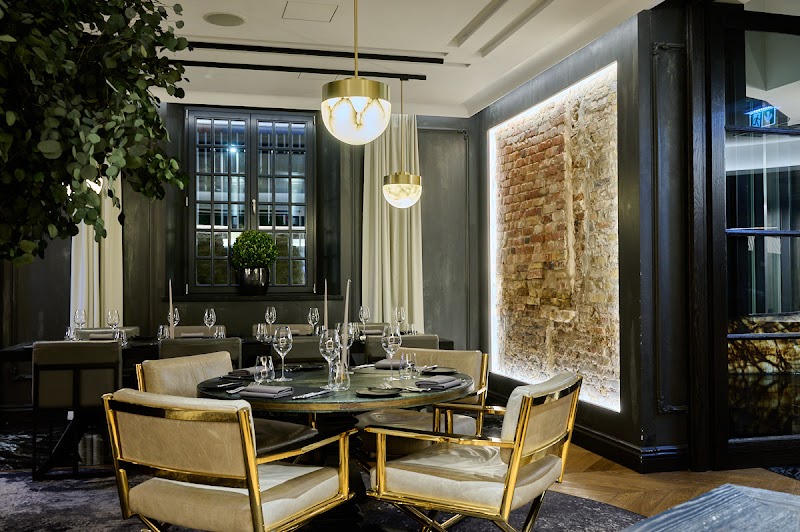
Ertlio Namas is a different category. It is not a place for quick cepelinai, but a restaurant where historic Lithuanian cuisine is served in a more modern, tasting-menu format. It is worth choosing when you want to show that Lithuanian cuisine can be not only hearty and simple, but also refined, telling a story through flavours.
Lithuanian food at the market and on the street
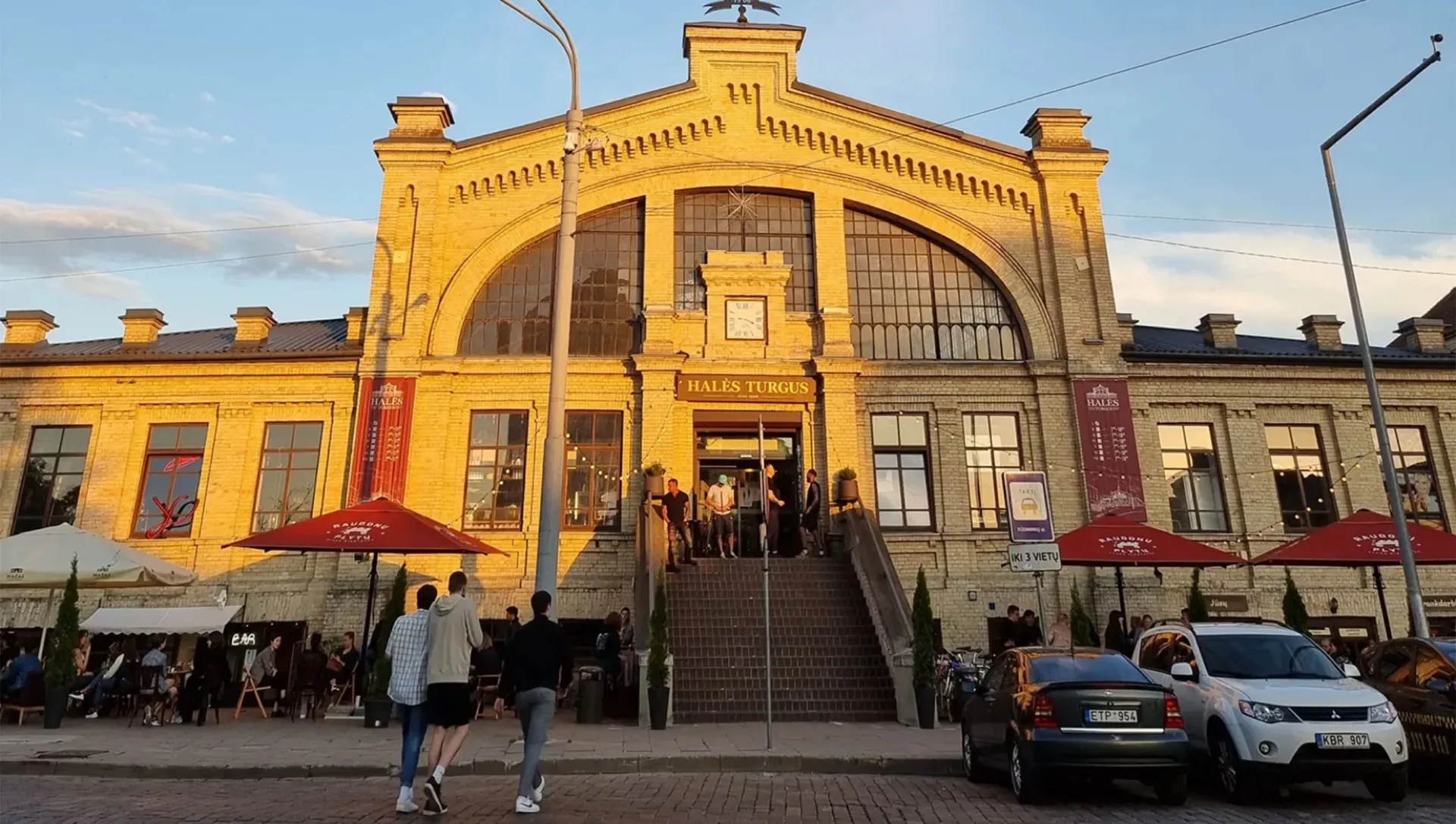
Markets are a good place to understand what traditional Lithuanian cuisine is made of. Halės Market and Paupys Market can be convenient destinations for those who want not just a restaurant but a livelier food experience. At a market
it is easier to see the bread, dairy products, meat goods, seasonal vegetables, berries, mushrooms and other ingredients from which Lithuanian dishes are later born.
Halės Market suits those who want an older, more local market feel. Here you can sense the everyday food rhythm of the city and grab a bite at the same time. Paupys Market is a more modern food-hall format, convenient for groups, because everyone can choose a different cuisine and still eat together.
In a street format, Lithuanian food usually appears at fairs, seasonal events, city festivals or markets. There it is worth looking for šakotis, gira, bread, curd cheese, skilandis or kibinai. If you come to Vilnius during a festive period, you will often find more Lithuanian flavours than on an ordinary day.
Tips
For vegetarians
Lithuanian cuisine is traditionally quite meaty, but there is definitely something for vegetarians to taste. Choose šaltibarščiai, virtiniai with curd or mushrooms, žemaičių blynai without meat, curd cheese, dark rye bread, some potato dishes and desserts. Always double-check about crackling, broth or sauce, because even vegetable dishes are sometimes served with meat additions.
For allergies
Lithuanian dishes often use dairy products, wheat, eggs, meat and mushrooms. If you have allergies, ask specifically rather than in general terms. For example, šaltibarščiai usually contain kefir and egg, cepelinai may contain gluten or meat, and desserts contain eggs and dairy products. At a restaurant it is always worth asking to clarify the ingredients.
For the season
In summer, choose šaltibarščiai, gira, berries, lighter curd dishes and the market. In autumn, mushrooms, potato dishes, bread, heartier soups and historic-cuisine dinners are a great fit. In winter Lithuanian cuisine reveals itself most strongly: cepelinai, kugelis, vėdarai and hot dishes become an almost natural part of the city's climate.
How to taste wisely
If you are tasting Lithuanian cuisine for the first time, do not try to eat everything in a single lunch. One day choose cepelinai or kugelis, another – šaltibarščiai and koldūnai, and yet another – the market, gira, bread and desserts. This way the food becomes part of your trip rather than a hard test for your stomach.
FAQ
What are cepelinai?
Cepelinai are large potato dumplings made from a mixture of grated and boiled potatoes, usually stuffed with meat, curd or mushrooms. They are served with sour cream and a sauce of crackling. It is a filling, traditional Lithuanian dish, best eaten as a main lunch or dinner.
What must you try in Vilnius?
On a first visit to Vilnius it is worth tasting cepelinai, šaltibarščiai, kugelis, žemaičių blynai, koldūnai or virtiniai, kibinai, dark rye bread, gira and šakotis. If you want a deeper experience, also include skilandis, curd cheese or a historic Lithuanian cuisine dinner.
Where to eat Lithuanian food in Vilnius?
It is worth looking for Lithuanian dishes in Vilnius at Etno Dvaras, Lokys, Senoji Trobelė, Gabi and Ertlio Namas. Etno Dvaras is convenient for classic dishes, Lokys and Ertlio Namas for historic cuisine, Senoji Trobelė for a hearty traditional dinner, and Gabi for a cosy Old Town stop.
Is Lithuanian cuisine suitable for vegetarians?
Yes, but you need to choose carefully. Vegetarians can enjoy šaltibarščiai, virtiniai with curd or mushrooms, some potato dishes, curd cheese, bread, šakotis and gira. It is important to check about crackling, broth and sauces, because in traditional cuisine meat additions are sometimes used even with non-meat dishes.
Is Lithuanian food very heavy?
Some Lithuanian dishes are indeed filling: cepelinai, kugelis, vėdarai or žemaičių blynai are potato-based and quite heavy. But there are also lighter choices: šaltibarščiai, virtiniai with curd, curd cheese, gira or bread with snacks. It is best to taste little by little and share dishes.