Why Vilnius Belongs on Every Traveller's List
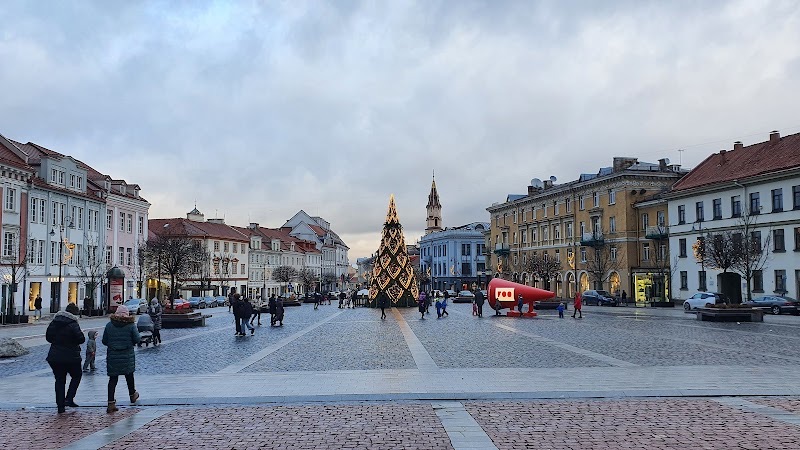
Vilnius is one of Europe's best-kept secrets, and in 2026, the word is finally getting out. The Lithuanian capital offers a UNESCO-listed Baroque Old Town, a thriving independent arts scene, some of the continent's most inventive restaurants, and a pace of life that still feels refreshingly unhurried. Whether you have two days or two weeks, this guide covers the very best things to do in Vilnius, organised so you can make the most of every hour.
Compact enough to explore largely on foot yet rich enough to reward weeks of wandering, Vilnius rewards the curious traveller far beyond what its modest size might suggest. From the hilltop castle that gave the city its name to a self-declared micro-republic across the river, every corner of this city holds a story worth discovering.
Top Sights: The Unmissable Icons
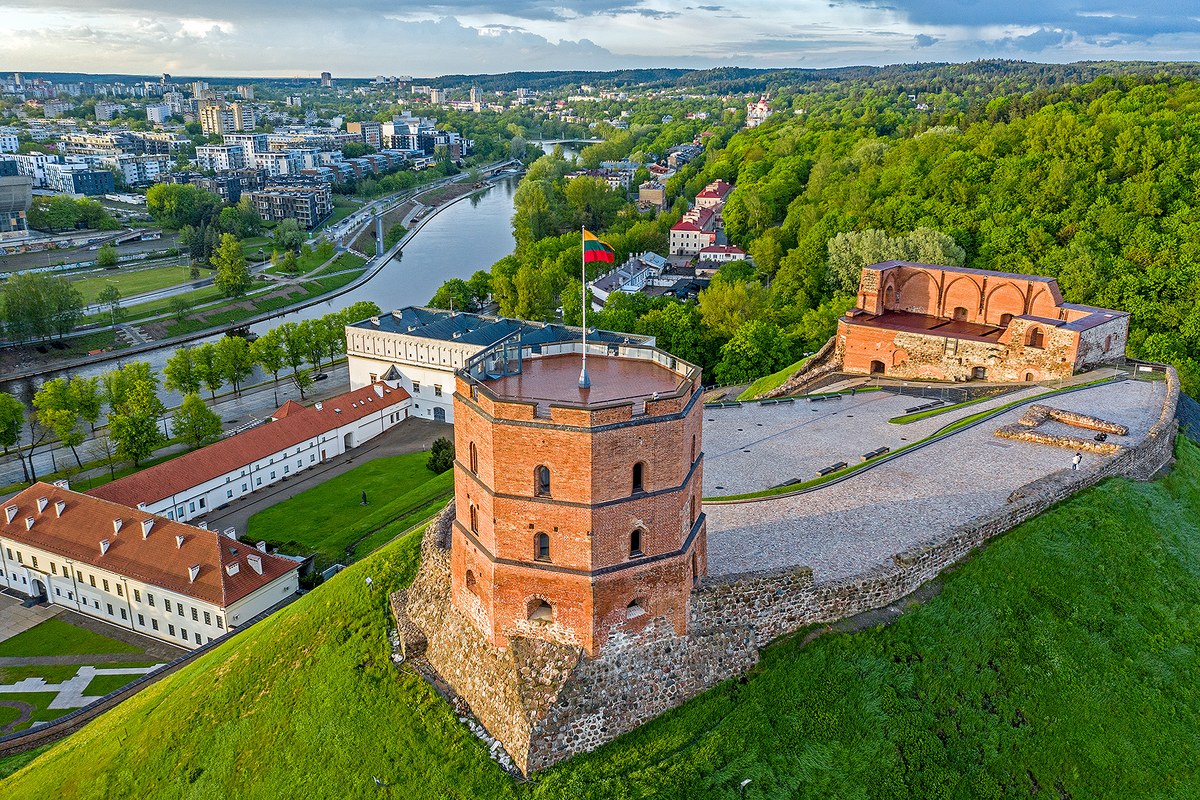
Gediminas Castle Tower
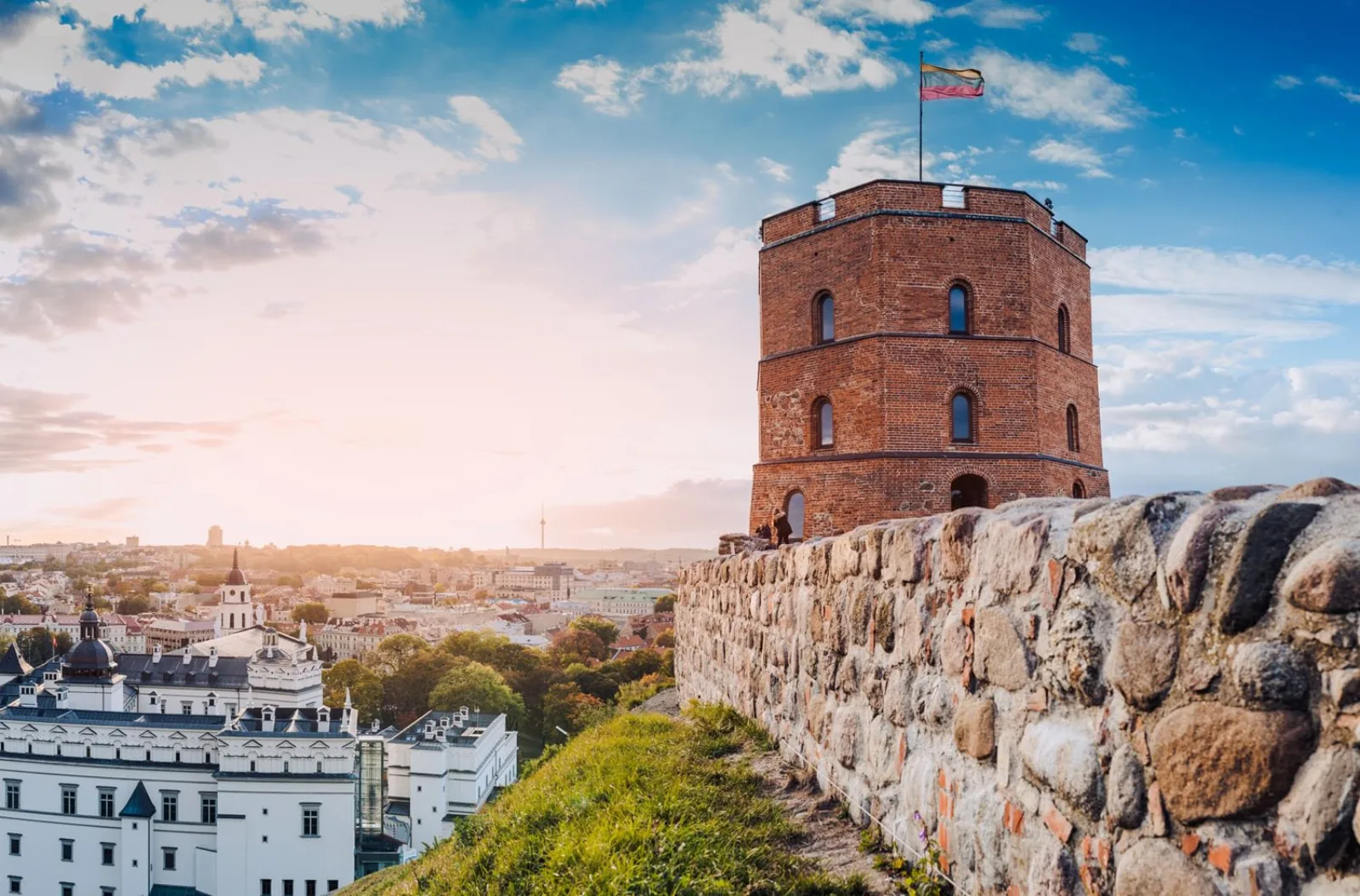
No visit to Vilnius is complete without climbing Gediminas Castle Tower, the city's enduring symbol perched atop a 48-metre hill. The tower is the only surviving part of the 14th-century Upper Castle, and it earns its place as the city's icon through sheer dramatic presence. The climb, either via a steep forest path or a funicular, takes around 15 minutes, and the reward is a 360-degree panorama that takes in the red-roofed Old Town, the silver ribbon of the Neris river, and forested hills stretching to the horizon.
Inside the tower you'll find the Museum of the Castle, a compact but excellent exhibition on medieval Lithuanian history, the Grand Duchy era, and the 1989 Baltic Way: when two million people formed a human chain from Vilnius to Tallinn demanding independence. Allow 45-60 minutes for the full experience.
- Opening hours: Daily 10:00-20:00
- Entry: €8 adults, €4 concession; funicular extra €2
- Tip: arrive at opening time to beat tour groups; sunset visits offer magical golden light
Vilnius Old Town
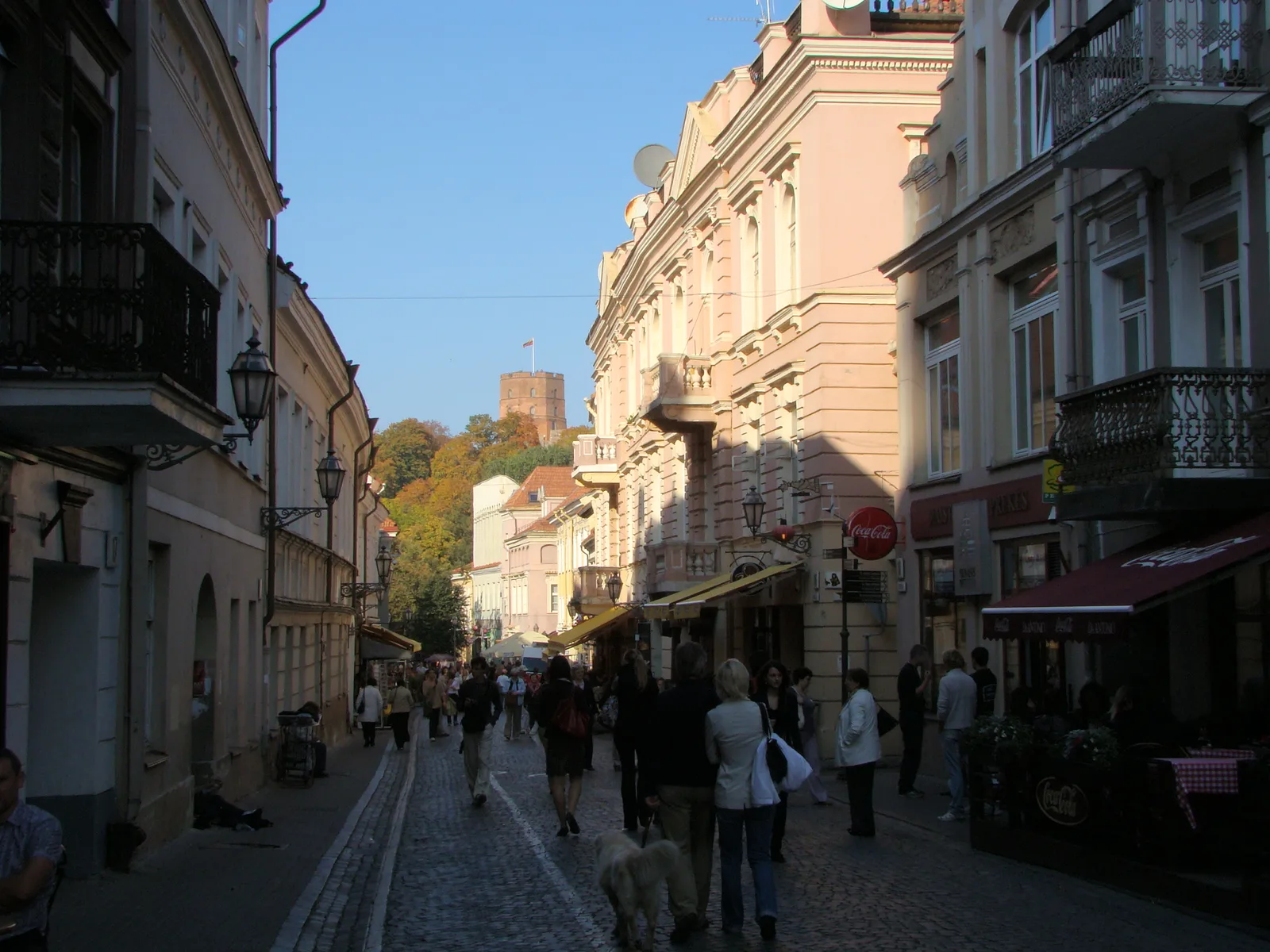
The Vilnius Old Town is the largest surviving medieval old town in Northern Europe, covering 3.6 square kilometres and earning UNESCO World Heritage status in 1994. Its defining characteristic is an almost accidental beauty: Baroque churches jostle with Gothic courtyards, Renaissance doorways hide behind crumbling plaster, and narrow lanes open unexpectedly onto grand squares.
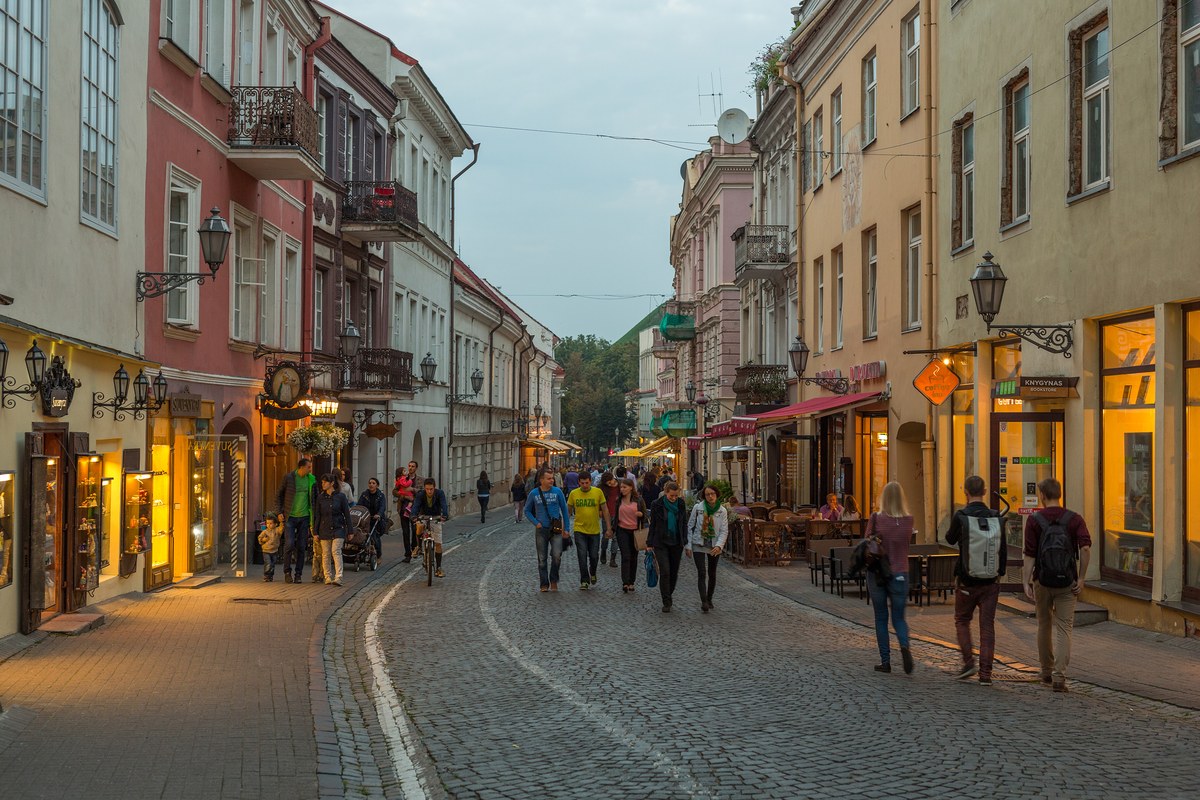
The best approach is to simply walk. Start from Cathedral Square and wander south along Pilies Street: the main artery, lined with amber shops, cafés, and street musicians. Duck into every courtyard and alley you see: some of Vilnius's best cafés, galleries, and bars hide in these unexpected spaces. The Old Town rewards aimless exploration far more than a rigid itinerary.
Don't miss St. Anne's Church on Maironio Street: a Gothic masterpiece so delicate that Napoleon reportedly wished he could carry it back to Paris on his palm. Its neighbour, the Bernardine Church, is equally impressive and usually less crowded.
Cathedral Square and the Bell Tower
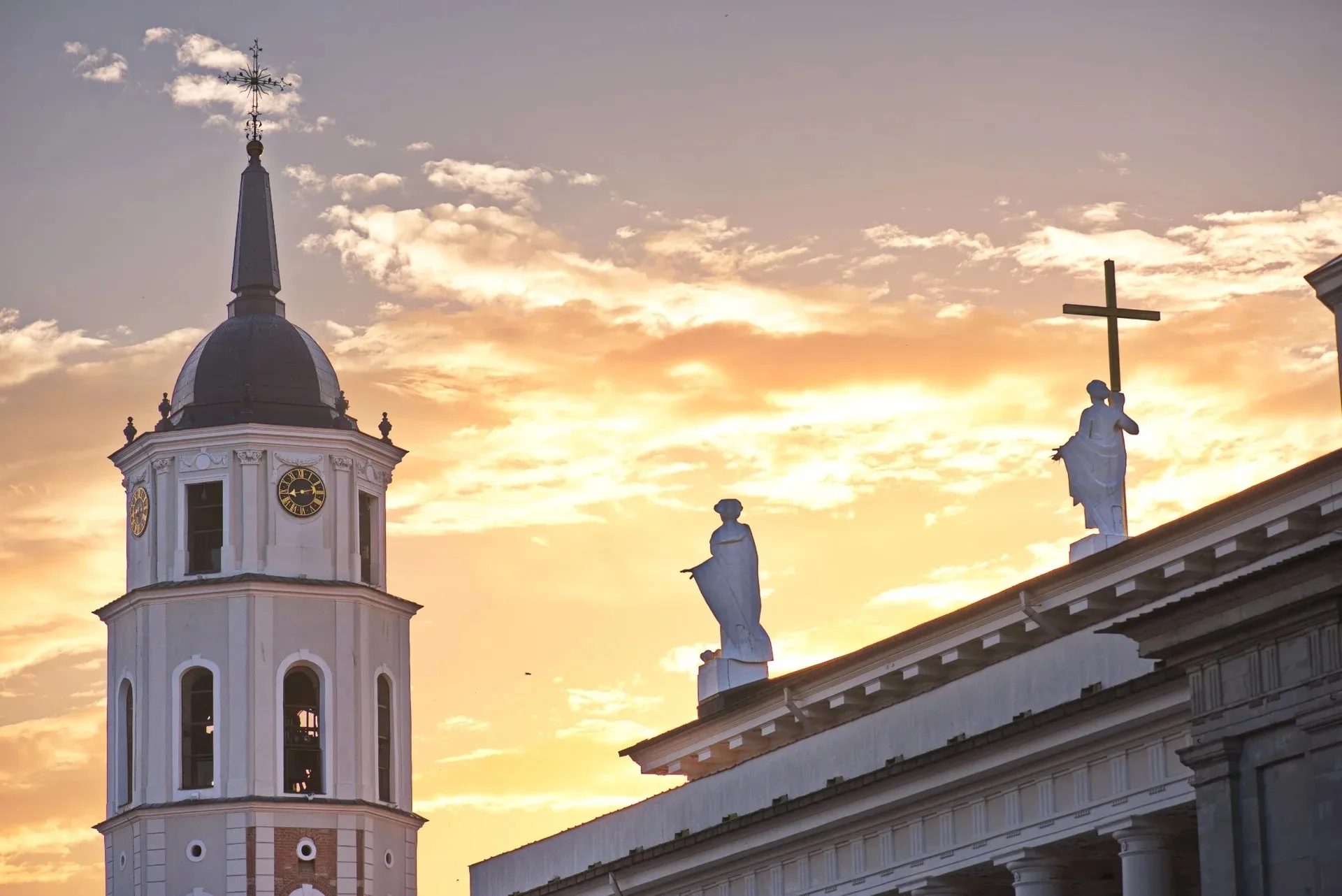
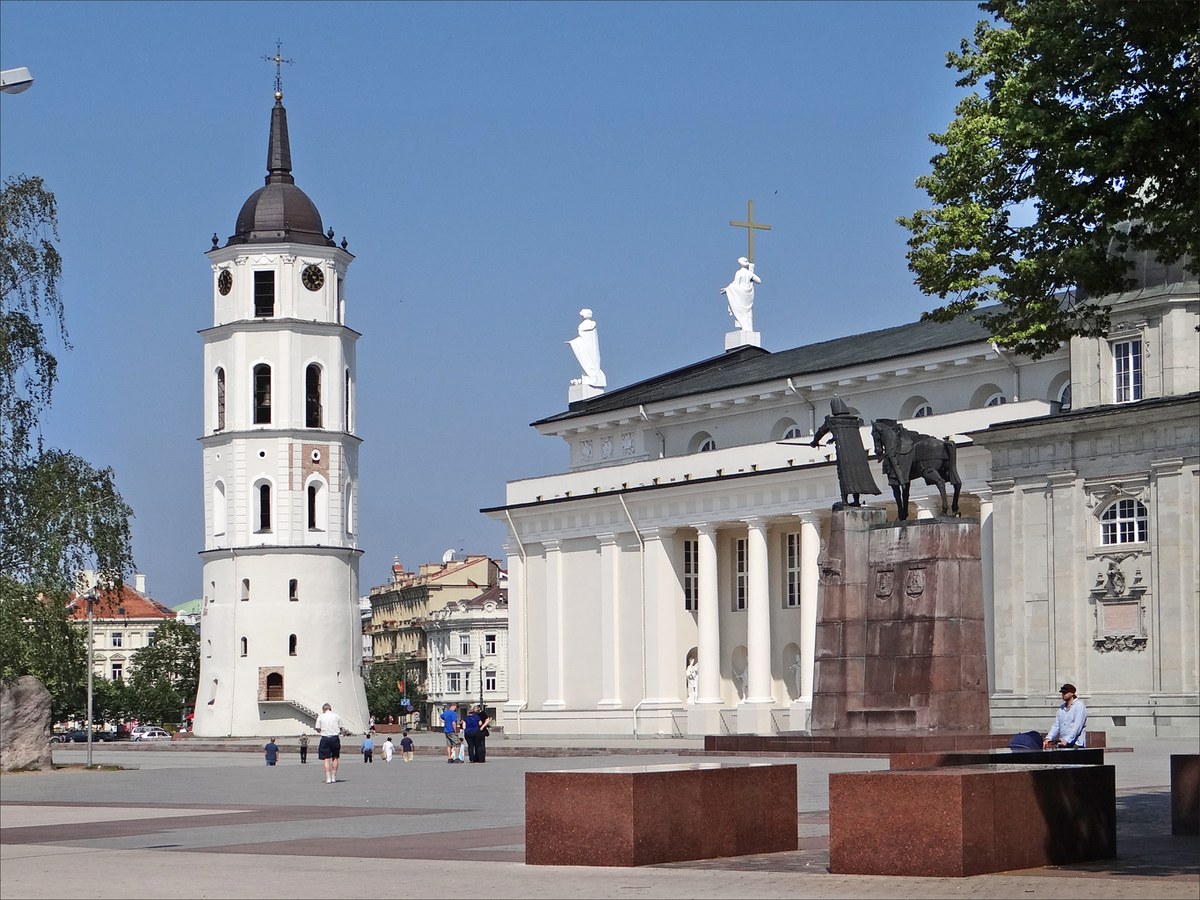
Cathedral Square is the emotional heart of Vilnius: an expansive plaza anchored by the neoclassical Vilnius Cathedral and its freestanding bell tower. Look for the Stebuklas tile ("miracle" in Lithuanian) set into the cobblestones: it marks the spot where the 1989 Baltic Way human chain began in Vilnius, and local tradition holds that spinning on it while making a wish brings good luck.
The Cathedral itself was built over a pagan temple and has been a church, a warehouse, and a gallery over the centuries: its turbulent history mirrors Lithuania's own. Free entry; the crypt with royal sarcophagi is worth the modest fee.
Užupis: The Republic Within the City
Užupis is Vilnius's most singular neighbourhood: a bohemian enclave that declared itself an independent republic in 1997, complete with its own president, constitution, and army (historically around a dozen men). The name means "beyond the river" in Lithuanian, and crossing the small bridge over the Vilnelė river does feel like entering another world: slower, more colourful, and full of surprising art.
The Užupis Constitution, translated into over 60 languages and mounted on plaques along Paupio Street, is a document of genuine philosophical charm. Among its 41 articles: "Everyone has the right to be happy", "A dog has the right to be a dog", and "Do not defeat." Spend time reading it: it captures the spirit of a city that takes joy seriously.
The neighbourhood is best explored on foot. Wander along the Vilnelė riverbank, spot the neighbourhood's unofficial mascots (mermaid and trumpeting angel sculptures), and stop into the independent galleries and studios that line the backstreets. On April 1st, Užupis Day, the neighbourhood throws an open street party that is one of Vilnius's most joyful annual events.
Best Activities in Vilnius
Kayaking on the Neris
One of Vilnius's most underrated experiences is kayaking on the Neris river, which flows right through the city centre. Several operators offer 2-4 hour guided paddles that pass beneath medieval city walls, through forested stretches, and under the Mindaugas Bridge with the Old Town skyline rising behind. It's a perspective on the city that few visitors ever see, and it's genuinely beautiful. Look for operators near the Green Bridge; most trips run May through September and cost around €25-35 per person.
Street Art and the Vilnius Street Art Scene
Vilnius has developed one of the most dynamic street art scenes in the Baltics. The best concentration is in Naujamiestis (New Town): particularly around Šv. Stepono, Pylimo, and the streets behind the bus station. The works range from large-scale murals commissioned as part of city regeneration projects to spontaneous pieces tucked into unexpected corners. Pick up a free street art map from the tourist office or join one of the dedicated street art walking tours that run on weekends.
Walking Routes and Viewpoints
Vilnius is a city for walkers. Beyond the Old Town, several routes reward the effort:
- Three Crosses Hill: a 15-minute climb from Kalnų Park rewards with the best panoramic view of the Old Town. The white crosses are a city landmark visible from across Vilnius.
- Bernardine Garden Walk: a riverside promenade connecting Cathedral Square to Užupis along the Vilnelė, passing through one of the city's most beautiful formal gardens.
- Paneriai Forest Walk: a sobering but important 5km trail through the forest where over 70,000 people, mostly Jewish, were murdered during WWII. The memorial and museum here are among the most significant in the region.
- Vingis Park Loop: a 5km loop through Vilnius's largest park, popular with cyclists, joggers, and families. The massive open-air stage here hosts the Song Festival; the intervals between festivals are not fixed.
The Museum Scene
Vilnius punches well above its weight for museums. The National Museum of Lithuania on Cathedral Square traces the full arc of Lithuanian history from the Stone Age to Soviet occupation. The Museum of Occupations and Fights for Freedom (formerly the KGB Museum) in the actual former KGB headquarters on Gedimino Avenue is one of the most powerful and disturbing museums in Europe: the cells in the basement are original and intact. Allow a full two hours and go in the morning when you have mental energy for what you'll encounter.
For a lighter experience, the Čiurlionis National Museum of Art in Kaunas (about an hour from Vilnius by train) houses the world's largest collection of works by Mikalojus Konstantinas Čiurlionis, a visionary early-20th-century painter and composer whose symbolist works look startlingly contemporary. The Contemporary Art Centre on Vokiečių Street is the best place to see what Lithuanian artists are doing right now.
Food Scene: What and Where to Eat
The Vilnius food scene has transformed dramatically in the past decade. The city now has a genuine cluster of world-class restaurants alongside its beloved traditional canteens, and the quality-to-price ratio remains extraordinary by Western European standards.
Start at Halės Market: the covered food market in the Naujamiestis district that is open Tuesday to Saturday 07:00-18:00 and Sunday 07:00-15:00 (closed Monday) and is one of the best places in the city for breakfast or lunch. Local cheeses, charcuterie, fresh bread, and warm kibinai (Karaite pastries filled with meat) are the highlights. The surrounding streets have become a food cluster in their own right, with a dozen excellent restaurants within easy walking distance.
For traditional Lithuanian food, look for cepelinai (zeppelin-shaped potato dumplings stuffed with meat and topped with sour cream), šaltibarščiai (cold pink borscht: a summer staple), and bulviniai blynai (potato pancakes). Browse the full restaurant guide for curated picks across every budget and cuisine.
Nightlife: Bars, Clubs, and the After-Dark Scene
Vilnius has a nightlife scene that surprises most first-time visitors. The city is a genuine night-out destination, with a dense concentration of bars ranging from candlelit wine cellars in Gothic vaults to rooftop cocktail bars with castle views.
Užupis and Užupio Street are the heart of the craft beer movement, with several excellent taprooms pouring local and international craft beers in relaxed surroundings. Gedimino Avenue and the streets running south off it have the greatest density of bars and clubs. The city's club scene is centred around the Naujamiestis district, where a cluster of venues runs until the early hours on weekends.
For the best rooftop bars, head to the upper floors of hotels and newer developments along the Neris riverfront: the views of the illuminated castle and Old Town at night are exceptional.
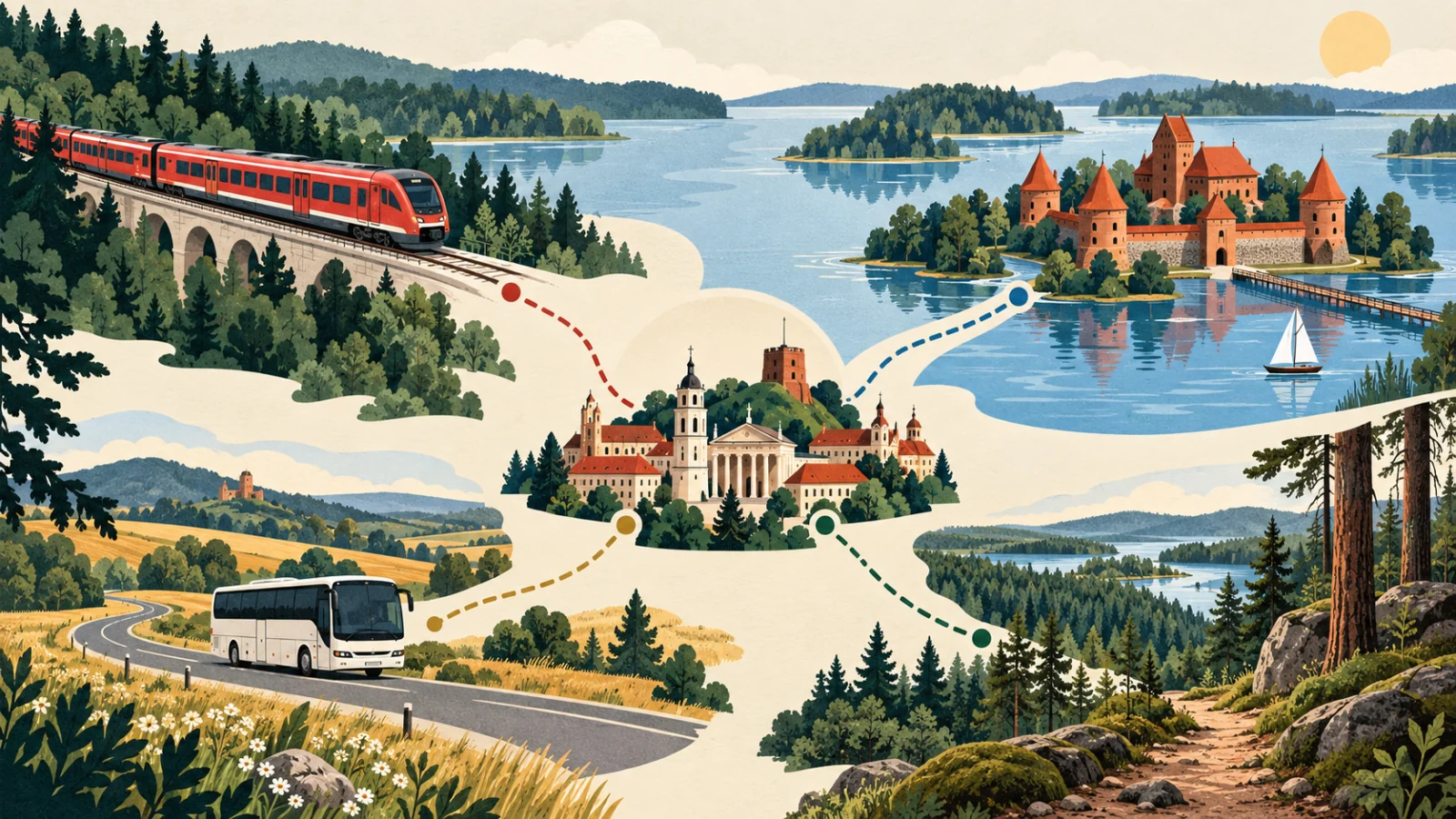
Day Trips from Vilnius
Trakai: The Island Castle
The most popular day trip from Vilnius, and justifiably so, is Trakai, a small town 28km to the west built on a peninsula between two lakes. Its centrepiece is the Trakai Island Castle, a beautifully restored red-brick Gothic castle surrounded by water and accessible via a wooden footbridge. The castle interior houses an excellent history museum, and the surrounding lakeside paths make for lovely easy walking.
Trakai is also home to the Karaite community, a small Turkic ethnic and religious group who settled here in the 14th century at the invitation of Grand Duke Vytautas. Their distinctive wooden houses with three windows (one for God, one for the Grand Duke, one for the family) line the main street, and their traditional kibinai pastries, best eaten warm from one of the lakeside restaurants, are the unmissable local food.
Getting there: buses run every 30-40 minutes from the Vilnius bus station (30 min, €1.40). By car or taxi it's 30 minutes. Return ticket and castle entry makes for an easy, rewarding half-day.
Kernave: Lithuania's Ancient Capital
For something more off-the-beaten-path, Kernave (40km northwest of Vilnius) is Lithuania's ancient capital and a UNESCO World Heritage site in its own right. The hill forts here date to the 5th century and the views over the Neris valley from the top are spectacular. The site museum is small but high-quality. Best visited in summer when the annual archaeology festival brings the history to life.
Seasonal Highlights
Vilnius has distinct seasons, each with its own character:
- Spring (March-May): Kaziukas Fair (early March) fills the Old Town with craft vendors; cherry blossom in Bernardine Garden; Užupis Day (April 1) is unmissable
- Summer (June-August): Long, warm days; outdoor terraces; Vilnius Festival classical concerts in Old Town courtyards; Midsummer (Joninės) celebrations on June 23-24
- Autumn (September-October): Cooler but beautiful; amber light on the Baroque architecture; mushroom season (Lithuanians are passionate foragers)
- Winter (November-February): Christmas Market on Cathedral Square (from late November to the end of December) is one of the best in the Baltics; New Year's fireworks from Three Crosses Hill; fewer crowds at all major sites
Practical Tips for Visiting Vilnius
- Getting around: The Old Town is compact and walkable; public buses and trolleybuses cover the wider city efficiently (€1 per journey with a card); taxis and Bolt (ride-share) are inexpensive
- Currency: Lithuania uses the euro (€); card payments are accepted virtually everywhere
- Language: Lithuanian is the official language but English is widely spoken, especially among younger people and in the hospitality sector
- Safety: Vilnius is a very safe city; standard urban precautions apply around the bus/train station area at night
- Best base: Staying in or near the Old Town puts you within walking distance of most major sights and the best restaurant and bar clusters
- Costs: Vilnius remains excellent value: a good restaurant meal costs €15-25; a craft beer €4-6; an excellent hotel room from €80/night
Ready to plan your trip? Explore all Vilnius attractions or dive into our 2-day Vilnius itinerary for a ready-made plan.
Frequently Asked Questions
What is the best time to visit Vilnius?
June to September is ideal for warm weather, outdoor events and long evenings. December is magical for Christmas markets. Avoid January-February if you dislike cold (-10°C possible).
How many days do you need in Vilnius?
2-3 days is enough to see the Old Town highlights. 4-5 days allows day trips to Trakai and Kaunas plus relaxed exploration of local neighborhoods.
Is Vilnius expensive compared to other European cities?
Vilnius is one of Europe's most affordable capitals. A meal costs €8-15, a beer €3-5, and a hotel room €40-80. Roughly 40-60% cheaper than Paris or London.
Is Vilnius safe for tourists?
Yes. Vilnius is one of the safest European capitals. Petty crime is low. The Old Town is well-lit and busy at night. Standard travel precautions apply.