Vilnius can be explored from the water, but the Neris, Vilnelė and Vokė are not interchangeable routes. Their currents, obstacles, launch points and landing arrangements differ, and conditions can change from one day to the next. The lakes around Trakai are a separate environment where wind, waves and the return distance matter. Choose a trip by its current route plan and participant requirements, not by an old price or a single promotional photograph.
Route comparison at a glance
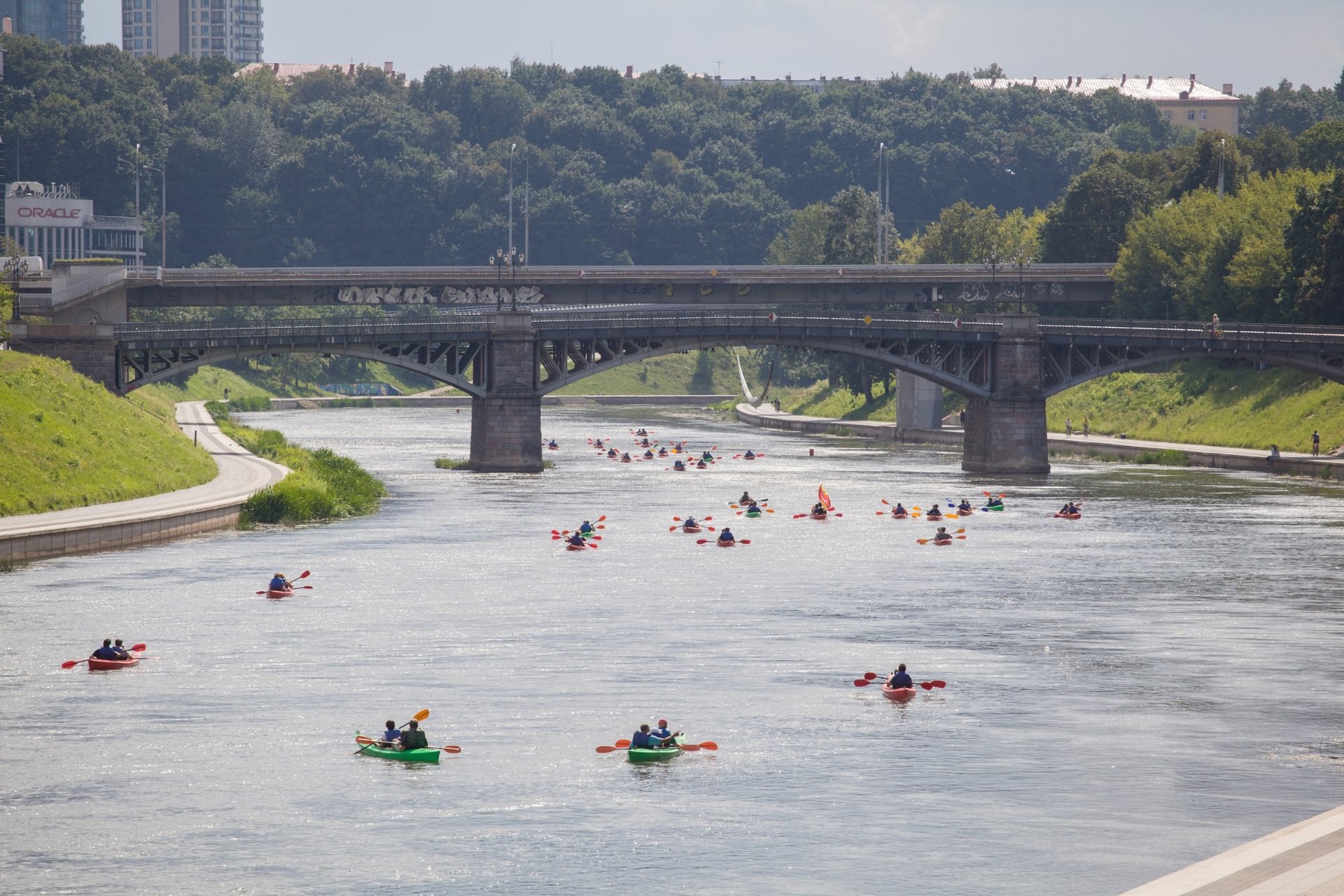
- Neris: a city-river option for seeing Vilnius embankments and bridges. Confirm the exact launch, landing point, distance and return transport.
- Vilnelė: narrower and more winding, with water level, current, shallows and natural obstacles affecting difficulty. The section offered on your date matters.
- Vokė: a separate route near the edge of the city. Launch points and logistics vary by provider, so do not rely on one historic itinerary.
- Trakai: lake paddling near the Island Castle and Užutrakis area. Wind and waves can make the return leg harder than it first appears.
Neris: Vilnius embankments and bridges
The Neris is the largest river running through Vilnius. A trip can reveal several parts of the city, but there is no single universal “beginner route”. Providers may use different launch and landing points, while current and wind influence the time on the water.
Ask for a route map before paying. Check whether transport to the launch or from the finish is included, where personal belongings are kept, and what happens if the trip is cancelled because of weather or river conditions. If your route starts near Verkiai, you can plan a separate visit to Verkiai Manor, but allow independent time for the land and water parts of the day.
Vilnelė: conditions matter more than a promised duration
The Vilnelė passes through Pavilniai Regional Park, Belmontas and Užupis before joining the Neris. Its sections are not equivalent. Pūčkoriai Outcrop lies upstream from Belmontas, so a description claiming that every trip starting at Belmontas necessarily passes the outcrop is geographically misleading.
Water level and obstacles can change, which makes an old fixed distance or duration a poor planning tool. Ask which section will be used on your date, whether any portage is expected, what obstacles are known, and what experience participants need. A stronger current after rain is not automatically a better or safer condition. The official destination guide also distinguishes the faster, rockier Vilnelė as the option requiring more experience; see Go Vilnius guidance on active experiences.
If a trip ends near the centre, you can continue on foot through Užupis. The provider still needs to confirm the actual landing point; a neighbourhood guide cannot replace the day's route briefing.
Vokė: verify the route separately
The Vokė joins the Neris in the western part of Vilnius. Online descriptions list different launches and finishes, so one duration or price cannot represent the entire river. Request a current map and agree who transports the group and equipment before and after the paddle.
Fewer paddlers do not automatically make a route easier or safer. Suitability depends on water conditions, obstacles, the group's abilities and the provider's assessment that day.
Trakai: a lake route is not a river route
Trakai Tourism and Business Information Centre publishes options for kayaks, canoes and other craft on Lake Galvė, including clear-bottom kayaks. This confirms that the activities exist, but prices, operating dates, age requirements and availability must be checked when booking. Use the official Trakai tourism page as a starting point and confirm current terms with the selected provider.
A lake has no river current carrying you toward a finish. Wind can make the return journey harder and increase waves, so agree on the permitted area, return time and weather procedure before launching. Plan the castle visit and transport separately with our day-trip guide from Vilnius; on the water, follow local navigation and pier instructions.
Safety checks before booking
The Lithuanian Transport Safety Administration recommends wearing a life jacket whenever boating, particularly for children and people who cannot swim. A life jacket should be the correct size, in good condition and fastened throughout the trip. The source is available in the official LTSA recreational boating FAQ.
- Tell the provider each participant's age, paddling experience and swimming ability.
- Ask what kayak, paddle, life jacket and dry storage are supplied.
- Check the day's weather, wind, water level and the provider's route decision.
- Carry a charged phone in a waterproof case, drinking water and dry clothing.
- Do not rely on claims that getting wet is unlikely or that a night or faster-current route requires no experience.
- Agree on cancellation, delay and emergency contact procedures in advance.
What a clear offer should include
A price is useful only when its scope is clear. Before booking, obtain written confirmation of:
- the exact launch, landing point and planned distance;
- included equipment and any transport surcharge;
- age, ability and supervision requirements;
- whether the trip is self-guided, instructed or guided;
- who makes the final decision about weather, water level and obstacles;
- cancellation, date-change and refund conditions.
Phone numbers, opening hours and prices seen months ago can change. This guide therefore does not advertise one provider as the “best” or reproduce rates that cannot be maintained as real-time information.
An alternative to paddling: public boats on the Neris
If you want a view of Vilnius from the water without paddling, electric boats operate on the Neris as part of the public transport system during the warm season. The live route, timetable and ticket conditions are published on the official JUDU river navigation page. This is a separate service; its stops and fares should not be confused with a kayak-rental offer.
How to choose
Do not choose the “prettiest” or “cheapest” river in isolation. The Neris can suit a city-view trip, the Vilnelė requires closer scrutiny of the specific section and conditions, the Vokė needs an explicit logistics plan, and Trakai requires attention to wind and the return distance. A responsible provider will explain the route, equipment, participant limits and cancellation rules before payment, and will not promise to run the same trip regardless of conditions.