Paupys: Where Vilnius' Industrial History Transformed into the Newest Quarter
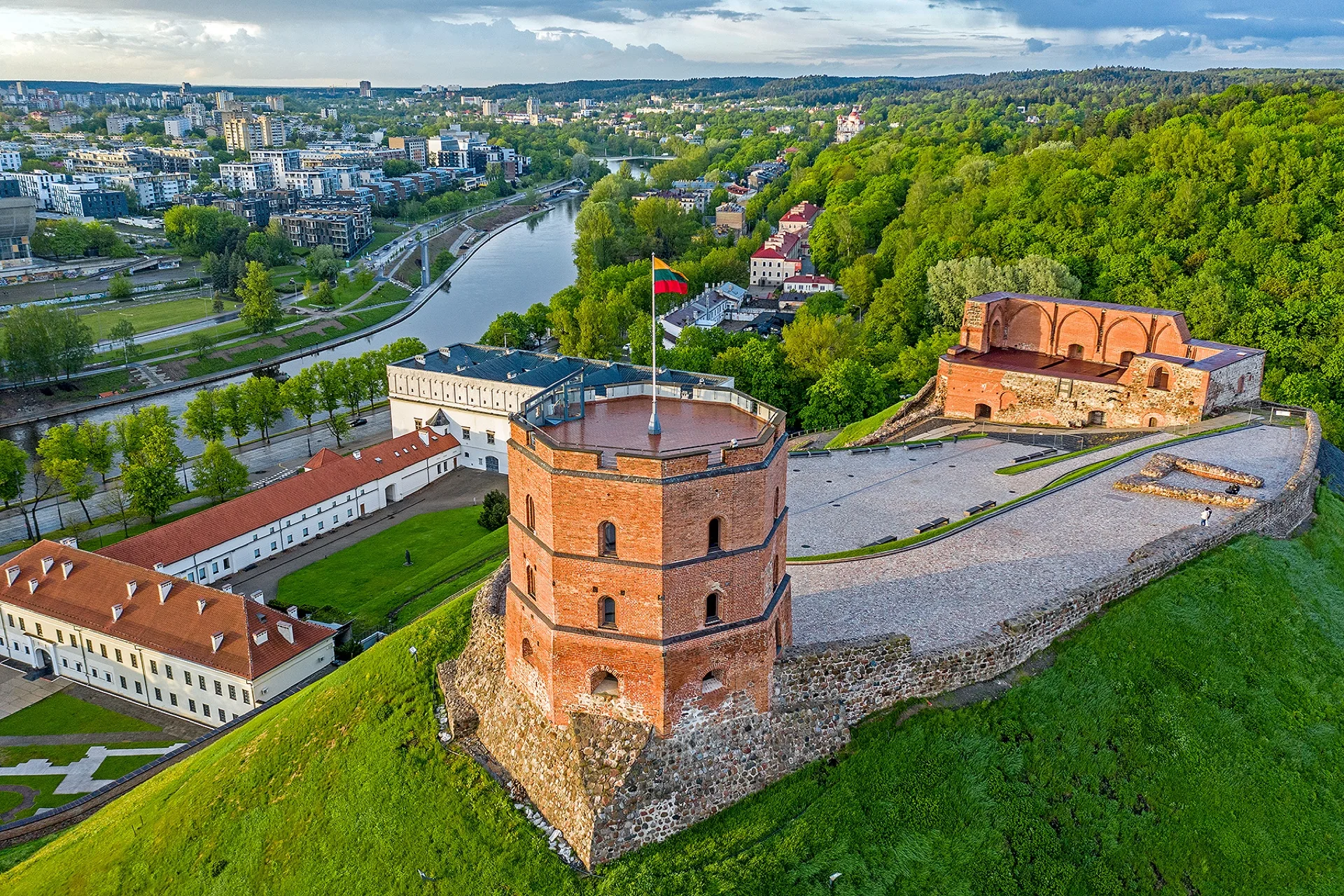
The Vilnelė river winds between Vilnius Old Town and the Užupis Republic. It is here, in a bend of the river, that Paupys has grown over the last decade, becoming one of the most prominent abandoned area conversion projects in the Baltic States. Just a decade ago, this peninsula was empty, cold, and derelict: windowless warehouses, factory buildings with missing roof sections, and courtyards overgrown with weeds. Today, it is a quarter with its own market, art gallery, cinema, and dozens of restaurants, where locals and visitors gather for lunch as naturally as they once did in the Old Town.
Paplauja: Centuries of Industrial History
From the 16th century until 1939, this area was called Paplauja, a name derived from a Belarusian word meaning "floodplain meadow." Two hundred years ago, the area resembled Venice more than Vilnius. A system of canals, dams, mills, and islands stretched here, and water power turned wheels that ground grain, groats, gunpowder components, and even rags for paper production. In the 1870s, brothers Efraimas and Dovydas Lipskiai established a beer and spirits distillery on Paupio Street, which operated for over five decades. Next to it, they set up a Swiss garden with a summer theater, where Vilnius residents spent their leisure time. Nearby, the Tyzenhauzai paper mill operated, powered by spring water from Subačiaus hill, along with locksmith workshops and Samuelis Holšteinas's leather and fur factory, which was renamed "Jonas Vitas" during the Soviet era and operated until the end of the occupation. During the interwar period, some of the city's cheapest brothels operated in the vicinity of Tymo market, earning this quarter a reputation as a red light district.
War, the Soviet Era, and a Quiet Decline
The Second World War and the post war period irrevocably changed the landscape. Canals were filled in, islands disappeared, and the Tymo quarter was demolished, with a road to Subačiaus street built in its place. During the Soviet era, the territory became purely industrial. After the war, an electrical measuring device factory was established here, later named "Skaiteku," one of the largest producers of such goods in the entire Soviet Union. A textile spinning and weaving factory operated nearby. The "Skaiteko" factory, which had been operating for about six decades, closed its doors only in 2008-2009. After that, most of the buildings remained empty: cold, damp, and without any commercial purpose.
Darnu Group and the Rebirth of Paupys
A new chapter began around 2015, when real estate developer Darnu Group initiated one of the largest abandoned area conversion projects in Lithuania, included in the Vilnius City Municipality's "Architecture Park" initiative. On an area of more than 7 hectares along the Vilnelė, 824 apartments and approximately 21,000 square meters of commercial premises are planned. The total investment in the quarter already exceeds 150 million euros. The project is being developed in stages, and Darnu Group recently announced it was purchasing new land plots for further expansion. Paupys therefore remains a vibrant construction site, not a finished and static picture.
Paupio turgus: The Gastronomic Heart of the Quarter
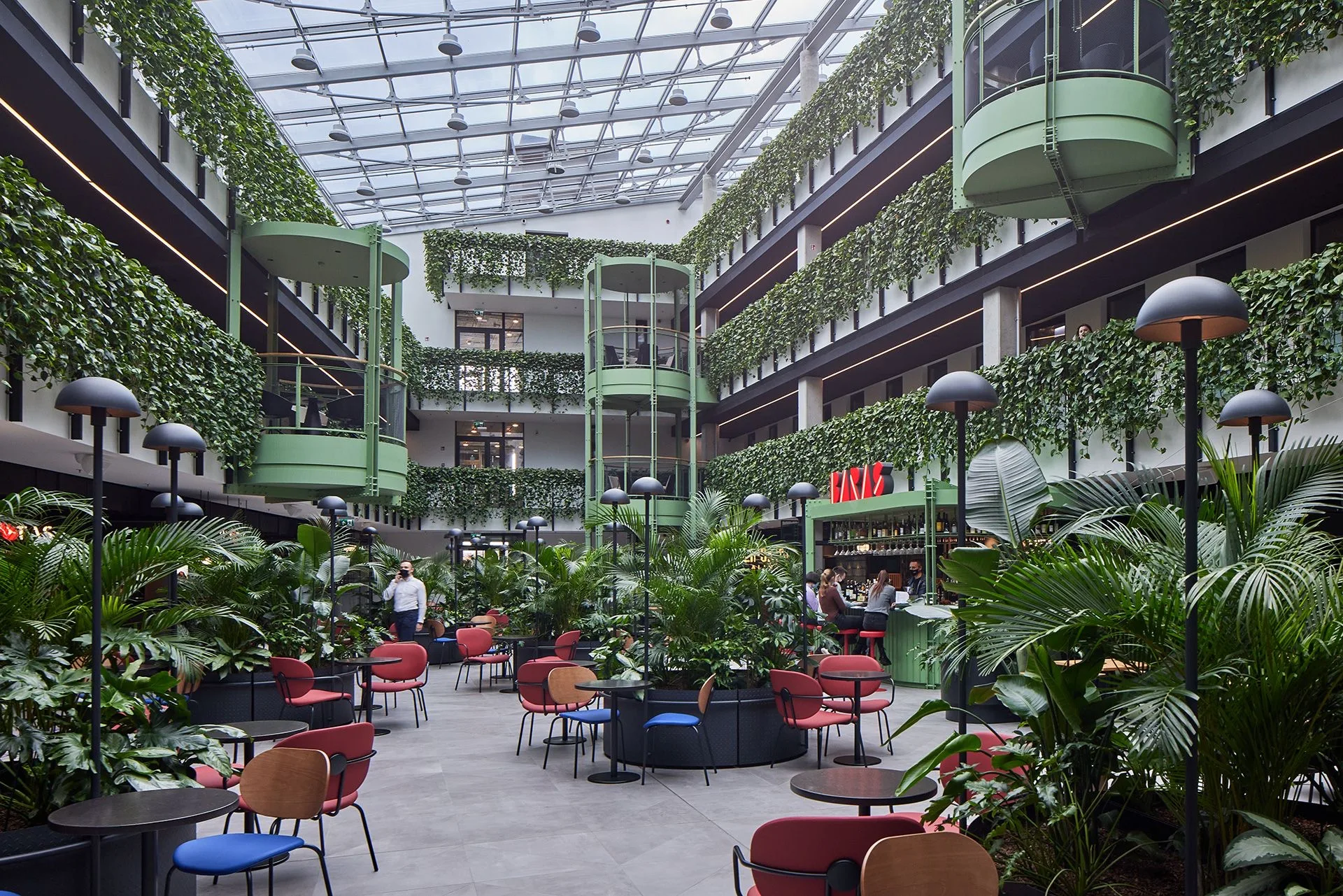
The most prominent symbol of the new Paupys is Paupio turgus, which opened on May 6, 2021, at Aukštaičių g. 7. The almost 2,000 square meter space under a glass roof was designed by architect Audrius Ambrasas with the "Plazma" studio. Approximately 2 million euros were invested in interior and lighting solutions alone. Inside, there is a winter garden with 1,300 plants, and one wall is adorned with a monumental fresco by artist Jurgis Tarabilda. The market has 300 indoor seats and an additional 150 on the outdoor terrace. Underground, there are 200 parking spaces. The first two hours are free upon registration, subsequent hours cost 2 euros per hour, and the parking operates 24 hours a day. The market is open daily: Monday, Tuesday, Wednesday, Thursday, and Sunday from 11:00 to 21:00, and Friday and Saturday from 11:00 to 22:00.
What to Eat Under One Roof
Under the market roof, there are 16 restaurants, 3 bars, and 5 specialized food stores. The old phrase "more than 20 restaurants" proves accurate, though no one previously bothered to name any of them. Chačapuri Bistro offers Georgian cuisine. Khachapuri costs about €7.80 to €7.90, and a lunch set is approximately €10 to €15 per person. Burna House serves modern Lithuanian cuisine. Breakfast and brunch dishes range from €4.90 to €8.40, with Eggs Benedict offered on weekends. Italian cuisine in the market is represented by Mamma Rosa. Japanese cuisine is offered by Samurai Ramen and Wasabi Sushi. Spanish cuisine is found at La Paella. Portuguese and African chicken is prepared by Peri Peri. Lithuanian pancakes are made by Bebro blyninė. Druska Miltai Vanduo offers bread and breakfast. Meatbusters caters to burger enthusiasts, and Peas and Love, a salad bar, suits those seeking healthy options. For fish and seafood, visit Ryk Lys. For Mexican and Latin American flavors, go to Padre Duos Pipirų. For kebabs and wraps, try Wraperia Suppa Kebs. For Asian wok, there is Wok Out. For yakitori grill, visit Yakitori Grill Boutique.
When to Visit to Avoid Queues
Paupio turgus operates on the logic of a food center, not a classic restaurant. There are no queues at most stalls. Orders are placed directly at the counter, and you need to find a table yourself. On Saturday and Sunday lunchtimes, especially from 12:00 to 15:00, finding a free table can take time, as locals bring both children and grandparents here. It is quietest on weekday mornings and early afternoons, until 17:00. Most stalls accept both cash and cards. However, reservations are only possible for a few restaurants, including Burna House for weekend brunch, so if you want a specific table at a precise time, it is advisable to call in advance.
Restaurants and Bars Beyond the Market Walls
Paupys' gastronomy does not end at the market doors. Nearby, there is the Italian restaurant Piano Piano, the restaurant Formosa, and the beer bar Lipskio alinė. Its name directly pays homage to the 19th century Lipskiai brewery, which stood in almost the same location a century and a half ago. This is one of the few instances in Vilnius where a new business consciously references the history of its location, rather than simply building on an empty plot.
Art, Cinema, and Leisure
Outdoors, among the residential buildings, there is a free open air Paupys art gallery, featuring sculptures and installations. These include a work by sculptor Donatas Jankauskas-Duonis and a light installation made of boulders by Linas Kutavičius. The gallery project was funded by the quarter's developer, Darnu Group, with an amount of 300,000 euros. The quarter also features the Pasaka cinema and the Re-Formatas sports club. A pedestrian promenade with new bridges has been built along the Vilnelė, leading directly to the Užupis Republic. This means it is a walk of a few minutes from the market to Užupis' art spaces.
Practical Information
Location: Paupys stretches along the Vilnelė river, between Vilnius Old Town and the Užupis Republic. The main street is Aukštaičių g.
How to get there: The most convenient way is on foot. It takes 5 to 10 minutes from Town Hall Square to Paupio turgus.
What to do: Visit Paupio turgus, walk along the renovated Vilnelė embankment, see the art gallery sculptures, and cross the new bridges to Užupis.
Looking for a place to sleep nearby? Our Where to Stay in Vilnius guide covers the Paupys area alongside the city's other neighbourhoods, and the Paupio Turgus listing keeps the current restaurant roster and reviews up to date.