Vilnius in 2026: A Practical Guide for Your First Visit
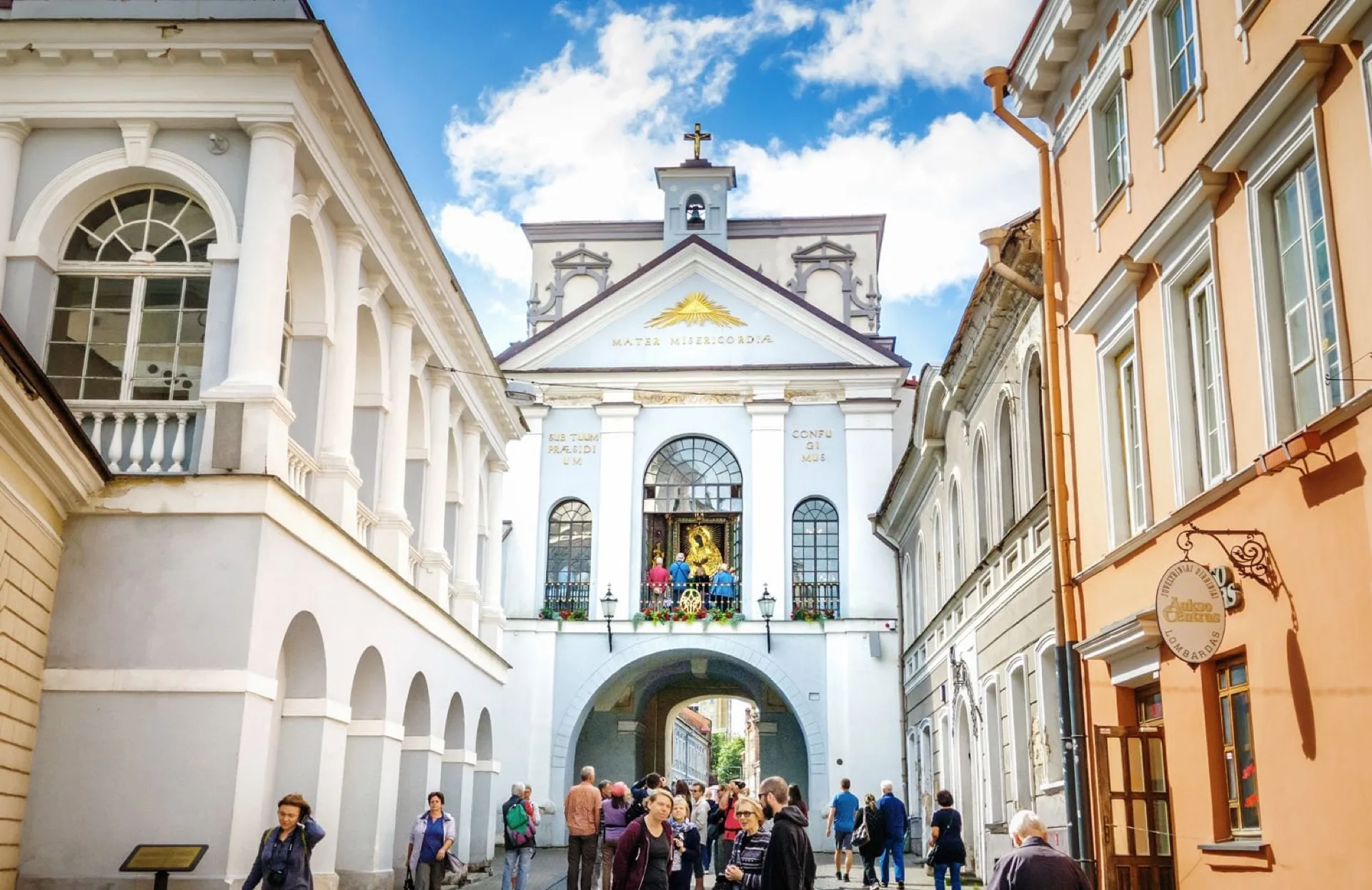
Vilnius rarely makes it onto the top list of European cities for short breaks, so most visitors don't expect much, and that works to their advantage. A UNESCO-protected Baroque Old Town, a relatively low price point within the Eurozone, a vibrant art and restaurant scene, and a compact size (you can walk across the Old Town in 20 minutes) make Vilnius one of the easiest cities to plan a weekend or longer trip to.
This guide gathers everything you need before your trip: how to get to and around the city, which neighborhood to stay in, how much money you'll need, when is the best time to go, and a few practical tips that will save you time once you're there. Prices and routes were verified in summer 2026 directly from airport and city transport sources; it's always worth double-checking before your trip, as fares can sometimes change.
How to Get to Vilnius
By Plane
Vilnius Airport (VNO) is 7 km south of the city center. It is served by Ryanair (the largest low-cost carrier, connecting Vilnius with London, Dublin, Brussels Charleroi, and other cities), Wizz Air (London Luton, Eastern Europe), airBaltic (via Riga to a wide network), LOT Polish Airlines (via Warsaw), and Finnair (Helsinki, with further connections to Asia and North America). Direct flights connect Vilnius with dozens of cities across Europe.
From the Airport to the City Center: Train, Bus, or Taxi
This is often where confusion arises, so the facts were verified directly from airport and city transport sources in 2026:
- Train, the fastest option. The station is a 2-minute walk from the arrivals hall. The journey to Vilnius railway station takes 7-8 minutes, and a ticket costs 0.90 €. Trains run about 16 times a day, roughly from 7 AM to 7:30 PM. Tickets can be purchased via the LTG Link app, on the ltglink.lt website, at a station vending machine, or from the conductor on the train. From the central station to the Old Town is about a 15-minute walk.
- Express Bus 3G, runs from the airport through the city center every 10 minutes, the journey takes about 20 minutes. Buses 1, 2, and 88 also go to the city (88 goes to the center and Europa Square; 1 and 2 go via Vikingų Street towards the station); at night, from 10:30 PM to 5:30 AM, the night bus 88N operates. A ticket costs 1 €, payable by contactless bank card or phone at the validator when boarding the bus; a paper ticket purchased from the driver costs 1.10 €.
- Taxi or Bolt, the official airport stand fare, initial charge 1.45 € plus about 1.01 € per kilometer during the day (1.16 € at night). A trip to the Old Town or Cathedral Square costs about 10 €, taking 15-25 minutes, depending on traffic. It's advisable to use the Bolt app to avoid inflated prices from unregistered taxis.
For more detailed instructions with step-by-step explanations, see the separate article on how to get from Vilnius Airport to the city center.
By Bus from Riga, Warsaw, and Tallinn
Vilnius is conveniently connected by long-distance buses to other Baltic capitals and Warsaw. Most of this route network is operated by FlixBus and the Baltic carrier Lux Express, whose buses offer Wi-Fi and power outlets.
- From Riga, journey about 4 hours, tickets from 10 € when purchased in advance.
- From Tallinn, 8-9 hours direct with a stop in Riga, tickets from 15 €; a night journey saves on accommodation costs.
- From Warsaw, about 8-9 hours, tickets from 15 €; a night journey is also popular.
- From Kaunas, frequent services throughout the day, journey about 1.5 hours, from 5 €.
All long-distance buses arrive at Vilnius Bus Station, Sodų g. 22, about a 20-minute walk or a short city bus ride to the Old Town.
By Train from Kaunas or Warsaw
Vilnius railway station, next to the bus station, is connected to Kaunas (about 1 hour 15 minutes, frequent services) and Warsaw (night train, about 8-10 hours). The international train offering is much more modest than in Western Europe, but the night train to Warsaw is a convenient option for those arriving from Central Europe.
By Car
The Via Baltica (E67) connects Warsaw with Vilnius in approximately 6 hours, while from Riga, the journey on the A7/E77 road takes about 4 hours. A permit is required to enter the Old Town (valid for hotel guests); it's best to leave your car in parking lots on the outskirts of the Old Town and continue on foot.
How to Get Around Vilnius
On Foot
For the Old Town and its surroundings, walking is the easiest and most pleasant option. The historic center is compact; you can walk from Cathedral Square to the furthest edge of Užupis in less than 20 minutes. The cobblestones of the Old Town can be uncomfortable with inappropriate footwear, so comfortable shoes will definitely come in handy.
Public Transport
Vilnius buses and trolleybuses cover the entire city. The system operates with contactless payment; simply tap your bank card or phone to the reader when boarding the bus (1 € per ride). A paper ticket purchased from the driver costs slightly more, 1.10 €. A separate transport card or app is usually not needed; a contactless card works across the entire network. Routes and schedules are most conveniently checked on the Google Maps app or the stops.lt website.
Buses and trolleybuses run frequently, every 5-15 minutes on main routes, from approximately 5:30 AM to midnight; night routes also operate on weekends.
By Bicycle and Scooter
Vilnius has invested in bicycle paths, especially along the Neris riverbanks, and the loop from the center to Vingis Park is one of the most pleasant recreational routes in the city. The city's terrain in the Old Town and Naujamiestis is mostly flat, becoming hillier near the parks. Electric scooters are rented throughout the city by Bolt; you can see the nearest available scooter and price in the app before you start riding.
Taxi and Bolt
Bolt is the common way to order a taxi in Vilnius, dominating across the Baltic region. The price is known in advance when booking, and drivers arrive punctually. A trip within the city costs about 4-8 €. It's advisable to avoid unmarked taxis near the bus and railway stations.
Vilnius Neighborhoods: Where to Stay
Old Town
The Old Town is the historic heart of the city and the best base for most visitors. This 3.6 square kilometer UNESCO-protected district packs attractions, restaurants, and bars so densely that everything is within walking distance. Accommodation here is more expensive than in other neighborhoods; for example, the Narutis Hotel (Pilies g. 24), located in a historic building, is one of the most famous boutique hotels right in the center of the Old Town. View Old Town hotels and apartments.
Naujamiestis (New Town)
Naujamiestis, west of the Old Town along Gedimino Avenue, is the city's creative and commercial heart, with the highest concentration of cafes, design shops, and street art. Comfortable mid-range hotels are located here, such as Novotel Vilnius Centre (Gedimino pr. 16) or Neringa Hotel (Gedimino pr. 23) with a rooftop terrace. It's about a 15-minute walk to Cathedral Square.
Užupis
Staying in Užupis means waking up in Vilnius' most unique quarter. Here, small apartments in renovated buildings and artists' studios prevail over large hotels, so the choice is narrower, but the atmosphere is unique. It's a five-minute walk to the Old Town.
Šnipiškės, Across the Neris River
Šnipiškės, north of the Neris River, offers more modern hotels at a lower price than in the Old Town, such as Radisson Blu Hotel Lietuva (Konstitucijos pr. 20, with a rooftop observation deck) or Best Western Vilnius (Konstitucijos pr. 14). Europa Tower, the Parliament building, and several good restaurants are also located here. It's a 10-15 minute walk to the Old Town via the Green Bridge or Mindaugas Bridge.
When to Visit Vilnius
Spring (March-May), the Best Overall Choice
Spring is often considered the best time for Vilnius. In early March, the Old Town fills with the Kaziukas Fair featuring artisan stalls, cherry blossoms bloom in Bernardine Garden in April, and May is warm, green, and full of events. Crowds are moderate, and prices are lower than the summer peak.
Summer (June-August), High Season
Summers in Vilnius are warm, sometimes even hot, with an average of about 22 degrees Celsius in July, reaching up to 30 on peak days. Long days, up to 17 hours of daylight in June, allow you to explore the city at a leisurely pace. Joninės (St. John's Day), the night of June 23-24, is one of the year's most vibrant cultural events, and the Vilnius Festival brings classical music to the Old Town courtyards. The downside: crowds at major attractions and the need to book restaurants and hotels well in advance for weekends.
Autumn (September-October), Undeservedly Overlooked
September and October offer some of the most pleasant conditions for exploring the city, with temperatures between 14-18 degrees Celsius, stunning autumn foliage in October, crowds diminishing after mid-September, and accommodation prices dropping. Restaurant menus are particularly good at this time, with mushrooms and game dominating.
Winter (November-February), for the Atmosphere
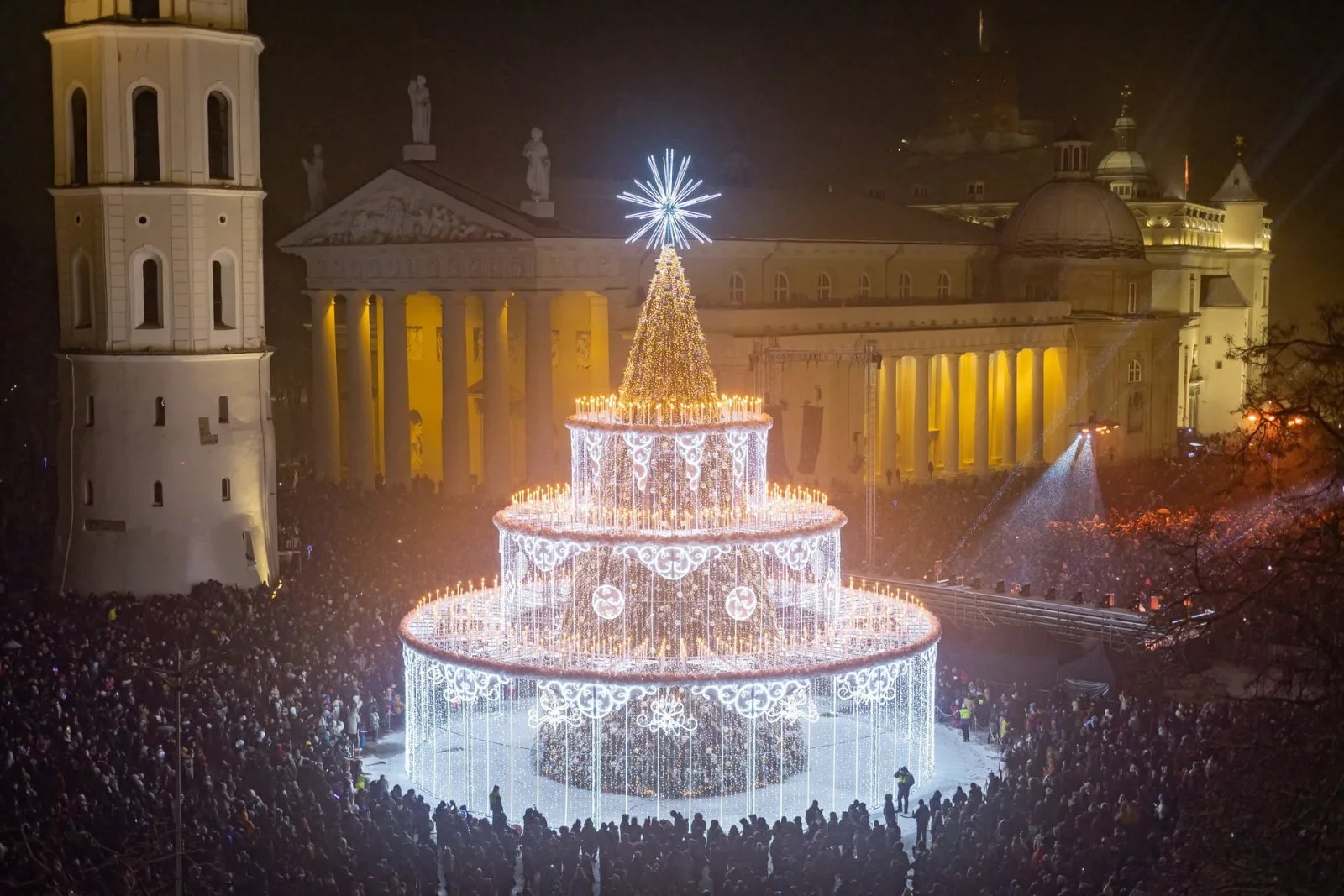
Vilnius winters can be truly cold, with a January average of about -5 degrees Celsius, sometimes below -15, and dark, with only about 8 hours of daylight in December. But the city looks spectacular in winter; the Christmas Market in Cathedral Square (from late November to early January) is one of the most beautiful in the Baltics, with artisan stalls and mulled wine. Crowds are minimal almost everywhere.
Budget Planning
Vilnius remains one of the most affordable EU capitals. Indicative figures for 2026:
- Accommodation, hostel bed from 18 € per night; budget room from 45 €; 3-star hotel from 70 €; boutique hotel from 110 €; high-end hotel from 180 €.
- Food, breakfast at the market 4-7 €; lunch at a cafe 10-15 €; dinner with wine at a good restaurant 25-40 €; tasting menu at top restaurants 55-120 € (see food section below).
- Drinks, craft beer at a bar 4-6 €; glass of wine 5-8 €; cocktail 8-12 €.
- Tickets, most museums 3-7 €; combined tickets for several attractions often cost 15-20 €.
- Transport, bus ticket 1 €; Bolt ride within the city 4-8 €; airport transfer 1-10 € depending on the chosen method.
- Daily Budget, budget traveler 50-70 €; average 120-160 €; comfortable 200 € and more.
Practical Information
Language
Lithuanian is the official language, one of the oldest living Indo-European languages. English is widely spoken in hotels, restaurants, and tourist areas, especially among the younger generation. A few Lithuanian words are always appreciated: ačiū (thank you), labas (hello), prašom (please/you're welcome).
Currency and Payment
Lithuania has been in the Eurozone since 2015. Card payments are accepted almost everywhere, including restaurants, taxis, and market stalls. ATMs are plentiful in the Old Town and city center. Cash is only really needed for small purchases at the market or for tips.
Connectivity
Mobile network coverage in Lithuania is good, and EU roaming works as standard. A local SIM card (Tele2, Bitė, or Telia) can be purchased at the airport or in stores, from 5 € for 10 GB. Free Wi-Fi is available in most cafes, restaurants, and public spaces in the Old Town.
Safety
Vilnius is a safe city by European standards; violent crimes against tourists are rare. Standard precautions apply in markets and crowds, especially in Cathedral Square during peak season. The general emergency number, 112, is valid throughout the EU.
Cultural Nuances
- Service might seem reserved compared to Southern Europe; this is the local style, not rudeness.
- Take off your shoes when entering private homes; hosts often offer slippers.
- Dinner pace is unhurried; the waiter will not automatically bring the bill, you need to ask for it.
- Tipping is not mandatory but appreciated; 10% for good service is a common norm.
Public Holidays
Holidays that may affect opening hours include February 16 (Independence Day), March 11 (Restoration of Independence Day), May 1, Joninės (St. John's Day) on June 24, July 6 (Statehood Day), August 15, November 1, and Christmas on December 24-26. Banks and some shops are closed on these days, but most restaurants and attractions remain open.
What to Eat and Drink
Lithuanian cuisine features hearty seasonal dishes, cepelinai (potato dumplings with meat or curd filling), šaltibarščiai (cold pink beetroot soup), potato pancakes, and dark rye bread. Alongside tradition, Vilnius also boasts an ambitious contemporary restaurant scene, with two restaurants, Nineteen18 and Demo, holding one Michelin star each in 2026. Find a full list with prices and addresses in the Vilnius Restaurant Guide.
In terms of drinks, craft breweries offer excellent options, and Lithuanian mead is worth trying at least once. A full list of bars and cocktail lounges can be found in the Vilnius Bar Guide.
Where to Stay
For most travelers, staying in or near the Old Town is the right choice, due to its walkability and abundance of restaurants. For summer weekends, book at least 3-4 weeks in advance; the best boutique hotels sell out faster than you might expect for a city of this size.
For a complete list of Vilnius activities, restaurants, bars, and events, see the Vilnius City Guide: Things to Do.
Frequently Asked Questions, Vilnius 2026
Do I need a visa to enter Vilnius?
Lithuania is part of the Schengen Area. EU citizens only need an identity card. UK, USA, Canadian, and Australian citizens can enter without a visa for up to 90 days. Please check your country's requirements before traveling.
What currency is used in Vilnius?
The Euro; Lithuania adopted it in 2015. Cards are accepted almost everywhere, and ATMs are plentiful in the city center.
How do I get from Vilnius Airport to the city center?
The train to the central station takes 7-8 minutes and costs 0.90 €, running about 16 times a day. Express bus 3G runs through the center every 10 minutes, taking about 20 minutes, with a ticket costing 1 € by contactless card. Bolt or a taxi to the Old Town costs about 10 € and takes 15-25 minutes. The airport is just 7 km from the Old Town.
What language is spoken in Vilnius?
The official language is Lithuanian. English is widely understood in hotels, restaurants, and tourist areas, especially among the younger generation.